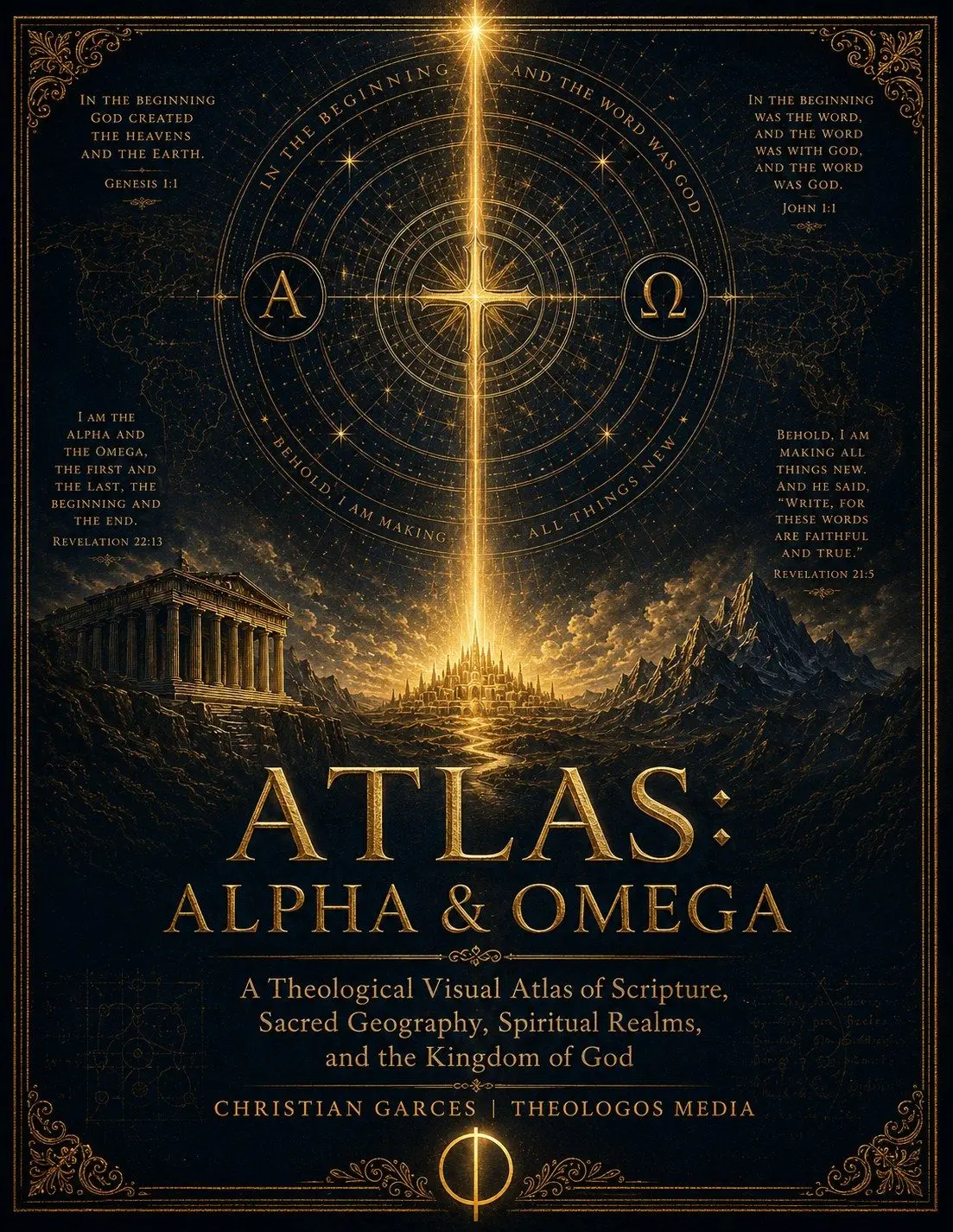
Genesis opens at the only beginning Scripture ever names. The first verse is not a defense of monotheism, not a polemic against other religions, not a scientific abstract — it is a confession. In the beginning, God created the heavens and the earth. The Hebrew bereshit bara Elohim lays four foundations in three words: there was a beginning; God acted; God alone is the actor; and what He made was the heavens and the earth — the totality of what exists. Everything Scripture says afterward stands on that ground.
What the chapter then describes is not merely the appearance of matter. It is the consecration of a temple. The seven days follow the pattern of temple inauguration that the ancient Near East would have recognized immediately — boundaries set, functions assigned, rest enthroned. Light is named. Day and night are named. The waters above are divided from the waters below. The land emerges. The luminaries are placed in the expanse. The waters teem with life. The land brings forth animals. And then, on the sixth day, humanity — male and female, in the image of God — is placed in the sanctuary as priest-king of the whole.
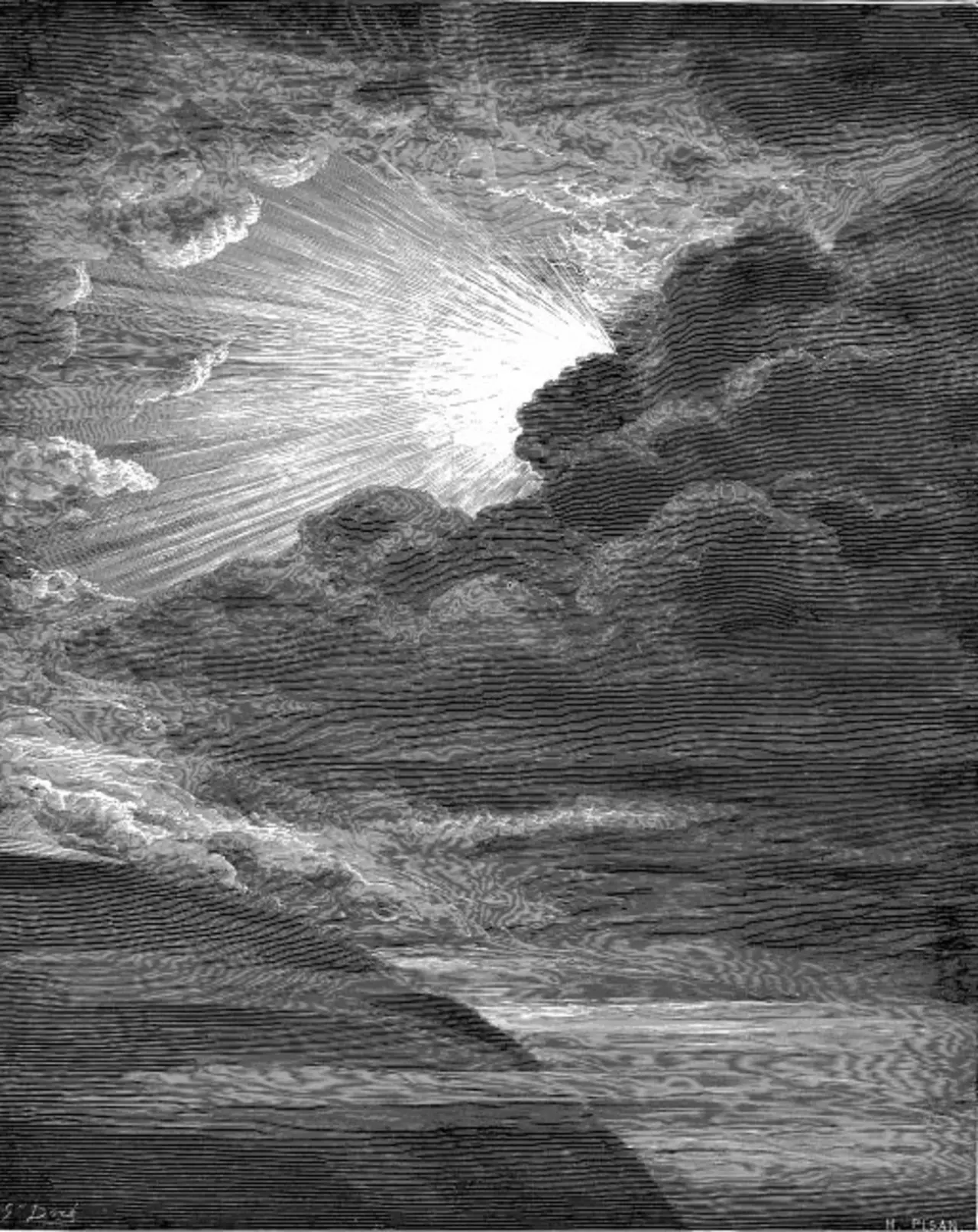
The primal light of day one is not the light of the sun. The sun does not appear until day four. Day one's light is the disclosure that the universe is a creation of glory before it is a creation of stars. Paul makes the doctrinal turn explicit in 2 Corinthians 4:6 — God, who said, “Let light shine out of darkness,” has shone in our hearts to give the light of the knowledge of the glory of God in the face of Jesus Christ. The same word that called primal light into being is the word that creates faith in the heart.
The pattern that closes each day — and there was evening and there was morning — establishes the rhythm that Sabbath consecrates on day seven. Time itself is a creature. It is not a god, not the deepest reality, not co-eternal with the Lord. It began. It is measured. It is good. The calendar that Israel will later observe, the appointed times of the moedim, the Sabbath rest that the New Testament identifies with the work of Christ — all of it descends from this first week.
The structure of Genesis 1 is famously twofold. Days one through three establish realms — light separated from darkness, sky separated from sea, land separated from sea. Days four through six populate those realms — sun, moon, and stars in the expanse; birds and fish in sky and sea; animals and humanity on the land. The ancient Near East built temples in exactly this rhythm: the earliest known liturgical texts describe the construction of a sanctuary, the installation of its furniture, the placement of the cult statue, and the divine rest that follows. Genesis 1 borrows the vocabulary and reverses the theology. There is no idol; humanity itself bears the image. There is no construction crew of gods; the LORD speaks alone. The pattern is recognizable; the worship is exclusive.
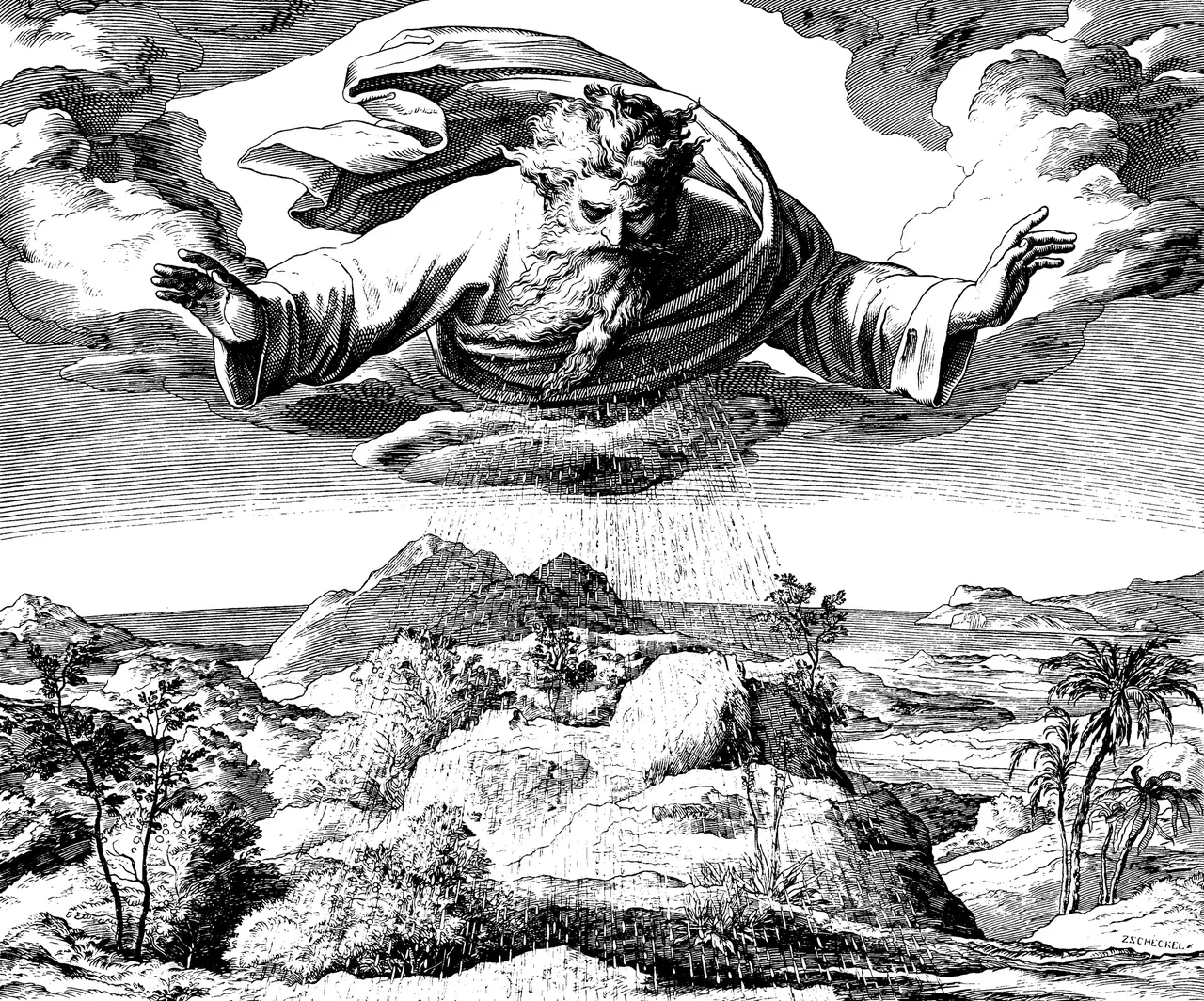
Genesis 1:2 names a second presence on the deep — the Spirit of God was hovering over the waters. The Hebrew ruach Elohim merachefet uses the same verb that describes a mother bird brooding over her young. The Spirit is not abstract energy. The Spirit is the divine breath, ordering the unformed deep, preparing it for the Word that will speak it into shape. John 1 makes the trinitarian reading explicit: In the beginning was the Word, and the Word was with God, and the Word was God… All things were made through Him, and without Him was not anything made that was made. Father, Word, and Spirit are at the work of creation together.
Genesis 1:26 then introduces a striking plural — Let us make humanity in our image. Christian tradition has read this as a witness to the Trinity within the Old Testament itself. The biblical text also testifies to a heavenly court around the throne: the host of heaven standing on the Lord's right and left in 1 Kings 22, the morning stars singing together in Job 38, the divine council of Psalm 82. The Lord is not alone in heaven; He is the LORD of hosts. But the council is under God, never beside Him. The plural of Genesis 1:26 invites the angels to witness; the action is the Lord's alone.
Genesis 2 then zooms in. The cosmic temple of chapter 1 has an inner sanctuary — Eden — and in that sanctuary the LORD places the man. The work given is twofold: to work it and keep it. The Hebrew verbs abad and shamar are the same words used later for the work of the Levites in the tabernacle. Adam is described in the language of the priesthood. He is placed in the sanctuary not to dominate but to serve and to guard, to till and to worship.
Ezekiel 28 looks back on this scene and names Eden as the holy mountain of God, the place where the cherub walked among the stones of fire. The vocabulary is mountain-temple vocabulary. Eden is the first sanctuary. The exile from it in Genesis 3 is the exile from sanctuary worship — and the cherubim with the flaming sword stationed at its gate are the same cherubim woven into the curtain of the tabernacle and embroidered on the veil of the temple. The whole subsequent geography of sacred space — tabernacle, temple, heavenly sanctuary, new Jerusalem — is the story of regaining access to what Genesis 2 gave and Genesis 3 lost.
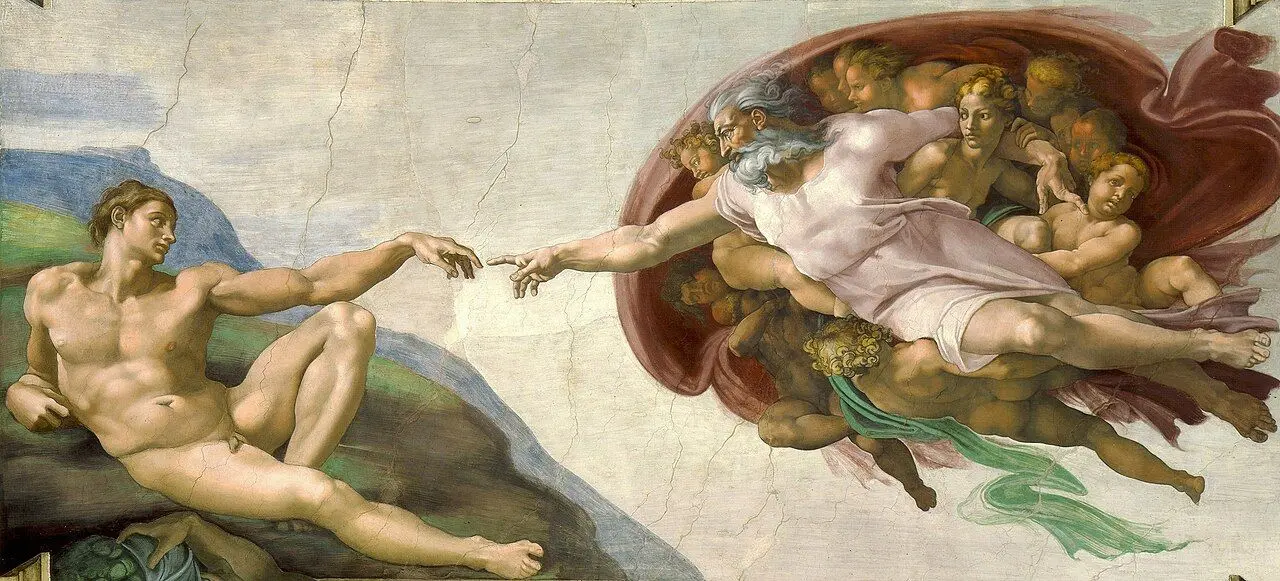
The Christian reading of Genesis 1–2 has always been Christological. The Word who said let there be light is the Word who became flesh and dwelt among us. The Spirit who brooded over the waters is the Spirit by whom Mary conceived and the Spirit poured out at Pentecost. The image of God in which humanity was made finds its perfect bearer in the Son, who is the image of the invisible God, the firstborn of all creation. The Sabbath rest of day seven is the rest that remains for the people of God, fulfilled in the One who said, Come to Me, and I will give you rest.
Chapter 1 of the Atlas does not stand alone. It is the architecture that the rest of the book inhabits. Sacred Geography begins from the doctrine that the earth is a sanctuary, not a backdrop. Realms and Cosmology assumes the threefold heavens of Genesis 1. Time and Ages runs on the calendar Sabbath consecrates. Records and Artifacts trace the priesthood Adam was given and the priesthood Christ restored. Powers and Entities show the divine council the plural of Genesis 1:26 already implied. Portals and Thresholds open between the Eden-sanctuary that was lost and the New Jerusalem that comes. People of the Canon are the image-bearers, fallen and being remade.
The whole Atlas is, in this sense, commentary on Genesis 1–2. In the beginning, God created. Everything else is the working-out of what that beginning means.