Schisms
The major ruptures that split historic Christianity. Each entry describes what was actually disputed and what both sides argued — without adjudicating which was right.
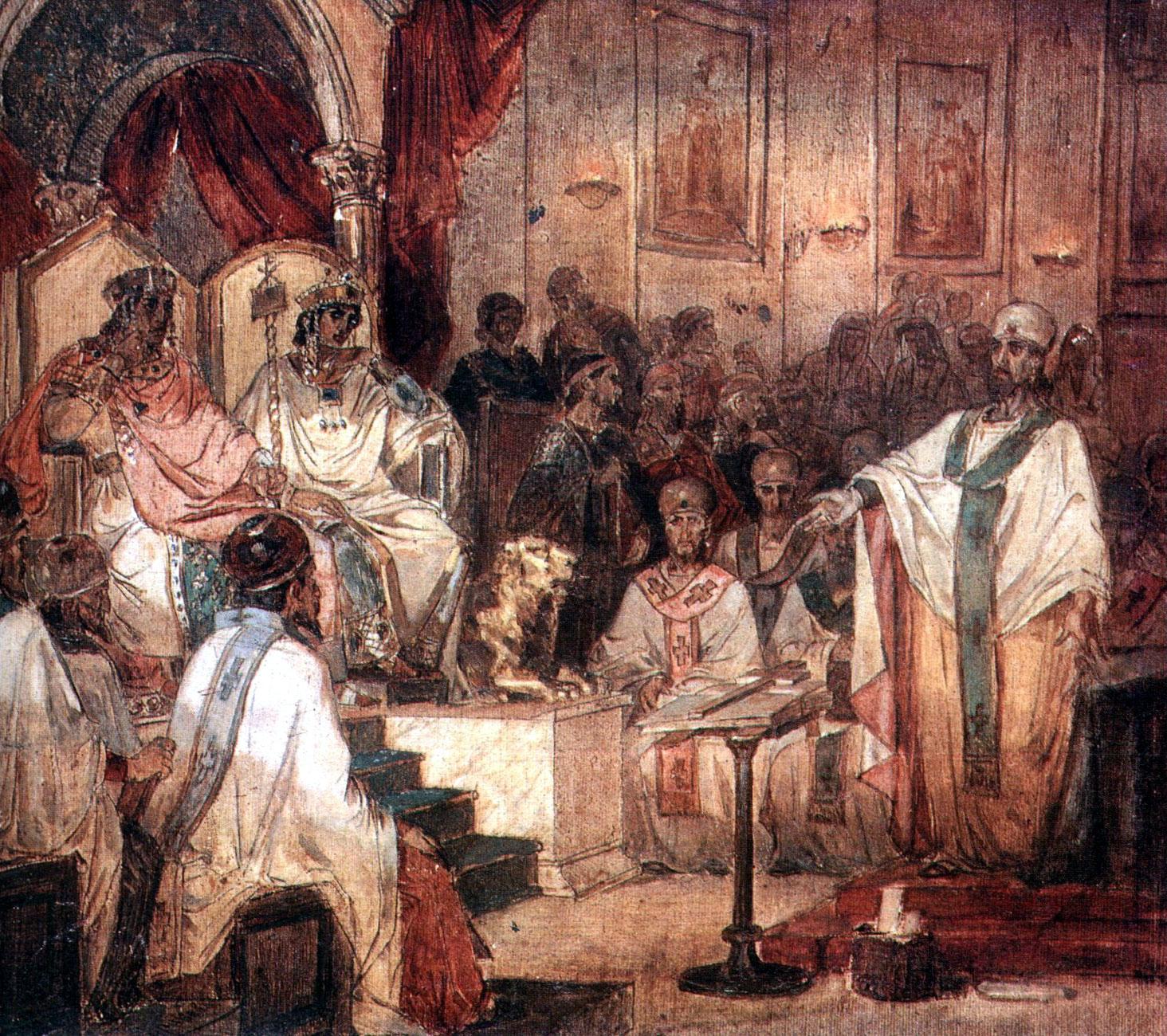 451 AD
The Council of Chalcedon
The Christological Schism of 451 AD
The first permanent schism in Christianity. The Council of Chalcedon's definition of two natures in one person split the imperial church from the churches of Egypt, Syria, Armenia, and Ethiopia — a division that has lasted 1,575 years.
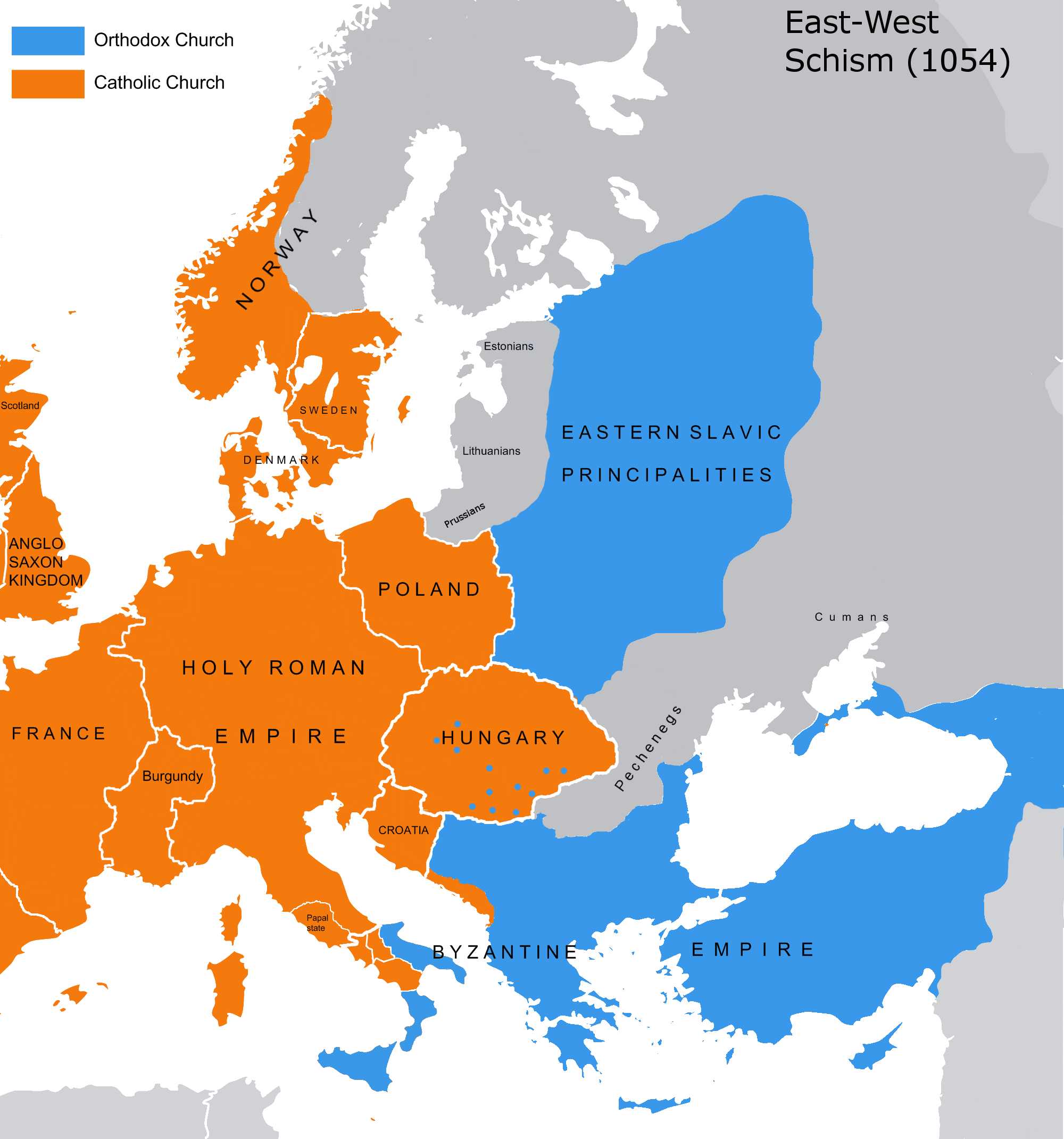 1054 AD (long preface; not formally a single event)
The Great Schism
Rome and Constantinople Part Ways, 1054 AD
The Latin West and Greek East had been drifting apart for centuries. In 1054 a Roman cardinal slapped a bull of excommunication on the altar of Hagia Sophia, the patriarch reciprocated, and a fracture nine hundred years in the making became formal.
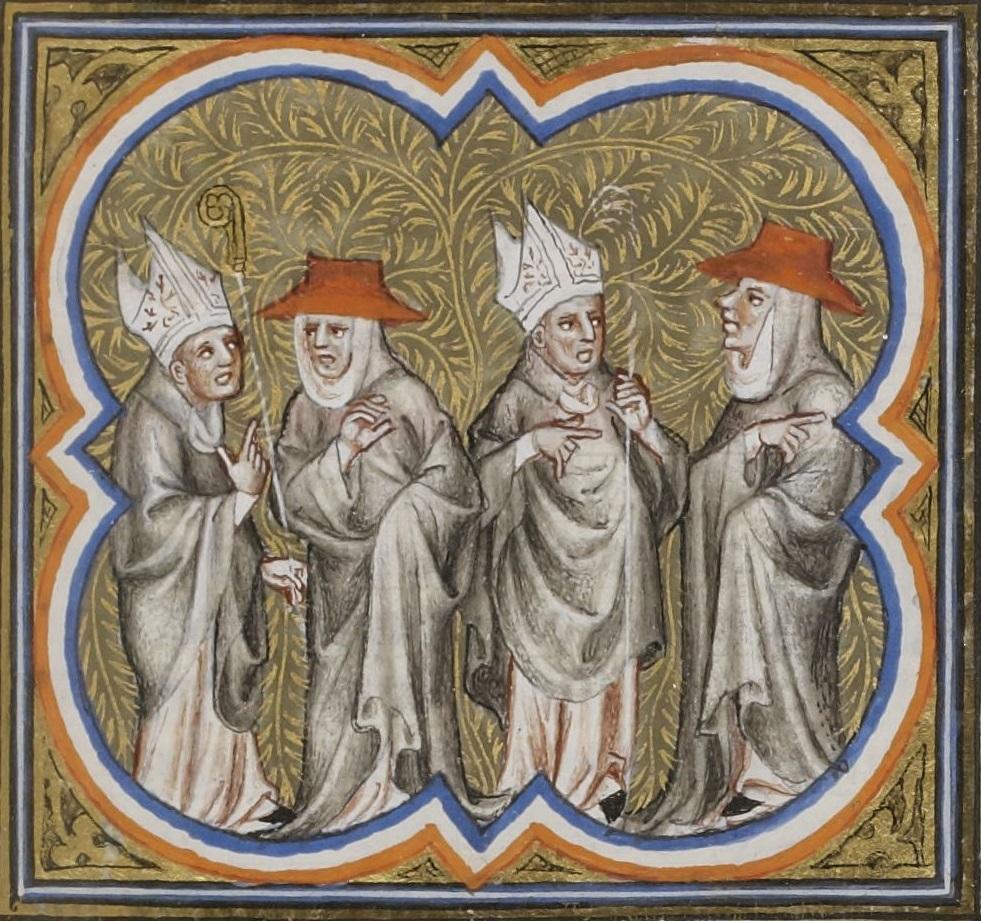 1378–1417 AD
The Western Schism
Three Popes at Once, 1378–1417
For thirty-nine years, the Roman Catholic Church had two — and eventually three — rival popes, each claiming legitimacy, each excommunicating the others. The Council of Constance resolved it by electing a single new pope and asserting that councils stand above popes.
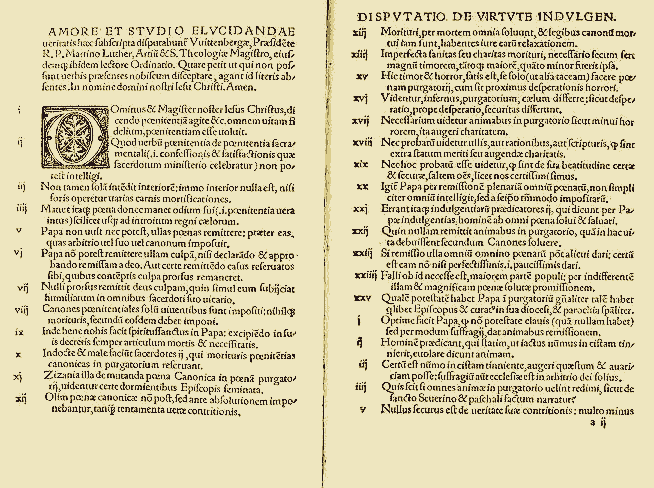 1517 onward
The Protestant Reformation
Wittenberg, 1517 — The Western Church Splits
When Martin Luther posted his 95 Theses on indulgences in 1517, he intended a debate. What followed was the permanent fracturing of Western Christianity into Catholic, Lutheran, Reformed, Anglican, and Anabaptist traditions — and the reshaping of European political history.