On Love, Uncertainty, and the Light We Long For
Theologos Media · Editorial
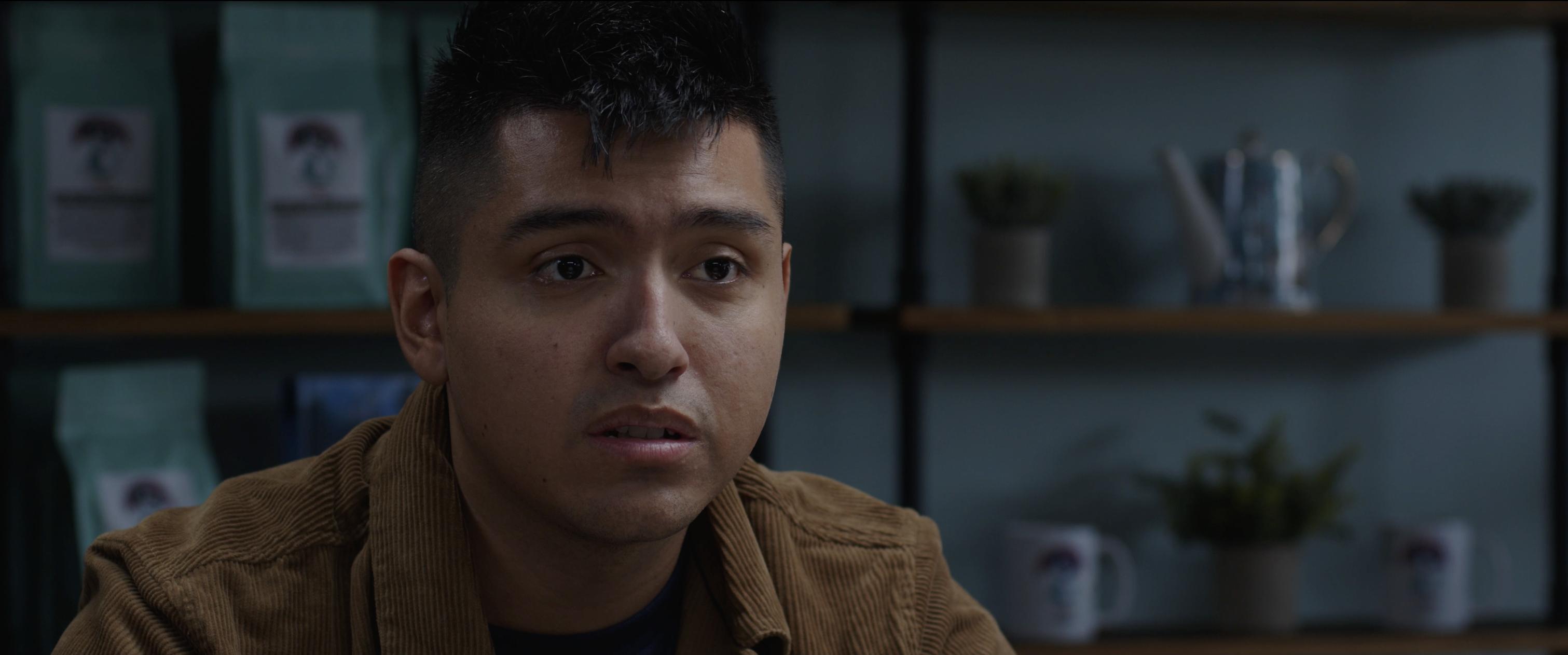
Dimly Lit is a small film. Two people in a room, a conversation that never quite arrives where it's supposed to, and the long silence between them where most of the story actually happens. Bryan M. Garcés directs, and he's careful not to overplay any of it.
The title is the thesis. To be dimly lit is to live in the in-between — not blind, but not seeing clearly. Able to love someone and still not quite understand them. Able to sit close and still feel far. The film stays inside that tension and refuses to rush out of it.
That is why it sits well here.
The film, briefly
On the surface, it is a relationship drama. Beneath the surface it is a meditation on the condition most of us live in most of the time. We carry wounds into conversations. We want clarity, but we also want cover. We want to be loved, and we hesitate when love asks for the vulnerability it requires.
That isn't unique to romance. It is true of every place a human being shows up — including the place where the soul stands before God.
Why this belongs on Theologos
Scripture has language for what this film is doing. Paul writes, “For now we see in a mirror dimly, but then face to face.” That is the same emotional space — partial sight, partial knowledge, partial love, but a deep ache toward the full version of all three.
The first thing Scripture tells us God does is speak light into darkness. The first thing the Gospel of John tells us is that the Word was in the beginning, that the Word was God, and that the Light shines in the darkness and the darkness has not overcome it. Light, in the Bible, is not just metaphor. It is revelation, holiness, presence.
Most of our lives don't happen in full noon or full midnight. Most of our lives happen at dusk.
Dimly understood feelings. Dimly held hopes. Dimly seen futures. We do our best inside that half-light, and sometimes we do real harm there. Garcés honors that. He doesn't preach. He doesn't try to resolve the room. He lets two people sit in the half-light long enough for the audience to recognize ourselves there.
A theological note
The Christian hope is that the half-light is not the last word. The Word still speaks. The Light still shines. The same God who said let there be light in Genesis is the God who, in Christ, walks into the dimly lit rooms of human hearts — not to expose us in order to shame us, but to reveal what He intends to heal.
Garcés isn't trying to say all of that. The film leaves room for the viewer to do the work. We're noting it because it is hard to watch this film honestly and not feel the older biblical pattern moving underneath it.
It's worth your time.