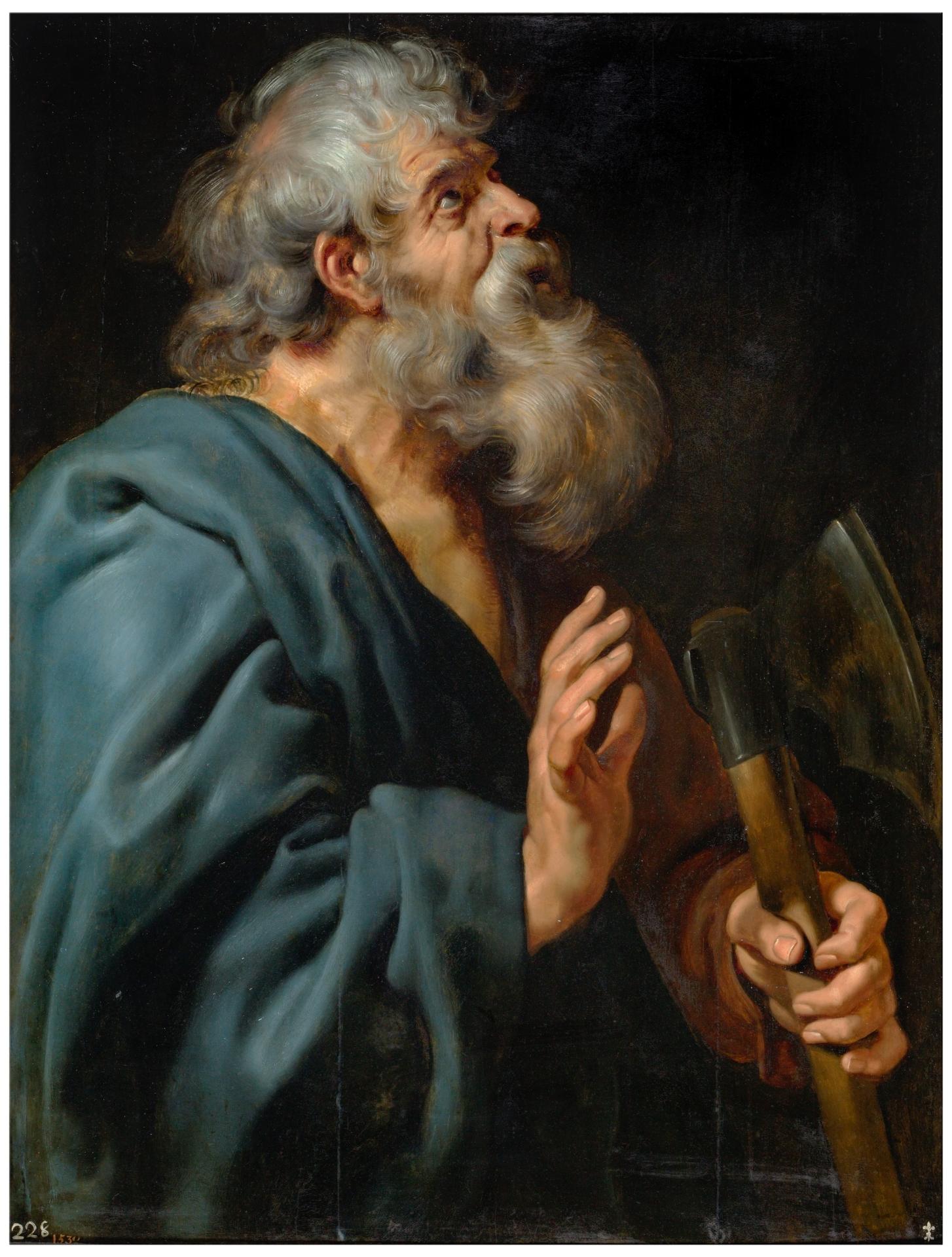
Matthias appears once in the New Testament: Acts 1:15–26, in the period between the Ascension of Christ and the day of Pentecost. Peter addresses the gathering of about 120 disciples in the upper room at Jerusalem and proposes that the betrayed-and-vacant twelfth apostolic seat be filled, citing the prophecies of Psalm 69:25 and Psalm 109:8. The criterion he proposes for the replacement is strict: 'Of these men which have companied with us all the time that the Lord Jesus went in and out among us, beginning from the baptism of John, unto that same day that he was taken up from us, must one be ordained to be a witness with us of his resurrection' (Acts 1:21–22). The requirement is direct eyewitness companionship across Christ's entire public ministry.
Two candidates met the criterion: Joseph Barsabbas (also called Justus) and Matthias. The community 'prayed, and said, Thou, Lord, which knowest the hearts of all men, shew whether of these two thou hast chosen, That he may take part of this ministry and apostleship, from which Judas by transgression fell, that he might go to his own place' (Acts 1:24–25). They cast lots — the ancient method of seeking divine determination, attested throughout the Old Testament — and the lot fell on Matthias. He was 'numbered with the eleven apostles' (Acts 1:26).
This is the last instance of selection by lot in the New Testament. With Pentecost (Acts 2), the gift of the Holy Spirit is poured out on the apostolic community, and the New Testament records no further use of lot-casting for major decisions. The Matthias selection therefore represents a transitional moment — the last act of the apostolic community operating within Second Temple Jewish norms before the descent of the Spirit reorganizes the community's decision-making practices.
Matthias appears in none of the narrative episodes of Acts after his election. His name does not occur in the epistles. The post-apostolic tradition gives him an Ethiopian mission (the early Latin Christian tradition) or a mission to Colchis on the Black Sea coast of modern Georgia (the Eastern tradition). Both traditions are later than the New Testament period and difficult to verify. His martyrdom is described variously as by stoning at Jerusalem, by crucifixion in Colchis, or by axe in Ethiopia.
His historical and theological role is to be the only restoration of the Twelve. After his election, the apostolic college is restored to its full number, and Acts can resume the narrative of the Spirit's work through the complete Twelve at Pentecost. Some early Christian authors — particularly in the Eastern tradition — argued that Matthias's election was premature and that the 'true' twelfth apostle was Paul, called by Christ directly rather than chosen by lot. The Western tradition has consistently maintained the Acts narrative as authoritative: Matthias is the legitimate twelfth, and Paul, as 'an apostle born out of due time' (1 Corinthians 15:8), holds an additional and distinct apostolic commission.