Advent
Adventus Domini
Four weeks of preparation for the Nativity. Born in fourth-century Gaul and Spain as a pre-Christmas fast, fixed at four Sundays by Gregory the Great, and structurally aimed at both the historical and eschatological coming of Christ.
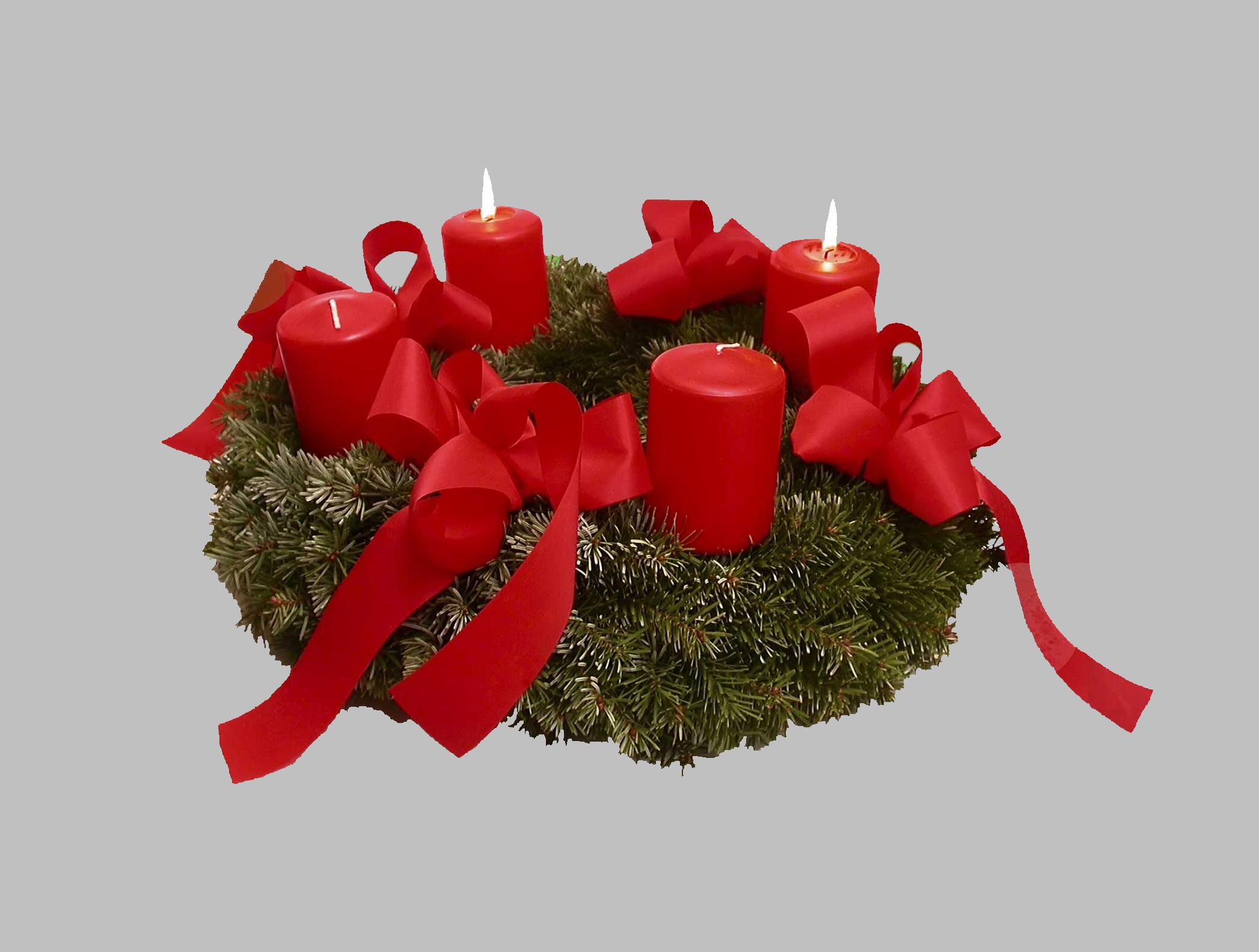
Advent is the Christian year's opening — a four-week preparation for the celebration of the Nativity of Christ on December 25. The name comes from the Latin adventus, itself a translation of the Greek parousia, which meant the formal arrival of a king or emperor in a city. The Christian appropriation is deliberate: the season prepares the church not only for the historical coming of the Lord in the manger but for his eschatological coming in glory. Both horizons sit inside every Advent liturgy.
The season emerged in the Western church in the late fourth century. The Council of Saragossa (380) directed the faithful to attend church daily from December 17 through Epiphany — a discipline that points toward a pre-Christmas preparatory period. A few decades later in Gaul, the bishops of Tours and elsewhere had instituted a forty-day fast from the feast of St. Martin (November 11) through Christmas, paralleling the Lenten fast before Easter (Gregory of Tours, Historia Francorum 10.31). This Gallican fast survived in modified form as the Eastern Nativity Fast and is still observed by Orthodox Christians today.
The Roman pattern of four Sundays of Advent was fixed under Gregory the Great around 600. The Roman lectionary appointed readings from Isaiah, the historical prophecies of the coming Messiah, the Baptist's preaching of repentance, and Mary's encounter with Gabriel. The structural logic is a movement from prophetic anticipation to imminent fulfillment — from "the wolf shall dwell with the lamb" (Isaiah 11) to "behold, I am the handmaid of the Lord" (Luke 1:38).
The Great O Antiphons of the final week (December 17–23) are the oldest surviving Advent texts. Each antiphon addresses Christ by an Old Testament title — O Sapientia (Wisdom), O Adonai (Lord), O Radix Iesse (Root of Jesse), O Clavis David (Key of David), O Oriens (Rising Dawn), O Rex Gentium (King of the Nations), O Emmanuel (God-with-us) — and asks him to come (veni). They are at least as old as the seventh century and form the basis of the medieval hymn "O Come, O Come, Emmanuel." Read as an acrostic from the last antiphon to the first, the initial letters of the Latin titles (Emmanuel, Rex, Oriens, Clavis, Radix, Adonai, Sapientia) spell ERO CRAS — "Tomorrow I will come."
Advent has always sat in tension between two moods. It is penitential — the violet vestments, the fasting, the absence of the Gloria in the Western rite — and it is full of joyful expectation, the Rorate caeli of Isaiah 45 sung at dawn Masses. The contemporary Western church, immersed in commercial Christmas from late October, has often lost the discipline of the season. Recovering it begins with the simple discipline of keeping Advent in Advent and Christmas at Christmas — twelve days of Christmas, from December 25 through January 5, not four weeks of cultural anticipation followed by an exhausted afternoon on the 25th.
Scriptural Basis
- Isaiah 7:14 — "The virgin shall conceive and bear a son"
- Isaiah 40:3–5 — "Prepare the way of the Lord"
- Malachi 3:1 — "Behold, I send my messenger"
- Romans 13:11–14 — "the hour has come to wake from sleep"
- Matthew 24:36–44 — the Second Coming as the deeper horizon of Advent
- Revelation 22:20 — "Come, Lord Jesus"
Observance
- Four Sundays of preparation, traditionally penitential in tone (violet vestments in the Roman rite; rose on Gaudete Sunday)
- The Advent wreath: four candles lit progressively, with the Christ candle at the center
- The Great O Antiphons (December 17–23) — "O Sapientia, O Adonai, O Radix Iesse..."
- In the Eastern churches: the forty-day Nativity Fast (November 15 – December 24)
- Lessons and Carols services, popularized by King's College Cambridge (1918)
Citations & Further Reading
- Synod of Saragossa (380), Canon 4
- Gregory of Tours, Historia Francorum 10.31
- Adolf Adam, The Liturgical Year (Pueblo, 1981), 129–143
- J. Neil Alexander, Waiting for the Coming: The Liturgical Meaning of Advent, Christmas, Epiphany (Pastoral Press, 1993)
- The Great O Antiphons — Liber Usualis, 340–343