Hanukkah
Hanukkah (חֲנֻכָּה — "Dedication")
Hanukkah — eight days of dedication beginning 25 Kislev. The Maccabean cleansing of the Temple in 164 BCE, the rabbinic miracle of the cruse of oil that burned eight days, and the feast at which John 10 sets Jesus's claim "I and the Father are one."
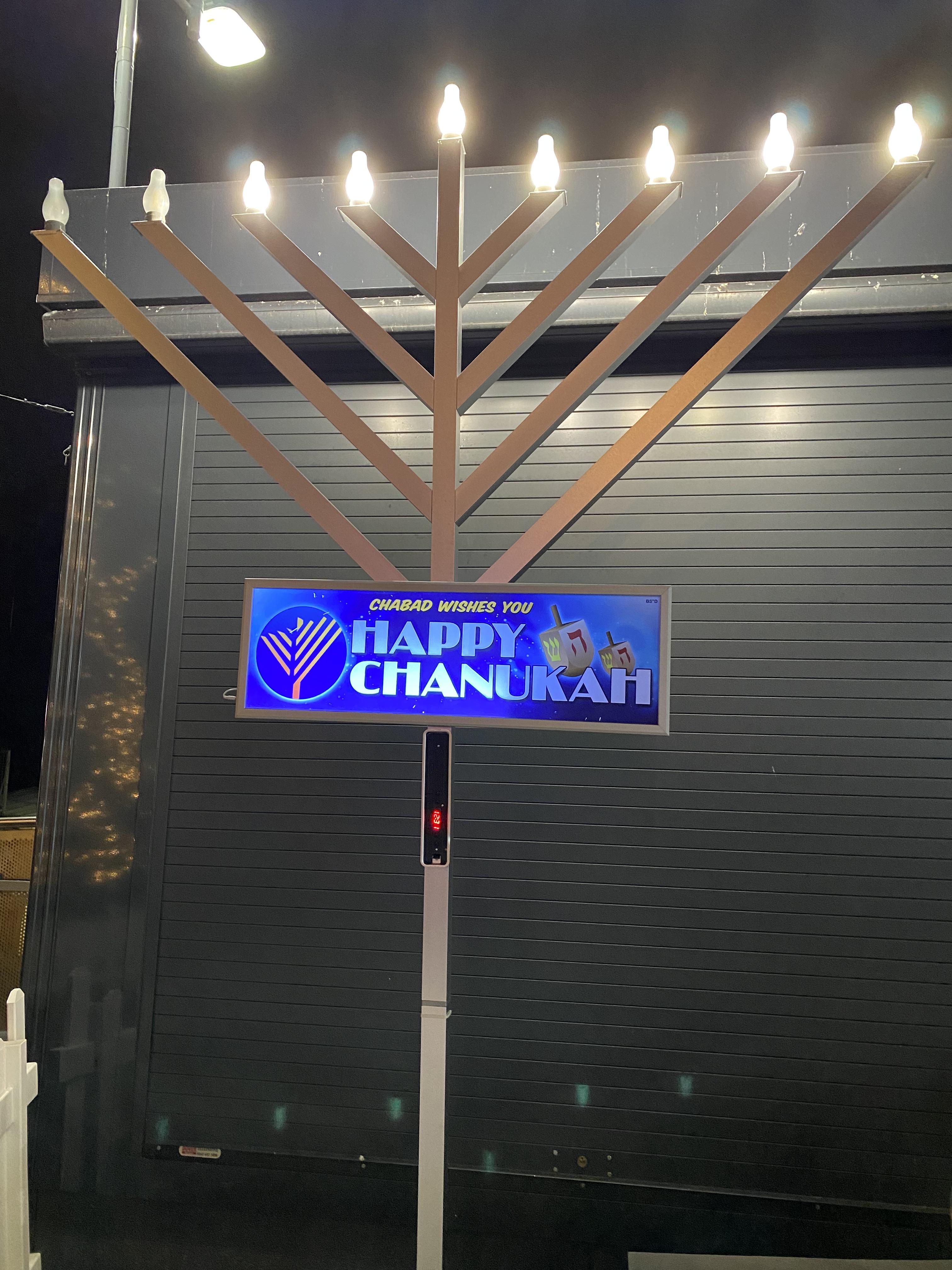
Hanukkah — "Dedication" — is the historically latest of the major Jewish feasts and the only one not commanded in the Torah. It commemorates events of the second century BCE, between the closing of the Hebrew Bible and the opening of the New Testament. The feast is keyed to the rededication of the Jerusalem Temple in 164 BCE, three years after its desecration by the Seleucid king Antiochus IV Epiphanes — the king whom the book of Daniel calls "the little horn" and "the contemptible person" (Daniel 7:8, 11:21).
The historical events are recounted in 1 and 2 Maccabees, both preserved in the Greek Septuagint (and so in the Catholic and Orthodox Old Testament canons, though not in the Jewish Tanakh or the Protestant Old Testament). Antiochus, attempting to Hellenize Judaea, prohibited the practice of Judaism in 167 BCE: circumcision was made a capital offense, Sabbath observance was outlawed, and the Temple was rededicated to Zeus Olympios with the sacrifice of a pig on the altar (1 Maccabees 1:54–61). The revolt began when an aged priest named Mattathias killed a Jew who agreed to sacrifice to a pagan god in the village of Modein (1 Maccabees 2). Mattathias's son Judah, called Maccabee ("the hammer"), led the rebellion. After three years of guerrilla warfare against far larger Seleucid armies, the Maccabees retook Jerusalem in 164 BCE. They cleansed the Temple, built a new altar (the old one having been profaned), and on 25 Kislev — three years to the day after the original desecration — they rededicated the sanctuary with eight days of celebration (1 Maccabees 4:36–59). The eight days were modeled on Sukkot, which the Maccabees had been unable to keep that autumn while still at war; 2 Maccabees 10:6 calls Hanukkah "a Sukkot of Kislev."
The rabbinic tradition adds a complementary narrative. The Babylonian Talmud (Shabbat 21b) records: when the Maccabees entered the Temple, they found that the Greeks had defiled all the oil for the menorah except for one small cruse that still bore the unbroken seal of the high priest. The cruse held only enough oil for one day, but it burned miraculously for eight — long enough for new oil to be prepared. The eight nights of Hanukkah commemorate this miracle of the oil. The Maccabean narrative emphasizes military and political deliverance; the Talmudic narrative emphasizes a quieter miracle of providence. Both have shaped the way the feast is kept.
The lighting of the Hanukkah menorah is the central observance. Eight candles in a row, plus the shamash (the "servant" candle used to light the others, set apart at a different height). One candle on the first night, two on the second, and so on through eight on the final night. The blessings are recited ("Blessed are you, Lord our God... who performed miracles for our ancestors in those days at this season"), and the candles must be placed at a window or doorway so that the miracle is publicized to the wider world — pirsumei nissa, the publicizing of the miracle, is the technical halakhic principle.
For Christian readers, Hanukkah is the only Jewish feast that the New Testament explicitly stages a scene at. John 10:22 sets the great Bread of Life and Good Shepherd discourses in the context of the Feast of Dedication, with Jesus walking in Solomon's Portico of the Temple. The chronology is precise: this is winter, the Temple is in use, the miraculous restoration of the Temple by the Maccabees is the historical backdrop. The Jews around Jesus ask, "How long will you keep us in suspense? If you are the Christ, tell us plainly" (John 10:24) — the messianic question raised at the feast that commemorates the great messianic deliverance of the Maccabees. Jesus's answer drives the narrative toward the climax of John 10: "I and the Father are one" (10:30). Some pick up stones; others believe. The feast of the Maccabean cleansing of the Temple frames a scene in which Christ, who in the Johannine theology is himself the new Temple (John 2:19–22), reveals his identity. Hanukkah is the messianic feast that points forward to him — and that the Jewish people, then and now, keep with candles in the windows in the darkest weeks of the year, publicizing the miracle.
Scriptural Basis
- 1 Maccabees 1–4 — the persecution under Antiochus and the Maccabean revolt
- 2 Maccabees 10:1–8 — the rededication of the Temple
- Daniel 8 and 11 — read by the Maccabees as prophetic of Antiochus's desecration ("the abomination that makes desolate," Daniel 11:31)
- Babylonian Talmud, Shabbat 21b — the rabbinic narrative of the cruse of oil that burned for eight days
- John 10:22–39 — the only New Testament passage explicitly set at Hanukkah ("the Feast of Dedication," John 10:22): Jesus walking in Solomon's Portico, the "are you the Christ?" question, the great "I and the Father are one" claim
Observance
- Lighting of the Hanukkah menorah (chanukiyah) for eight nights — one candle the first night, adding one each night, with the shamash (servant candle) used to kindle the others
- Recital of the blessings (Baruch atah Adonai... she'asah nissim — "who performed miracles") and the song Maoz Tzur ("Rock of Ages," 13th century)
- The candles must be placed where they are publicly visible — "to publicize the miracle" (pirsumei nissa)
- Special insertions in the prayers: Al haNissim ("For the miracles") in the Amidah and in Birkat haMazon
- Reading of the priestly offerings of Numbers 7 in synagogue (the original dedication offerings of the Tabernacle, applied typologically to the rededication of the Temple)
- Eating of foods fried in oil (latkes, sufganiyot) to commemorate the cruse of oil
- Games with the dreidel (sevivon) bearing the letters nun, gimmel, hei, shin (Nes Gadol Hayah Sham — "a great miracle happened there")
Citations & Further Reading
- 1 Maccabees 1–4 and 2 Maccabees 10:1–8 (the historical narrative)
- Babylonian Talmud, Tractate Shabbat 21b (the miracle of the oil)
- Mishnah, Tractate Bava Kamma 6:6 (the placement of the Hanukkah lights)
- Megillat Antiochus (medieval Aramaic scroll narrating the Maccabean revolt)
- Maimonides, Mishneh Torah, Hilkhot Hanukkah
- Josephus, Antiquities 12.7.6–7 (the only ancient Jewish historical account outside Maccabees)
- John 10:22–39 — the New Testament's only explicit Hanukkah passage