Lent
Quadragesima (Latin) / Tessarakoste (Greek)
Forty days of fasting, prayer, and almsgiving in preparation for Easter. Pre-Nicene in origin, fixed in shape by the early fourth century, structured on Christ's forty days in the wilderness and the catechumenal preparation for baptism at the Easter Vigil.
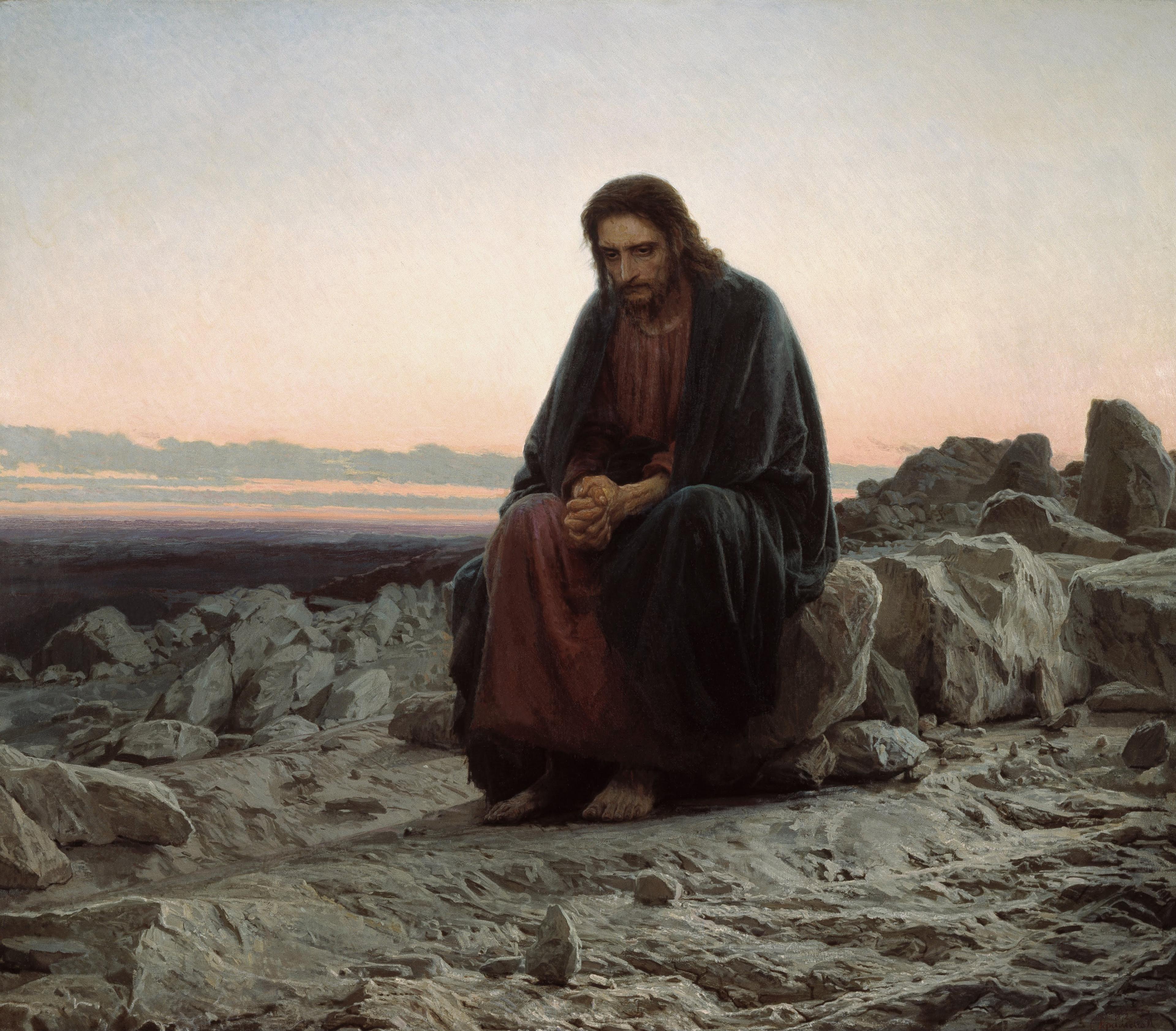
Lent is the church's forty-day preparation for Easter, modeled on Christ's forty-day fast in the wilderness (Matthew 4) and behind that on the forty days of Moses on Sinai (Exodus 34) and Elijah's journey to Horeb (1 Kings 19). The number forty is biblically the duration of a testing, a transformation, a passage from one condition into another, and the church's Lenten season is patterned on all three.
The pre-Nicene church did not yet have a uniform forty-day Lent. Irenaeus's letter to Pope Victor about the Quartodeciman controversy, preserved by Eusebius (Hist. Eccl. 5.24.12–13), describes the diverse pre-paschal fasts of the second century: some fast one day, some two, some forty hours, some longer. The Quadragesima — the forty-day Lent — is first clearly visible in the early fourth century. Canon 5 of the Council of Nicaea (325) mentions it as already established. Athanasius's Festal Letters from the 330s and 340s presuppose it. Cyril of Jerusalem's Catechetical Lectures (c. 350) are a complete cycle of Lenten instruction for catechumens preparing for baptism at the Easter Vigil — and that catechumenal preparation is the original pastoral logic of the season.
The forty days are counted differently East and West. The Western reckoning counts forty fasting days from Ash Wednesday to Holy Saturday, excluding the Sundays (which are commemorations of the Resurrection and so cannot themselves be fasting days). The Eastern reckoning counts forty consecutive days from Clean Monday through the Friday before Lazarus Saturday, with Lazarus Saturday and Holy Week observed as a separate fast that intensifies the Lenten one. Both reckonings preserve the number forty without violating the Sunday rule.
The threefold Lenten discipline — fasting, prayer, almsgiving — is the structure laid out by Christ himself in Matthew 6, which the Roman lectionary appoints as the Gospel for Ash Wednesday. The Eastern fast is the more demanding by the standards of any modern Western church: no meat, fish (except on certain feast days), eggs, dairy, oil, or wine through the entire forty days. The medieval Western fast was nearly as strict; the modern Roman discipline reduces it to two prescribed fast days (Ash Wednesday and Good Friday) and the obligation to abstain from meat on Fridays, with the personal Lenten discipline left to each Christian's prudent choice. Whatever the level of strictness, the principle is consistent: bodily restraint clears the heart for prayer, and the resources freed by fasting are turned outward as almsgiving.
Ash Wednesday in the West and Clean Monday in the East mark the beginning of the season. The Western imposition of ashes — "Remember that you are dust, and to dust you shall return" (Genesis 3:19), or "Repent and believe the gospel" (Mark 1:15) — is one of the most direct sacramental gestures in the liturgical year. The Eastern Clean Monday begins with Forgiveness Vespers on the preceding Sunday evening, where every member of the community asks forgiveness of every other. The two practices express the same theological truth from different angles: Lent begins with the recognition that we are mortal and that we have sinned, and it moves toward Pascha — the Christian Passover, the passage from death to life. Without Lent, Easter is a quickly-passing Sunday; with Lent, Easter is what it was meant to be — the great paschal feast for which the entire year aspires.
Scriptural Basis
- Exodus 24:18, 34:28 — Moses on Sinai for forty days
- 1 Kings 19:8 — Elijah's forty-day journey to Horeb
- Matthew 4:1–11, Mark 1:12–13, Luke 4:1–13 — Christ's forty days in the wilderness
- Joel 2:12–13 — "Return to me with all your heart, with fasting, with weeping, with mourning"
- Isaiah 58:5–9 — the true fast that the Lord chooses
- 2 Corinthians 6:1–10 — "behold, now is the acceptable time"
Observance
- Fasting — historically one meal a day, no meat or animal products (the Eastern church still follows close to this discipline)
- Prayer — additional liturgical offices (the Liturgy of the Presanctified Gifts in the East, daily Mass in many Western traditions)
- Almsgiving — the third leg of the Lenten triad (Matthew 6:1–18 is read on Ash Wednesday)
- Ash Wednesday in the West — the imposition of ashes with the words "Remember that you are dust"
- Sundays are not counted in the forty days (each Sunday is a "little Easter")
- Catechumens prepare for baptism at the Easter Vigil — Lent's original pastoral purpose
Citations & Further Reading
- Council of Nicaea (325), Canon 5
- Irenaeus to Pope Victor, preserved in Eusebius, Historia Ecclesiastica 5.24.12–13
- Athanasius, Festal Letters (annual Lenten letters from Alexandria, 329–373)
- Cyril of Jerusalem, Catechetical Lectures (c. 350)
- Egeria, Itinerarium 27–28 (the Jerusalem Lent, c. 384)
- Nicholas Russo, "The Early History of Lent," Center for Christian Ethics (Baylor, 2013)