Anglicanism
The Via Media
The English Reformation. Episcopal order, the Book of Common Prayer, the Thirty-Nine Articles, and Richard Hooker's via media — Catholic in order, Reformed in doctrine, comprehensive in spirit.
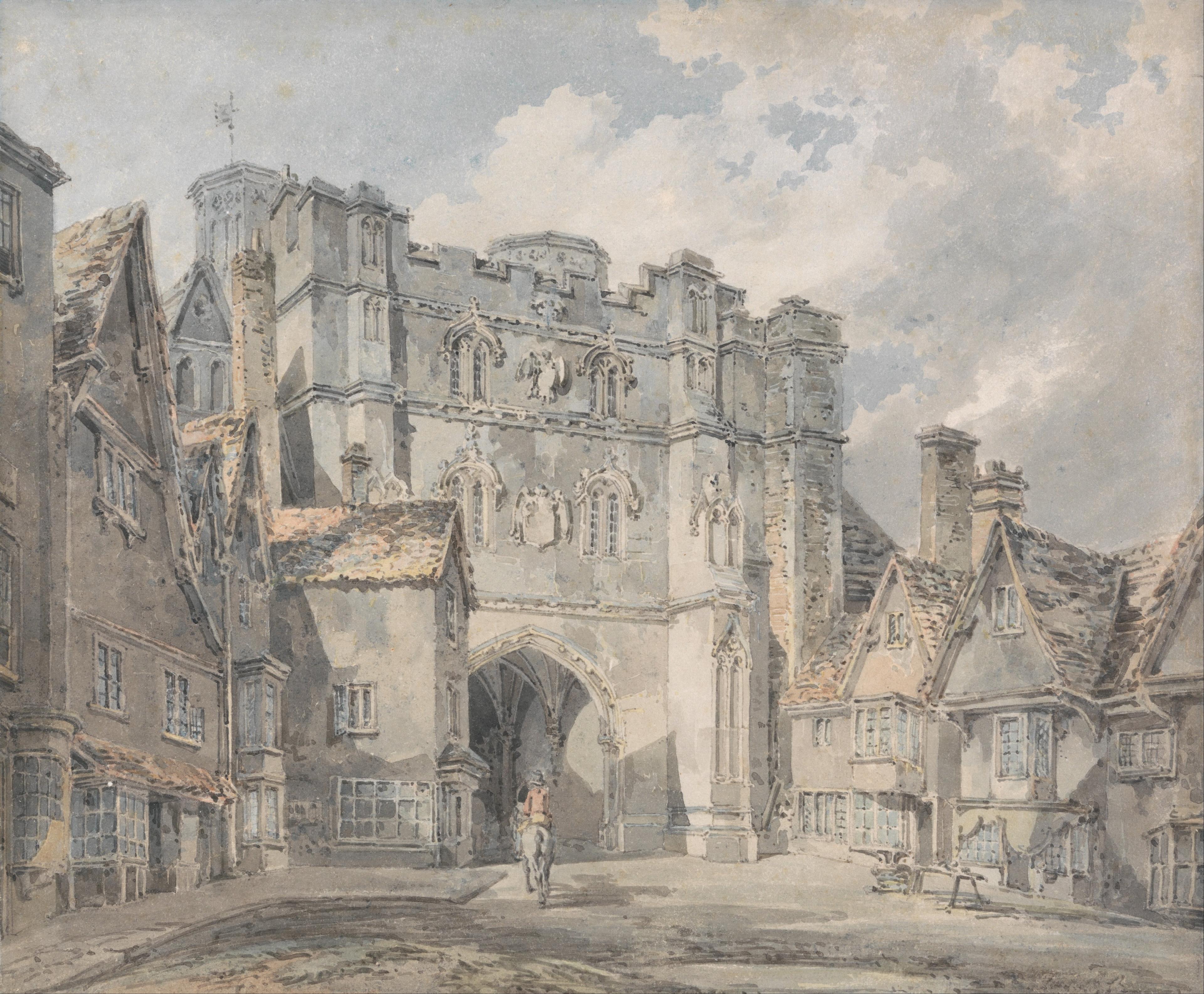
Anglicanism is the religious tradition that emerged from the English Reformation under the Tudor monarchs. Its political starting point is the Act of Supremacy of 1534, which declared Henry VIII (not the pope) the supreme head of the Church of England. Its theological substance was given by Thomas Cranmer, Archbishop of Canterbury from 1533, in the form of the Book of Common Prayer (1549, 1552, with the later 1559 and 1662 revisions) and the Forty-Two Articles (1553, reduced to the Thirty-Nine Articles in 1571). Under Edward VI the Church of England became Reformed in doctrine. Under Mary I it was forcibly returned to Rome. Under Elizabeth I the Elizabethan Settlement of 1559 produced the via media — the deliberate middle path between Roman Catholic order and Reformed doctrine that has defined Anglican self-understanding ever since.
The theological articulation of Anglican identity is Richard Hooker's Of the Laws of Ecclesiastical Polity, the eight books of which appeared between 1593 and 1597 (with two posthumous). Hooker argued against both Roman Catholic and Puritan critics that Anglican worship and church order were not contrary to Scripture (against the Puritan claim) and that Scripture, properly read, established neither presbyterian government nor papal supremacy (against the Catholic claim). The Anglican appeal to Scripture, Tradition, and Reason as the threefold authority — sometimes loosely called the "Anglican triad" — comes from Hooker.
The Book of Common Prayer is the lasting Anglican contribution to Christian worship. Its rhythms — Morning and Evening Prayer, the Collects, the Eucharistic Prayer, the Litany — have shaped Anglican spirituality from the 16th century to the present. The English of the Prayer Book stands alongside the King James Bible as the foundational liturgical-literary inheritance of English-speaking Christianity. The 1662 Book of Common Prayer is still the legal liturgical standard of the Church of England.
Globally, Anglicanism is organized as the Anglican Communion — approximately 42 autonomous provinces in communion with each other through the See of Canterbury. The communion is currently undergoing serious strain over the disagreement between the Global South provinces (theologically conservative) and the Western provinces (predominantly Northern hemisphere liberalism on questions of sexuality and ordination). Worldwide Anglican membership is approximately 85 million, with the largest provinces in Nigeria, Uganda, Kenya, and other African nations.
Distinctives
- Episcopal government in apostolic succession
- The Book of Common Prayer as liturgical and doctrinal anchor
- Scripture, Tradition, and Reason as the threefold authority
- Comprehensive ecclesiology — Catholic and Reformed together
- Via media — a deliberate middle path between Rome and Geneva
Key Figures
- Thomas Cranmer
- Richard Hooker
- John Wesley (originally Anglican)
- John Henry Newman (before his conversion to Rome)
- John Stott
Defining Documents
- The Book of Common Prayer (1549, 1552, 1559, 1662)
- The Thirty-Nine Articles of Religion (1571)
- Richard Hooker, Of the Laws of Ecclesiastical Polity (1593–1597)
- The Lambeth Quadrilateral (1888)