Non-denominational / Independent Evangelical
Congregational, Contemporary, Anti-Confessional
The fastest-growing slice of American Christianity — and the hardest to define. Independent, congregationally-autonomous, anti-denominational by intention. An ecclesiology rather than a theology — most non-denominational churches function as low-church evangelical Protestants without being bound to any historic confession.
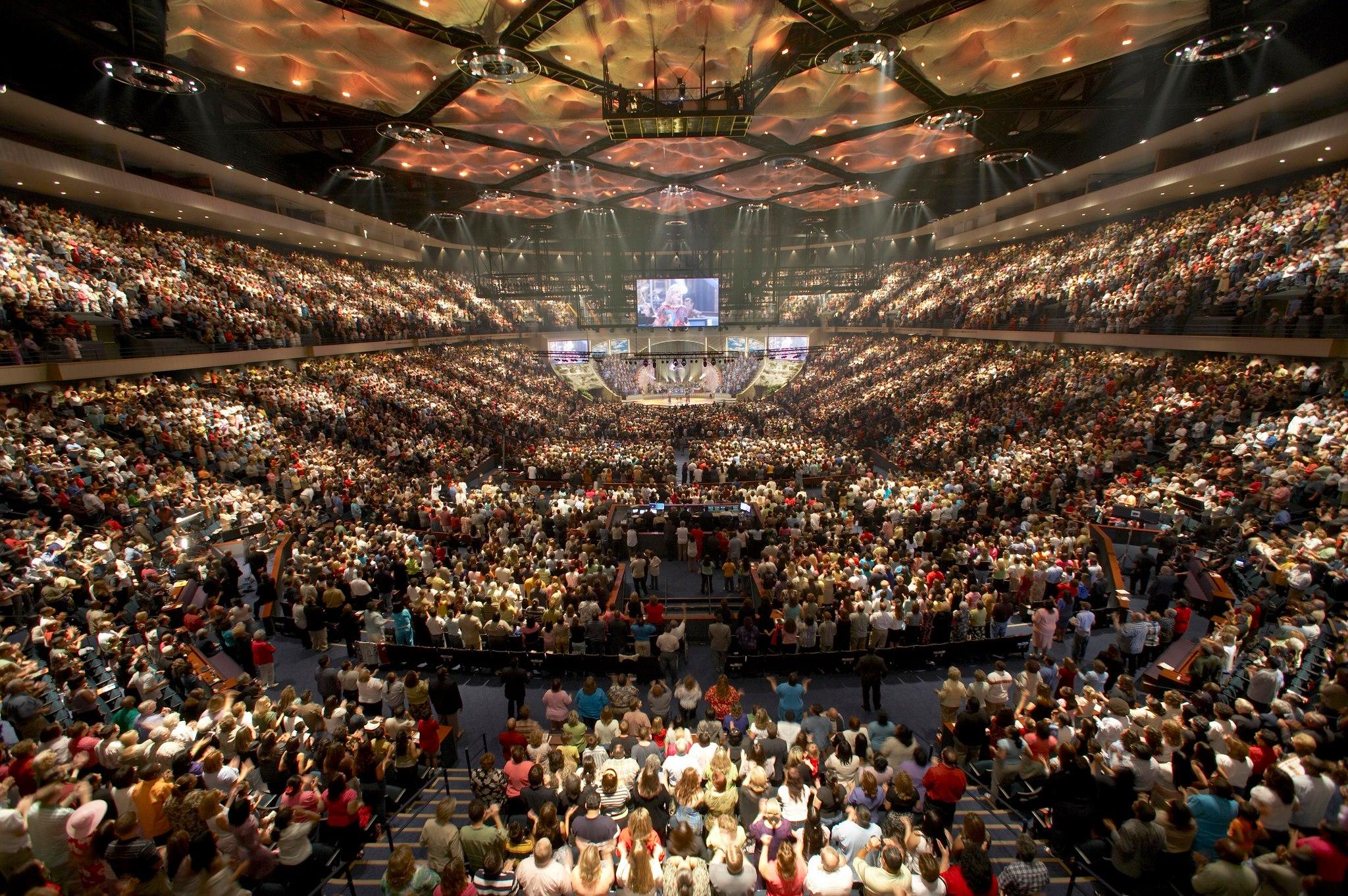
Non-denominational Christianity is the hardest tradition in this library to define, because by intention it refuses confessional definition. The term describes a posture toward church structure — independent, congregationally autonomous, anti-denominational — rather than a unified theological position. Most non-denominational churches function as low-church evangelical Protestants, but they vary widely on the sacraments, on baptism (some immerse believers, some accept any prior baptism), on eschatology, on women in ministry, and on the cessation or continuation of the spiritual gifts. The tradition is honest about this: the great selling point of non-denominationalism is precisely that it does not require its adherents to sign onto a historic confession.
The deep roots of the movement reach back to the 19th-century Restoration Movement (Stone-Campbell) and to fundamentalist independent Baptist and Bible-church traditions, which had long held a congregationalist suspicion of denominational hierarchy. But the modern non-denominational movement coalesces in the late 1960s and early 1970s, accelerates through the 1980s and 1990s, and is now — according to the 2014 Pew Religious Landscape Study and subsequent updates — the fastest-growing American Protestant identity. Two streams converge in the founding moment. In Southern California, the Jesus Movement of the late 1960s drew thousands of hippies, surfers, and disenchanted young people into Christian faith. Chuck Smith's Calvary Chapel in Costa Mesa, beginning in 1965 with a tiny congregation, became the institutional home of the movement and the template for thousands of subsequent Calvary Chapels worldwide. In Illinois, Bill Hybels founded Willow Creek Community Church in a rented theater in 1975 with the deliberate strategy of building a church that would appeal to people who had left the denominations of their childhood — the seeker-sensitive model that would shape American evangelical megachurch culture for the next forty years.
Theologically, most non-denominational churches share a common cluster of evangelical convictions: the inspiration and authority of Scripture, the deity and bodily resurrection of Christ, salvation by grace through faith, the personal new birth, and the urgency of evangelism. Many subscribe to a brief in-house "Statement of Faith" that reads as a condensed broad evangelicalism — often resembling the Lausanne Covenant of 1974, or the National Association of Evangelicals' Statement of Faith, without binding subscription to any of them. The Bible is treated as the sole authority; historic creeds (the Apostles', the Nicene) are sometimes recited in worship but are not confessional standards.
Ecclesiologically, the defining feature is independence. The local church is autonomous: it owns its property, hires and disciplines its own staff, and joins or leaves any voluntary network at its own discretion. Larger non-denominational networks (Calvary Chapel, the Vineyard, the Acts 29 church-planting network, the Association of Related Churches) function more like franchises than denominations — providing brand identity, theological orientation, and church-planting support without exercising authority over the local congregation. Governance within the local church is typically a board of elders or a senior-pastor-with-staff model; few non-denominational churches have a formal congregational vote on doctrine or discipline.
Worship is contemporary, informal, and accessible. The musical idiom is band-led praise and worship (the Jesus Movement gave birth to Maranatha! Music, which set the pattern; Hillsong, Bethel, Elevation, and Passion music dominate the contemporary version). The preaching is typically expository or topical-relational, in a conversational register, often supported by stage design, lighting, and video. The sacraments are observed — almost always two, baptism and the Lord's Supper — but with relatively low theological emphasis. The Lord's Supper is generally treated as a memorial, observed monthly or less frequently in most congregations.
Pew's 2014 study counted approximately 35 million non-denominational Christians in the United States — making them collectively larger than every Protestant denomination except the Southern Baptist Convention, and likely now larger than the SBC. The Hartford Institute for Religion Research estimates that approximately 13% of American churchgoers now attend non-denominational congregations, and the National Congregations Study has tracked steady growth in non-denominational identification since the 1990s. Globally the numbers are harder to count: the same congregational-autonomy logic that makes the tradition popular makes it nearly uncountable. The honest summary is that non-denominationalism is a 20th- and 21st-century American ecclesiological innovation — not a unified theological tradition — that has reshaped the religious landscape of the Global North evangelical world.
Distinctives
- Explicit rejection of denominational structure — each local church autonomous
- Primacy of Scripture without binding subscription to any historic creed or confession
- Contemporary worship music and low-church liturgy
- Seeker-friendly evangelism and accessible preaching
- Lay leadership culture, with small-group ministry as a structural norm
- Eclecticism — most non-denominational churches function as low-church evangelical Protestants but vary widely on baptism, sacraments, eschatology, and gender roles
Key Figures
- Chuck Smith (Calvary Chapel Costa Mesa, the Jesus Movement)
- John Wimber (Vineyard movement)
- Bill Hybels (Willow Creek Community Church, seeker-sensitive model)
- Rick Warren (Saddleback Church, The Purpose Driven Church)
- Andy Stanley (North Point Community Church)
Defining Documents
- Rick Warren, The Purpose Driven Church (1995)
- Bill Hybels & Lynne Hybels, Rediscovering Church (1995)
- The Lausanne Covenant (1974) — a broad evangelical anchor for many non-denominational congregations
- Calvary Chapel Distinctives (Chuck Smith) and the Vineyard Statement of Faith — typical examples of locally-authored confessional minimums