Eastern Orthodoxy
The Church of the Seven Councils
The Eastern half of the historic Catholic church — the church of the seven councils, the Greek Fathers, and the icons. Salvation conceived as theosis: real participation in the divine life.
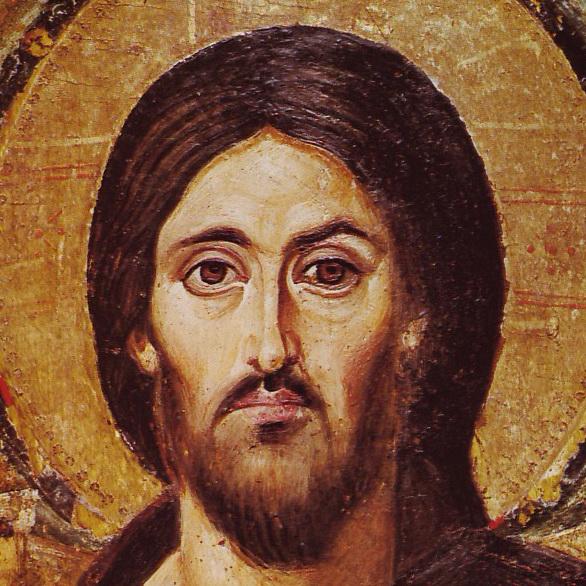
Eastern Orthodox Christianity is the continuous tradition of the Greek-speaking and Slavic-speaking churches that traced its origins to the apostles and the patriarchates of Constantinople, Antioch, Alexandria, and Jerusalem. The first thousand years of Christianity were lived in formal communion between Rome and these Eastern sees, and the seven ecumenical councils — from Nicaea (325) to Nicaea II (787) — were the work of a single, undivided Church. Eastern Orthodoxy locates its self-understanding in faithful continuity with that conciliar tradition.
The formal break with Rome came in 1054 with the mutual excommunications between the papal legate Cardinal Humbert and the Patriarch of Constantinople, Michael Cerularius. The deeper causes were theological (the filioque clause added to the creed in the West, the question of papal supremacy), liturgical (Eastern and Western liturgical practice had diverged), and geopolitical (the Sack of Constantinople in 1204 by Western crusaders sealed the schism more deeply than 1054). The two halves of the church have remained separated ever since, with the most serious reunion attempts (Lyon 1274, Florence 1439) failing to be received by the Orthodox laity.
Theologically, Orthodox Christianity emphasizes the mystery of God — what the tradition calls apophatic theology, the recognition that the divine essence is unknowable, and that we know God only through his energies (an Orthodox distinction sharpened by Gregory Palamas in the 14th century). Salvation is described not primarily in juridical terms (forgiveness of sins) but in participatory terms (theosis, divinization): becoming, by grace, what God is by nature. The icons are not decoration — they are theological statements that the Incarnation made matter capable of carrying the divine, and the iconoclast controversy of the 8th and 9th centuries was settled at Nicaea II in favor of icons precisely on Christological grounds.
Ecclesiologically, Orthodoxy is conciliar rather than papal. The Ecumenical Patriarch of Constantinople holds a primacy of honor (primus inter pares — first among equals), but does not exercise jurisdiction over the other autocephalous churches. Today there are roughly fourteen to seventeen autocephalous Orthodox churches (the precise number depends on contested recognitions, such as the Ukrainian church). Worldwide membership is approximately 220 million.
Distinctives
- Authority of the seven ecumenical councils (Nicaea I through Nicaea II)
- Theology grounded in apophatic / mystical tradition
- Theosis — salvation as participation in the divine energies
- Veneration of icons as windows into heaven
- Conciliar ecclesiology — no single supreme bishop
- Married priesthood (bishops are drawn from monastics)
Key Figures
- Athanasius of Alexandria
- Basil the Great & the Cappadocians
- John Chrysostom
- Maximus the Confessor
- John of Damascus
- Gregory Palamas
Defining Documents
- The Nicene-Constantinopolitan Creed (381)
- The decrees of the seven ecumenical councils
- The Confession of Dositheus (1672, sometimes called the Eastern Orthodox confession)