Pentecostalism
Baptism in the Holy Spirit
The 20th century's fastest-growing Christian movement. Born at Azusa Street in 1906 from the Holiness tradition, marked by baptism in the Spirit, tongues, divine healing, and a posture of expectant openness to God's immediate work.
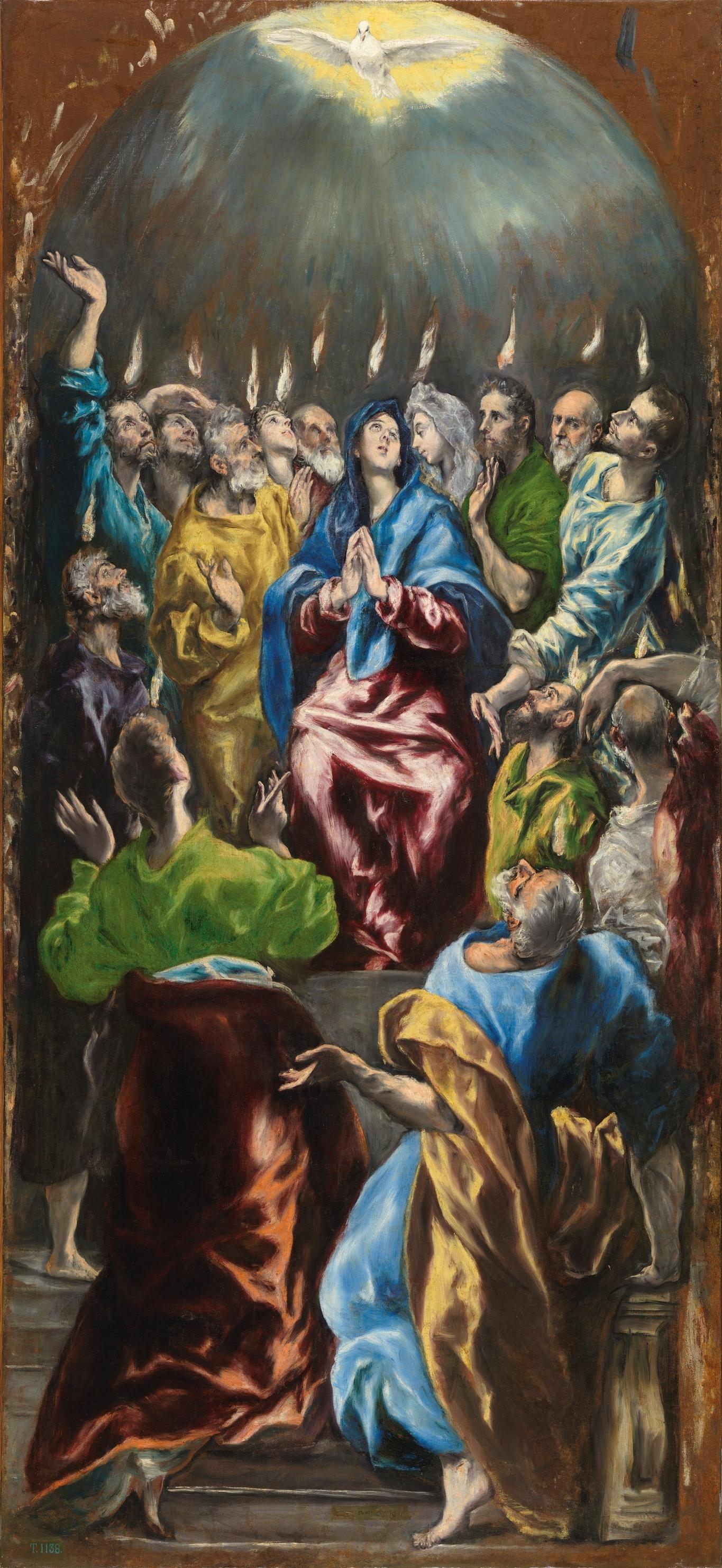
Pentecostalism was born in two events that the movement remembers as its founding moments. In Topeka, Kansas, on January 1, 1901, a student at Charles Parham's Bethel Bible School named Agnes Ozman spoke in tongues after Parham's group had set themselves to seek the "baptism in the Holy Spirit" they believed Acts 2 promised. Five years later, the African-American preacher William J. Seymour — who had been a student in Parham's Houston school — led the Azusa Street Revival in Los Angeles from April 1906 through approximately 1909. The revival on Azusa Street became the genuine birthplace of the global Pentecostal movement, drawing visitors from around the world who took the Pentecostal experience home with them.
The theological substance of Pentecostalism is its claim that the spiritual gifts of the New Testament — tongues, prophecy, healing, miracles — did not cease at the close of the apostolic age but remain available to the Church today. The cessationist position (held by much of historic Reformed and Lutheran Protestantism) is rejected. The "baptism in the Holy Spirit" is understood as a definite, post-conversion experience of empowering — in Classical Pentecostalism evidenced by speaking in tongues, though the Charismatic movement (Pentecostal experience within historic denominations from the 1960s onward) and the Third Wave (1980s-onward in evangelical churches) have held to the substance while relaxing the requirement of tongues as initial evidence.
Azusa Street's most theologically significant feature was its racial integration. Seymour, a black preacher, led a revival where blacks, whites, and Latinos worshipped together — at a moment when segregation was the structural law of American religious life. Frank Bartleman, an early eyewitness, famously wrote that "the color line was washed away in the blood." The integration did not last; American Pentecostalism quickly re-segregated, with white and black Pentecostal denominations developing separately for most of the 20th century. But the founding moment of the movement was, briefly, interracial in a way that almost no other early-20th-century American Christianity was.
Pentecostalism has been the 20th century's fastest-growing Christian movement and is currently the fastest-growing branch of Christianity worldwide. Classical Pentecostalism (Assemblies of God, Church of God in Christ, Foursquare, Pentecostal Holiness, and dozens more) numbers approximately 280 million. If charismatic Christianity in the historic denominations is counted, the broader Renewal movement numbers approximately 640 million worldwide — about one-quarter of all Christians. The center of gravity of Pentecostal Christianity is no longer the United States but the Global South, with major Pentecostal churches in Brazil, Nigeria, Kenya, South Korea, and rapidly across sub-Saharan Africa.
Distinctives
- Baptism in the Holy Spirit as a distinct experience after conversion
- Speaking in tongues as initial evidence (in Classical Pentecostalism)
- Continuation of all the spiritual gifts (charismata)
- Divine healing as part of the atonement
- Imminent return of Christ (premillennial eschatology)
- Worship marked by emotional expressiveness and freedom
Key Figures
- Charles Parham (Topeka, 1901)
- William J. Seymour (Azusa Street, 1906)
- Aimee Semple McPherson
- Oral Roberts
- David du Plessis (Pentecostal ecumenism)
Defining Documents
- The Apostolic Faith Magazine (Azusa Street, 1906–1908)
- The Statement of Fundamental Truths (Assemblies of God, 1916, revised)
- Pentecostal Confessions of Faith (varying — Pentecostalism is more experiential than confessional)