Restoration Movement
No Creed but Christ, No Book but the Bible
The early-19th-century American frontier movement that sought to restore primitive New Testament Christianity by dissolving denominational labels altogether. Three streams emerged: the Churches of Christ, the Independent Christian Churches, and the Disciples of Christ.
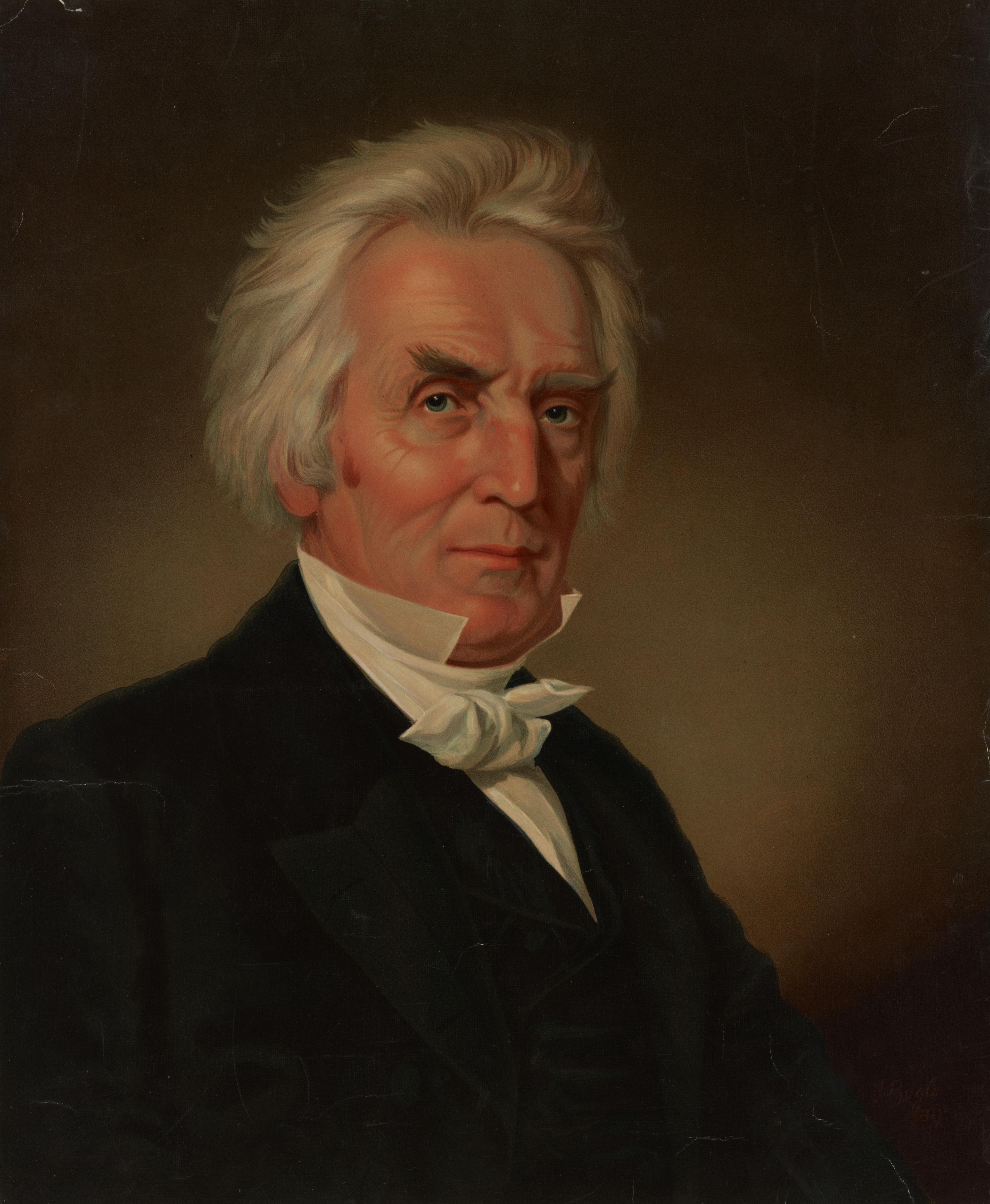
The Restoration Movement (also called the Stone-Campbell Movement, after its two founding streams) emerged on the early-19th-century American frontier as a deliberate attempt to dissolve denominational distinctions altogether and restore the church of the New Testament. Two independent streams converged. In Kentucky, the Presbyterian minister Barton W. Stone — convicted by the great Cane Ridge revival of 1801 that the Presbyterian system was incompatible with such an outpouring of the Spirit — led six ministers in dissolving the Springfield Presbytery in 1804 with the famous "Last Will and Testament," requesting only to be called "Christians." In western Pennsylvania, the Scotch-Irish Seceder Presbyterian Thomas Campbell published his Declaration and Address in 1809, calling for the union of all Christians on the basis of the New Testament alone, with no human creeds. His son Alexander Campbell — twenty-one years old, freshly arrived from Glasgow — joined the work and became its principal theologian.
The two streams discovered each other in the 1820s. Stone's "Christians" and the Campbells' "Disciples" (sometimes called "Reformers") shared a fundamental conviction: that the divisions of Christendom were sinful, that the cure was the abolition of all human creeds, and that the basis for Christian unity was a return to the explicit teachings of the New Testament. They formally merged on December 31, 1831 in Lexington, Kentucky, with the two leaders publicly committing their congregations to each other. The combined movement spread rapidly across the trans-Appalachian frontier, growing from perhaps 22,000 in 1832 to nearly 200,000 by 1860. By 1906 the U.S. Religious Census counted approximately 1.1 million Restoration Movement adherents in the United States — a major American Protestant body within a single century.
Theologically, the Restoration Movement holds to what the Campbells called the "ancient gospel" — what Walter Scott popularized as the "five-finger gospel": faith, repentance, confession, baptism, and the gift of the Holy Spirit. Baptism is by immersion, of believers only, and is connected with the remission of sins (the Movement here departed from the wider Baptist tradition, which generally treats baptism as an ordinance subsequent to forgiveness). The Lord's Supper is celebrated weekly in every Restoration Movement congregation — a distinguishing practice that derives from Alexander Campbell's reading of Acts 20:7. Church government is rigorously congregational — there is no denominational hierarchy in the strict Restoration Movement bodies, though some streams have developed cooperative associations.
The Movement has divided into three principal streams. The first division, finalized by 1906, separated the Churches of Christ (which generally reject instrumental music in worship, holding to a strict a cappella tradition derived from the regulative principle, and reject extra-congregational organizations) from the Disciples of Christ (which retained instruments and developed a denominational structure). The second division, finalized in 1968, separated the Disciples of Christ proper — which became the Christian Church (Disciples of Christ), a mainline Protestant denomination with full ecumenical participation — from the Independent Christian Churches / Churches of Christ, which retained the original congregational autonomy and a more conservative evangelical theology while preserving the use of instruments.
Worldwide adherents of the three streams together are approximately 7 million. The Churches of Christ are concentrated in the U.S. South (especially Texas and Tennessee), with significant overseas missions in Africa and Asia. The Independent Christian Churches and Churches of Christ are concentrated in the American Midwest and West. The Disciples of Christ are smaller but ecumenically active. The Movement's signature contribution to American religion has been its insistence that Christian unity is achievable — and that it begins not with the negotiation of differences but with the willingness to set aside everything that is not explicitly New Testament. James A. Garfield, the twentieth president of the United States, was a Disciples preacher before he entered politics; Lyndon Johnson grew up in the Churches of Christ. The Movement's quiet shaping of American religious culture has been larger than its denominational numbers would suggest.
Distinctives
- Restorationism — the recovery of New Testament Christianity stripped of post-apostolic accretions
- Believer's baptism by immersion for the remission of sins
- Weekly observance of the Lord's Supper (open to all baptized believers)
- Congregational autonomy with no denominational hierarchy
- Rejection of human creeds — "where the Scriptures speak, we speak; where the Scriptures are silent, we are silent"
- Christian unity as a foundational priority — "Christians only, but not the only Christians"
Key Figures
- Barton W. Stone (1772–1844) — Cane Ridge revival, Springfield Presbytery
- Thomas Campbell (1763–1854) — Declaration and Address (1809)
- Alexander Campbell (1788–1866) — primary theologian and organizer
- Walter Scott (1796–1861) — evangelist of the "five-finger gospel"
- James A. Garfield (1831–1881) — Disciples preacher who became 20th U.S. president
Defining Documents
- Barton W. Stone et al., The Last Will and Testament of the Springfield Presbytery (1804)
- Thomas Campbell, Declaration and Address (1809)
- Alexander Campbell, The Christian System (1835)
- Walter Scott, The Gospel Restored (1836)
- Alexander Campbell vs. Robert Owen, Public Debate on Christianity (1829)