Arsenius the Great
Father of the Emperors, Father of the Desert
A Roman senator and tutor to the future emperors Arcadius and Honorius, who heard a voice tell him "Arsenius, flee, be silent, dwell in stillness" — and walked out of the imperial palace into the Egyptian desert. He lived in Scetis for forty years.
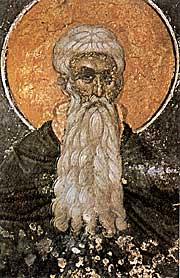
“I have often repented of having spoken, but never of having kept silence.”
— Arsenius the Great
Arsenius was born to a Roman senatorial family around 354 and educated as a deacon of the Roman church. Around 383, when Theodosius I sought a Latin-speaking tutor of impeccable character and learning to train his young sons Arcadius and Honorius (the future emperors of East and West respectively), Pope Damasus recommended Arsenius. He spent the next eleven years at the imperial court in Constantinople as the children's tutor and as a senator of the empire — second in rank to the emperor himself, by some sources. His position was as elevated as a layman's could be in the late Roman state.
The conversion narrative is one of the most striking in the Apophthegmata. While still at court, Arsenius prayed: "Lord, lead me into the way of salvation." A voice came to him: "Arsenius, flee from men and you will be saved." He left the court secretly, sailed to Egypt around 394, and presented himself as a novice to the abbas of Scetis. When he was told to prostrate himself before the elders, he obeyed without revealing his identity. He prayed the same prayer again. A voice came again: "Arsenius, flee, be silent, dwell in stillness — these are the roots of sinlessness." The three commands — fuge, tace, quiesce — became the spiritual program of his desert life.
Arsenius spent forty years at Scetis. He cultivated silence with a discipline that astonished even the other desert monks: he would not speak even when asked questions unless prompted three times. When visitors came, he was known to weep and to ask the elders to send them away. He refused to read the writings of the philosophers and the rhetoricians he had memorized in his youth — when a brother asked him, "How is it that you, with your education, ask an Egyptian peasant about your thoughts?" Arsenius answered: "I have indeed been taught Latin and Greek, but I have not yet learned the alphabet of this peasant." The desert had become his school, and the unlettered abbas his teachers.
His ascetic discipline was severe even by Scetis standards. He kept night vigils standing, with a sheet of palm-leaves on his lap that would slip and wake him if he slept. He bathed only once in the year. He sat in his cell for the night offices and turned his face to the east before dawn so that the rising sun would find him in prayer. His tears were copious — the desert tradition records that he wept so continuously that the front of his garment was permanently damp. Yet his fellow monks recorded that no one was gentler with troubled brothers, no one was more patient with novices, no one was more reluctant to speak harshly of an absent man. His silence was not coldness; it was a discipline learned to make room for love.
Arsenius was forced to flee Scetis around 434 when the first wave of Berber raids destroyed the monastic settlements. He moved to Troe near Memphis and lived in a small cell there for the remainder of his life. He died around 449 at the age of approximately ninety-five. The Apophthegmata Patrum preserves forty-four sayings under his name — the longest entry in the alphabetical collection — and his teaching on hesychia (stillness), on the discipline of silence, and on the inward turn became the foundation of every later Eastern monastic tradition of contemplative prayer, from the Sinai of John Climacus to the Athos of Gregory Palamas to the Russian Philokalia. The senator who walked out of the imperial palace became, in the desert, the spiritual father of every Christian who has tried to learn the alphabet of stillness.
Sources & Further Reading
- Apophthegmata Patrum, Arsenius series (44 sayings in the alphabetical collection — the longest entry)
- Theodore the Studite, Life of Arsenius
- Theodoret of Cyrrhus and other Byzantine chroniclers — references to his court position
- Coptic Synaxarium, 13 Pa'oni