John Climacus
John of the Ladder
The 7th-century abbot of Sinai who wrote the Ladder of Divine Ascent — thirty steps of monastic and spiritual climbing from worldly renunciation to perfect love. Read in Eastern Orthodox monasteries every Lent for 1400 years.
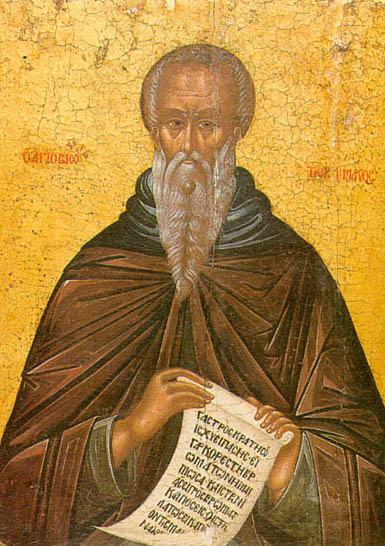
“Stillness is the worship of God by unceasing prayer.”
— John Climacus
John Climacus (John of the Ladder) entered the monastery on Mount Sinai at age sixteen and lived there or in nearby hermitages for the rest of his life. He spent forty years as a hermit at the cell of Tholas, then in his old age was elected abbot of St. Catherine's Monastery at the foot of Mount Sinai — the same monastery that still stands today as the oldest continuously inhabited Christian monastery in the world. He wrote the Ladder of Divine Ascent at the request of John, abbot of Raithu, near the end of his life.
The Ladder is structured as thirty steps — a deliberate echo of the thirty years of Christ's hidden life before his public ministry. Each step is a single virtue (or vice to be renounced), examined with concrete pastoral attention to how it actually works in the monastic life. The first three steps treat the renunciation of the world. Steps 4–7 address obedience, repentance, and the remembrance of death. Steps 8–17 are the war against the passions — anger, malice, talkativeness, falsehood, despondency, gluttony, lust, avarice, possessions, sleep, and pride. Steps 18–26 turn to the soul's positive virtues — meekness, humility, simplicity. Steps 27–30 conclude with the heights of the contemplative life — stillness (hesychia), unceasing prayer, dispassion (apatheia), and the final crown, love.
The Ladder's structural device — that the spiritual life is a real climb, with measurable progress and identifiable steps — has shaped Christian spiritual theology more than any other single book of the Christian East. The most famous icon of the Ladder, painted at St. Catherine's in the 12th century, shows monks ascending the ladder while demons drag others off into the jaws of hell at the bottom — a visual catechism of the book that hangs in Orthodox monasteries to this day. The book is read in every Orthodox monastery during Great Lent.
John's pastoral psychology is unusually acute. He observes how acedia (spiritual weariness) afflicts the monk at midday, how vainglory "feeds on the very food it pretends to refuse," how pride is the last vice to leave the soul. He warns against the dangerous form of humility that is really just inverted pride. He is not above humor — telling stories about brothers whose ascetic practices became absurd. The Ladder is the great spiritual classic of the Greek-speaking 7th century, and it remains the most-read book in Orthodox monastic Lenten observance.
Sources & Further Reading
- John Climacus, The Ladder of Divine Ascent (Klimax, Scala Paradisi, c. 600)
- Daniel of Raithu, Life of John Climacus (the introductory life appended to the Ladder)