Poemen the Great
The Shepherd
The shepherd-abba ("Poemen" means shepherd in Greek). His apophthegmata fill nearly 25% of the entire Sayings of the Desert Fathers — more than any other monk. Pastoral wisdom for the inner life from one of the longest-lived of the Scetiote elders.
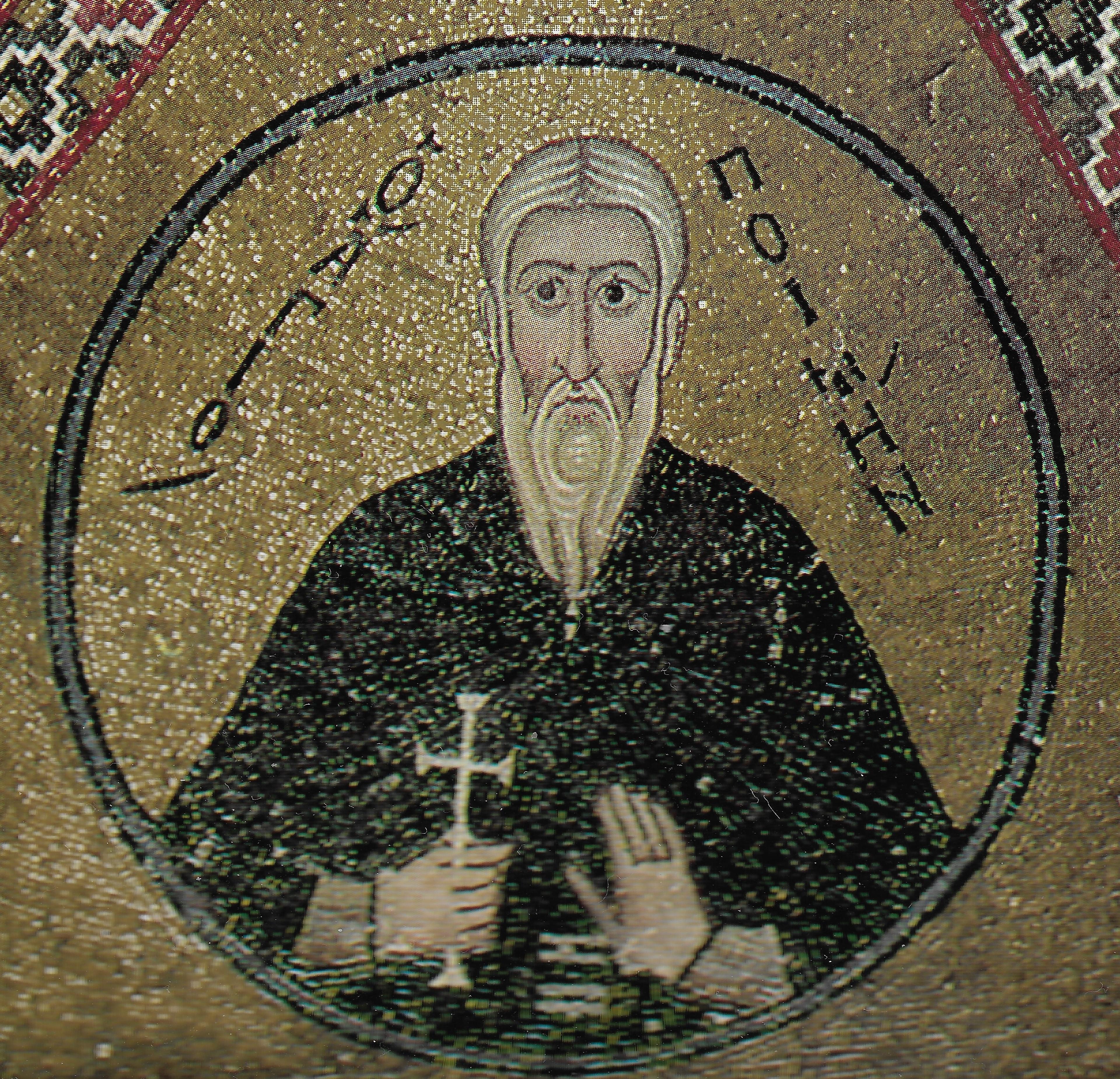
“If you see a young monk climbing up to heaven by his own will, seize him by the foot and pull him down — for it is not good for him.”
— Poemen the Great
Poemen — whose Greek name means "shepherd" — was born in Egypt around 340 and entered Scetis with several of his brothers as a young man. He lived there until the first wave of Berber raids in 407 forced the monks to evacuate. He resettled with a small community at Terenuthis on the western edge of the Nile Delta, and there he lived as an abba and spiritual father for the rest of his very long life — probably dying around the age of 110 in approximately 450. His apophthegmata, collected after his death, number 187 sayings in the alphabetical Greek collection — by far the largest entry under any single name, accounting for nearly a quarter of the entire corpus of the Sayings of the Desert Fathers. He was, in effect, the desert tradition's pastoral theologian.
Poemen's sayings are striking for their concreteness and their psychological subtlety. He has little to say about cosmic visions and almost nothing to say about ascetic competition; he has a great deal to say about the brother who comes to him with a particular thought, a particular temptation, a particular failure. "It is impossible to be too cautious in this matter," he told a brother who had asked how to think about his anger. "There are men who endure many sufferings for the sake of eternal life and yet lose it for not properly guarding their tongue." To another: "There is no greater love than that a man should lay down his life for his neighbor. When you hear a brother spoken of evilly, and you defend him, you are doing this."
Poemen's most quoted teaching concerns the discernment of thoughts (diakrisis). He taught — and the desert tradition received from him — that the inner life of the monk is best mapped not by extraordinary visions but by careful attention to ordinary thoughts: where they arise, where they tend, what they conceal. "Vigilance, self-knowledge, and discernment — these are the guides of the soul." He distinguished thoughts that come from God, from the devil, and from the human self; he taught monks to refuse the second category not by argument but by turning the mind to prayer; he understood that the same thought can sometimes look spiritual and sometimes look ordinary depending on what the soul does with it.
On humility and on the love of brothers, Poemen's pastoral instinct was unmistakable. He once said to a young monk who was anxious about the strict ascetic regimes of his neighbors: "To bear up under your neighbor without judging him — that is your true asceticism." To a brother who came to him weeping over a sin he had committed, Poemen wept along with him, sat in silence with him for hours, and finally said: "Do not despair. We will rise together." The pastoral disposition is not what the popular image of the desert father suggests, but it is everything in Poemen's sayings — the long patience of a shepherd who knows that every brother is fragile and that the desert is a place where men come not to perfect themselves but to learn how to be borne in love.
Poemen died around 450 at Terenuthis. By that time the great age of Scetis was over: the second Berber raid of 444 had destroyed most of the original cells, and the surviving Egyptian monks were dispersed across the Nile Delta and into Palestine and Sinai. The Apophthegmata Patrum — collected over the next century and translated into Latin by Pelagius the Deacon and John the Subdeacon in the 6th century, then into Coptic, Syriac, Armenian, and Ethiopic — preserved the desert's wisdom for every later Christian monastic tradition. The largest portion of that collected wisdom belongs to a shepherd who lived for over a century in the Nile flats and gave the inward life of every later Christian monk its pastoral vocabulary.
Sources & Further Reading
- Apophthegmata Patrum, Poemen series (187 sayings in the alphabetical collection — by far the largest entry)
- The anonymous Coptic Life of Poemen
- Sayings of the Desert Fathers (Benedicta Ward translation, 1975) — the Poemen series