The Forty Martyrs of Sebaste died in 320 AD, at a curious moment in Christian history. The Edict of Milan, which legalized Christianity throughout the Roman Empire, had been issued by Constantine and Licinius together in 313 AD. By 320, however, Licinius — who ruled the Eastern half of the empire — had broken with Constantine and was once again persecuting Christians within his territories, primarily targeting Christian soldiers in the imperial legions whose loyalty he questioned.
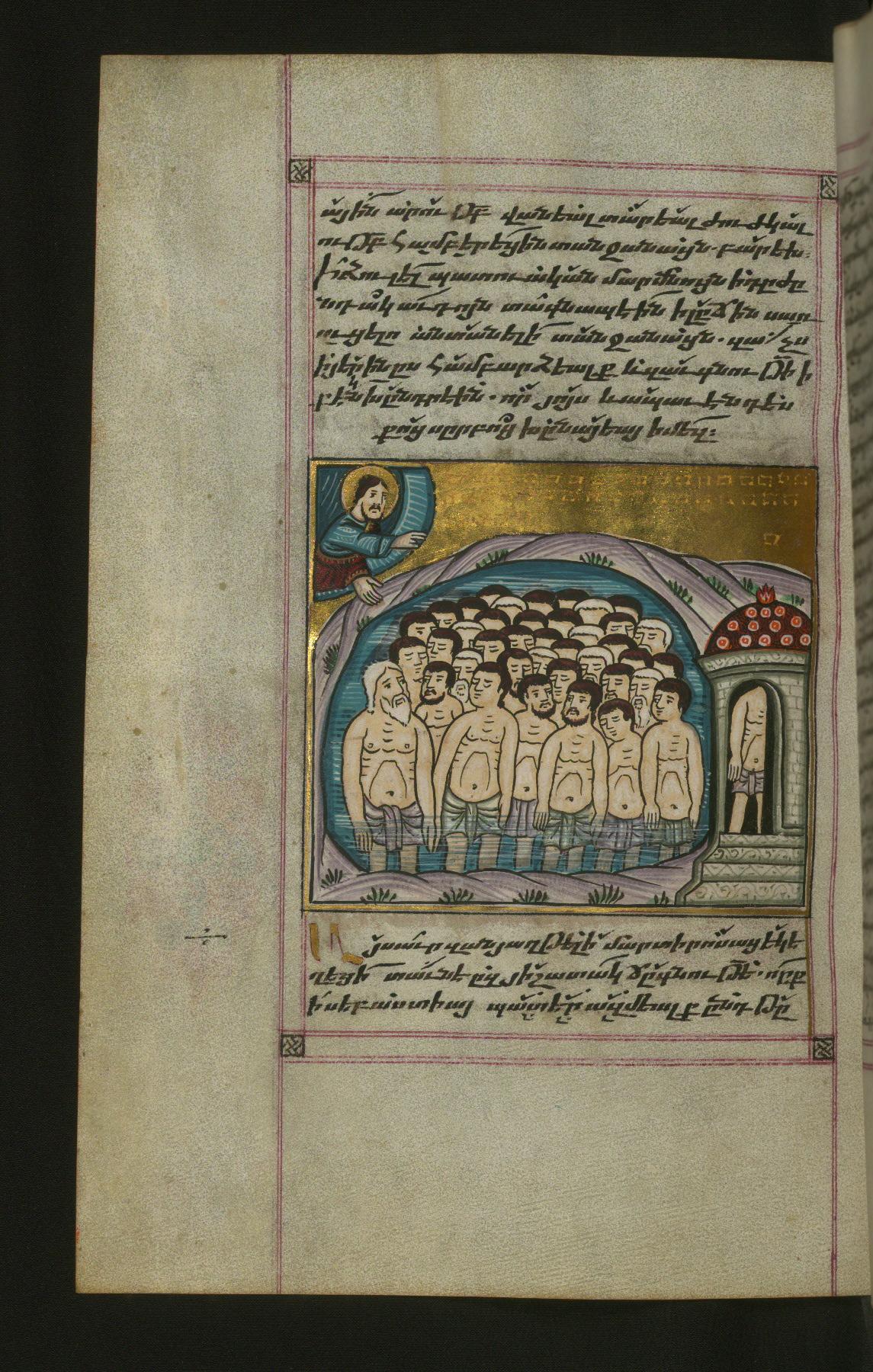
Forty soldiers of the Twelfth Legion 'Fulminata' (the Thundering Legion), stationed at Sebaste in Armenia (modern Sivas, eastern Turkey), refused to participate in the prescribed pagan sacrifices. They were arrested, interrogated, and sentenced to a peculiar form of execution designed to break their will: they were stripped naked and forced to stand on the frozen surface of a lake outside the city overnight. Warm baths were placed on the shore — if any of the forty broke and went to the baths to save himself, he would be released.
One of the forty did break. He left his companions, ran for the warm baths, and died of shock before he could reach them. As he did so, one of the Roman guards on the shore — moved by the sight or by a divine voice, depending on the source — stripped off his own uniform and joined the Christians on the ice. The number stayed at forty. By morning, all of them had died of exposure.
Their bodies were burned, but the relics of the Forty became among the most widely venerated in the Christian East. Basil the Great preached a sermon on their feast day still extant (Homilia in XL Martyres) that demonstrates the depth of regional cult by the late fourth century. Gregory of Nyssa preached another. Ephrem the Syrian composed hymns. The story spread westward through these patristic homilies and became a fixed feast in the Roman calendar.
The theological resonance of the Forty Martyrs is unusual. They are not killed by enemies of Rome but by the Roman state itself, in the precise period when Christianity was supposed to be free. They die not in the arena but in slow exposure to ordinary cold. And the count of forty — biblically the number of testing (forty days of the flood, forty years in the wilderness, forty days of fasting) — gives the episode an immediate scriptural shape. The Forty are a counter-image to the more dramatic earlier martyrdoms: a witness without spectacle, lengthy and ordinary, with a quiet substitution by a converted soldier as its single dramatic moment.