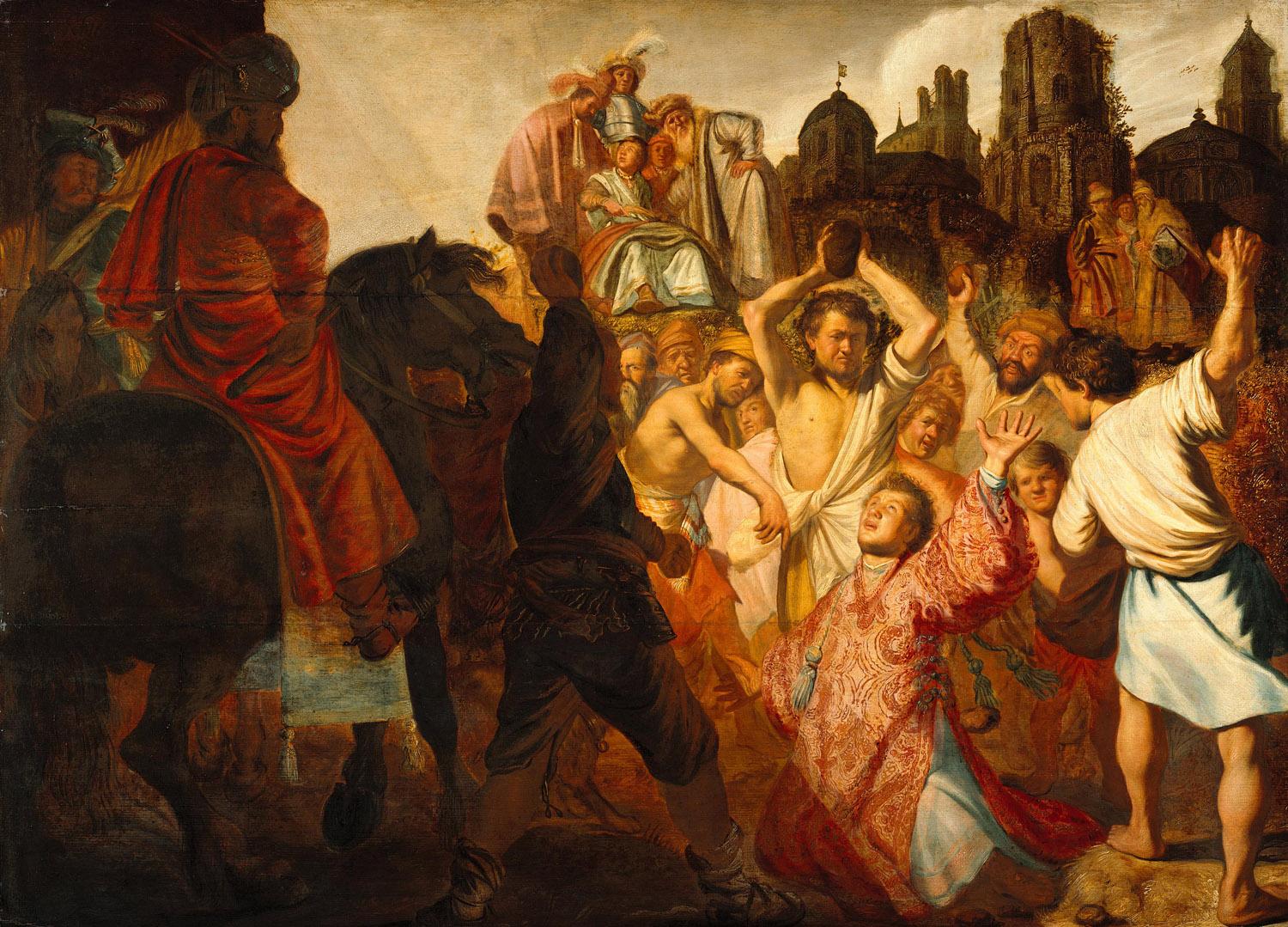
Stephen is the first named Christian to die for the confession of Jesus, and the New Testament tells his story at length. Acts 6 introduces him as one of the seven deacons appointed to serve the Greek-speaking widows of the Jerusalem church — a man 'full of faith and of the Holy Spirit' who 'did great wonders and signs among the people.' His preaching provoked a controversy that the local synagogue could not answer, and he was brought before the Sanhedrin on the charge of speaking against the temple and the law.
His defense, recorded in Acts 7, is the longest single speech in the book of Acts — a sweeping retelling of Israel's history from Abraham through Solomon's temple, all aimed at a single point: the God of Israel was never confined to the temple, and his Spirit was always rejected by the very people who claimed to serve him. The crowd's response was rage. Stephen, looking up, saw 'the heavens opened, and the Son of Man standing at the right hand of God,' and they stoned him outside the city. His last words echo Jesus's at Calvary: 'Lord, do not hold this sin against them.'
The witnesses laid their cloaks at the feet of a young man named Saul of Tarsus (Acts 7:58). This is the first time Paul appears in the New Testament — a quiet, ominous note that the Church's chief future apostle began as an enforcer at its first murder. Augustine remarked that the Church owes Paul to the prayer of Stephen.
Stephen's feast on December 26, the day after Christmas, is one of the oldest in the Christian calendar. The juxtaposition is theological: the birth of the Christ who came to die is immediately followed by the first death of the one who confessed him. The Christmas martyrs (Stephen on the 26th, the Holy Innocents on the 28th, Thomas Becket on the 29th) frame the Incarnation as a costly event from its first hours.