Theodore Beza
Calvin's Successor
Calvin's chosen successor at Geneva and the institutional architect of international Calvinism. Rector of the Genevan Academy, leader of the French Huguenots at Poissy, and the theologian who systematized Reformed predestinarian theology into the form later codified at Dort.
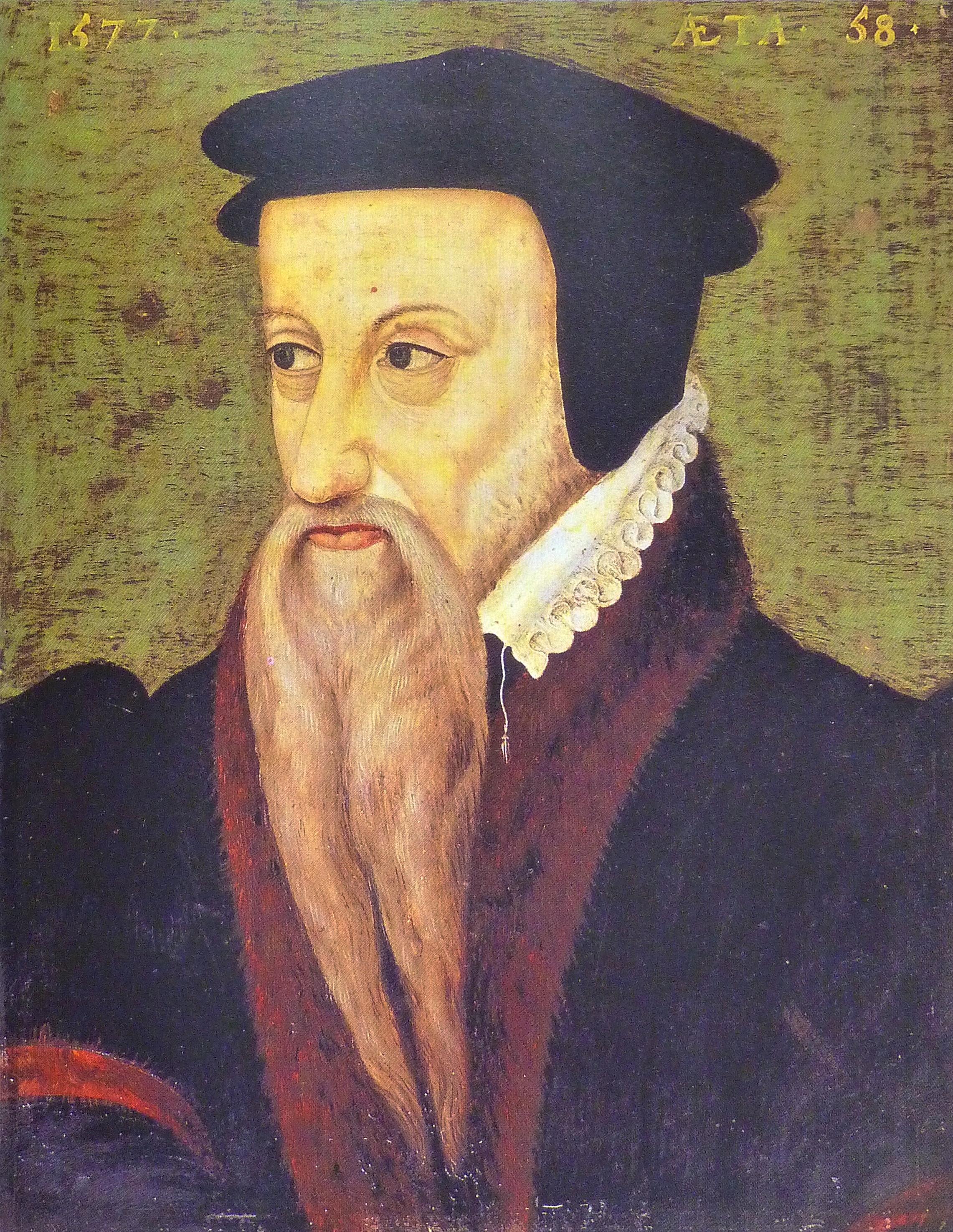
Théodore de Bèze was born to a minor noble family in Vézelay, Burgundy, in 1519. He was trained as a humanist lawyer at Orléans and Bourges — the same legal training as Calvin, in the same milieu, ten years later. By the early 1540s he was a successful poet in Paris, publishing the Latin Poemata of 1548 that established his literary reputation. A serious illness in 1548 produced what Beza himself described as a conversion; he resolved to leave Paris and join the Reformed community in Geneva. He arrived in October 1548, was received warmly by Calvin, and never seriously considered returning to a Catholic life.
From 1549 Beza taught Greek at the Lausanne Academy under the Bernese authorities. In 1558 Calvin recalled him to Geneva to help establish the Genevan Academy, of which Beza became the first rector when it opened in 1559. The Academy was designed to train Reformed pastors for the rapidly expanding French Huguenot mission, and within a decade was producing the leadership of the French, Dutch, Hungarian, and Scottish Reformed churches. When Calvin died in May 1564, the Genevan Council moved within days to confirm Beza as Moderator of the Company of Pastors — Calvin's successor in fact if not in formal title. Beza held the position for the next thirty-six years, until his retirement in 1600.
Beza's theological signature was the systematization of Reformed predestinarian theology. The Tabula Praedestinationis of 1555 — a single-page diagram showing the eternal decree of God flowing through history to the salvation of the elect and the reprobation of the damned — gave Reformed soteriology a more rigorously scholastic form than Calvin himself had ever quite committed to. Beza's supralapsarianism (the view that the decree of election logically precedes the decree to permit the Fall) became the position later softened to infralapsarianism at the Synod of Dort in 1619. The five-point Calvinism eventually summarized as TULIP is a downstream consequence of Beza's systematization at least as much as Calvin's.
Beza's most significant political moment was the Colloquy of Poissy in September 1561, where he led the French Reformed delegation in three weeks of disputation with the Catholic hierarchy before Catherine de' Medici and the young Charles IX. He failed to win toleration — the Wars of Religion broke out the following year — but he established himself as the public face of the French Huguenot cause for the next four decades. Through the massacres of St. Bartholomew's Day in 1572 (which he witnessed at a distance from Geneva), the assassinations and battles of the wars, and finally the Edict of Nantes of 1598, Beza coordinated Reformed resistance, ministered to the French refugees who flooded Geneva, and produced in Du droit des magistrats (1574) one of the foundational texts of Protestant political theory on the right of inferior magistrates to resist tyranny. His Greek New Testament — the basis of the Textus Receptus used by Erasmus's successors and ultimately by the King James translators — completed his legacy as the institutional architect of international Calvinism.
Key Works
- Tabula Praedestinationis (1555) — the supralapsarian diagram of predestination
- Confession of the Christian Faith (1560)
- Du droit des magistrats (Right of Magistrates, 1574) — Reformed resistance theory
- Novum Testamentum (1565) — Greek New Testament editions, basis of later Textus Receptus
- Icones (1580) — illustrated lives of the Reformers
Further Reading
- Scott M. Manetsch, Theodore Beza and the Quest for Peace in France, 1572–1598 (2000)
- Tadataka Maruyama, The Ecclesiology of Theodore Beza (1978)
- Henry Martyn Baird, Theodore Beza: The Counsellor of the French Reformation (1899)