William J. Seymour
Apostle of Azusa Street
The African-American son of former slaves who led the Azusa Street Revival from 1906 to 1915 — the founding event of modern Pentecostalism. He preached racial integration as a Spirit-baptized fact at the height of Jim Crow America.
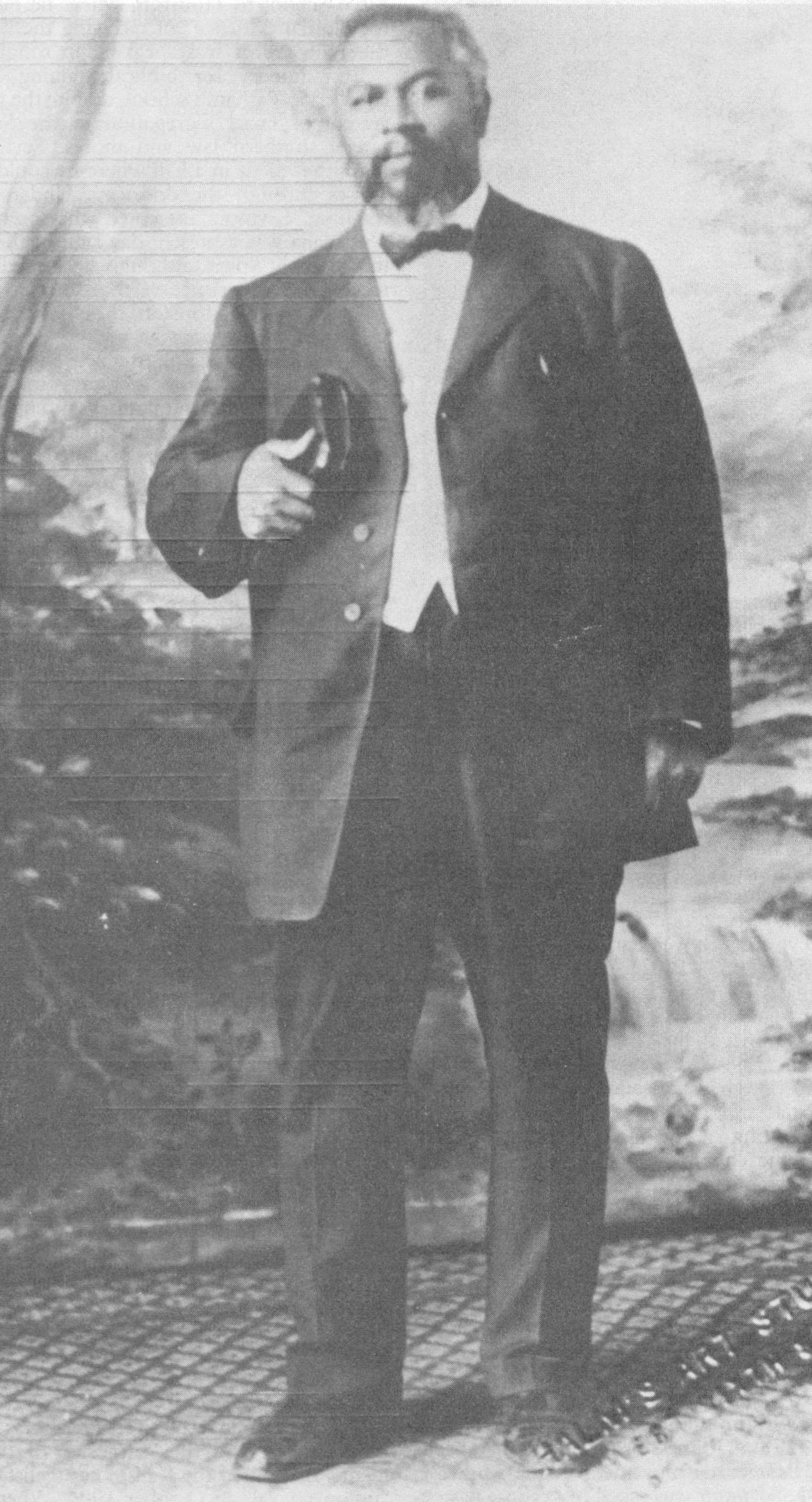
William Joseph Seymour was born in Centerville, Louisiana, on May 2, 1870 — five years after Emancipation, to formerly enslaved parents. He grew up in the Black Baptist tradition of the Reconstruction South, lost the sight in one eye to smallpox as a young man, and made his way north and west looking for work and for a religious settlement that matched what he was reading in the New Testament. He joined the Evening Light Saints (a holiness body that became the Church of God, Anderson) in Indianapolis, then moved to Houston around 1903 and to the holiness circles around Lucy Farrow and Charles Parham. In late 1905 Seymour enrolled in Parham's Bible school in Houston — sitting in the hallway outside the classroom because Texas segregation laws forbade his entry to the room itself. There he absorbed Parham's teaching that Spirit baptism was a third experience, subsequent to conversion and sanctification, evidenced by speaking in tongues.
In February 1906 Seymour accepted a call to pastor a small Black holiness mission in Los Angeles. He preached Parham's doctrine of Spirit baptism for several weeks before he had personally experienced it. The mission's existing pastor locked him out. Seymour moved to the home of Richard and Ruth Asberry at 214 Bonnie Brae Street, where on April 9, 1906 — after weeks of prayer and fasting — Edward Lee, then Jennie Moore (who would become Seymour's wife in 1908), and finally Seymour himself spoke in tongues. The crowds swelled within days. By April 14 the group had moved to 312 Azusa Street, a former African Methodist Episcopal building that had been used as a warehouse and stable, and the Azusa Street Revival had begun.
Azusa Street ran for three years of continuous meetings, three services a day, with worshippers from around the world. Frank Bartleman, an early participant, wrote that "the color line was washed away in the blood" — Black, white, Latino, and Asian believers worshipped together at a moment when segregation was the structural law of American religious life. Seymour presided as pastor — a quiet preacher who often led services with his head buried in a wooden shoe-crate to pray rather than perform. The Apostolic Faith newspaper, edited by Seymour and Clara Lum (and after 1908 by Florence Crawford alone, when Lum joined her in Portland and took the subscription list), carried the Azusa message worldwide; missionaries from Azusa carried it to South Africa, India, Norway, Sweden, and China within months. By 1910 every continent had a Pentecostal mission tracing its origin to Azusa Street.
Seymour's tragedy was that the revival he had helped birth could not sustain his vision of racial integration. Charles Parham, his former teacher, visited Los Angeles in October 1906 and condemned the racial mixing in language so offensive that Seymour barred him from the pulpit; Parham spent the rest of his life calling Azusa Street a fanatical aberration. White Pentecostal leaders began to separate from Black ones; by 1914 the Assemblies of God was organized as a predominantly white body, and by the late 1910s American Pentecostalism had largely re-segregated. Seymour's response was to write the Doctrines and Discipline of the Azusa Street Apostolic Faith Mission in 1915 — a document that explicitly required leadership of the mission to remain interracial, and that named the loss of integration as the loss of the revival's deepest gift. He spent his remaining years at Azusa Street with a small, mostly Black congregation. He died of a heart attack on September 28, 1922, at the age of fifty-two. The mission building was demolished in 1931.
Seymour's reputation outside Pentecostal historiography was thin for decades — Parham was credited with founding Pentecostalism, while Seymour was treated as a regional figure. The reassessment beginning in the 1980s with the work of Walter Hollenweger, Cecil M. Robeck Jr., and Gastón Espinosa has restored Seymour to his proper place: the African-American pastor who led the founding revival of the world's fastest-growing Christian movement, and who insisted on racial reconciliation as a Spirit-baptized fact at the height of Jim Crow America. The 2006 centennial of Azusa Street, observed at major Pentecostal gatherings worldwide, marked the consolidation of that reassessment.
Key Works
- The Apostolic Faith (newspaper of the Azusa Street Mission, 1906–1908)
- The Doctrines and Discipline of the Azusa Street Apostolic Faith Mission (1915)
- Sermon notes and editorial writings collected in Larry Martin (ed.), The Complete Azusa Street Library (1999–2007)
Further Reading
- Cecil M. Robeck Jr., The Azusa Street Mission and Revival (2006)
- Gastón Espinosa, William J. Seymour and the Origins of Global Pentecostalism (2014)
- Frank Bartleman, Azusa Street: An Eyewitness Account (1925)