William Miller
The Preacher of 1844
Baptist farmer-preacher of upstate New York who used historicist prophetic interpretation to predict the return of Christ on October 22, 1844. The "Great Disappointment" of that day shattered his followers — but a remnant reinterpreted the date as the start of Christ's heavenly sanctuary ministry, becoming the seed of Adventism.
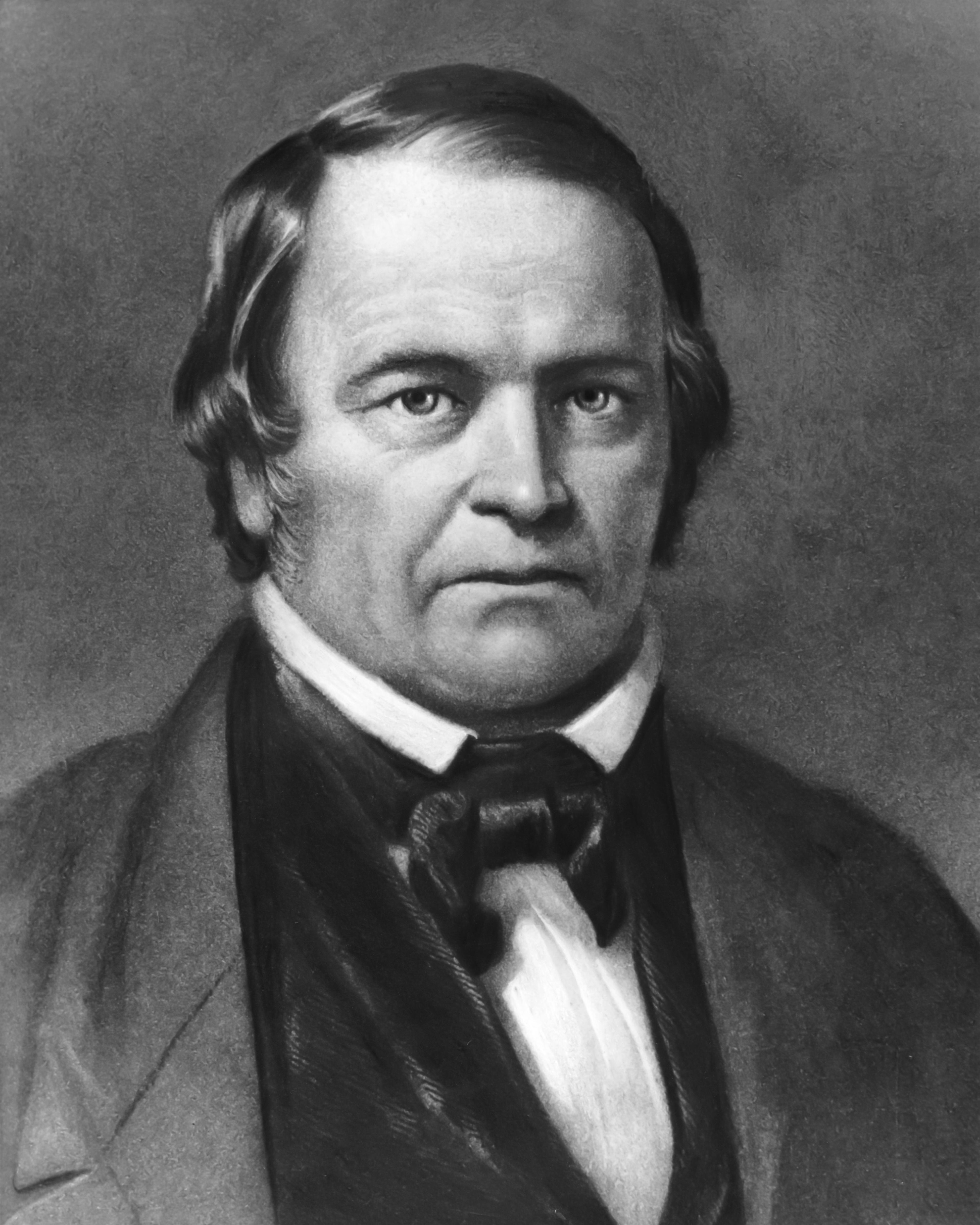
William Miller was born on February 15, 1782, in Pittsfield, Massachusetts, the son of a Revolutionary War captain. He grew up on the New York frontier near Low Hampton, served briefly in the War of 1812 (rising to the rank of captain at the Battle of Plattsburgh in 1814), and returned to farm life in upstate New York. As a young man he had drifted into Deism — the educated rationalism that doubted the supernatural authority of Scripture — but the experience of war and the death of close friends produced a religious crisis. By 1816 he had returned to the Baptist church of his upbringing, and by 1818 he had begun a careful, two-year, verse-by-verse study of the Bible designed to settle for himself whether the text was reliable. The study would change his life.
Miller's hermeneutical method was historicist — the long-standing Protestant approach (used by Luther, Wesley, and Edwards before him) that interpreted prophetic time periods on a day-for-a-year basis and read the apocalyptic visions of Daniel and Revelation as a sweeping prophecy of church history from the time of Christ to the Second Coming. His key text was Daniel 8:14: "Unto two thousand and three hundred days; then shall the sanctuary be cleansed." Taking the day-for-a-year principle and beginning the 2,300 days from 457 BC (the decree of Artaxerxes to restore Jerusalem, mentioned in Ezra 7), Miller calculated the terminus at AD 1843 or 1844, which he understood as the date of Christ's bodily return to cleanse the earth by fire. By 1822 he had reduced his conclusions to a personal confession of faith. By 1831 he was preaching publicly. By 1833 the Baptist church at Low Hampton had licensed him to preach.
The Millerite movement properly began in 1840 when Joshua V. Himes, a Boston pastor and skilled organizer, took up Miller's cause. Himes founded the journal Signs of the Times in March 1840, organized General Conferences of Adventist believers from October 1840 forward, and built a tent-meeting circuit that put Miller's lectures before audiences across New England and the mid-Atlantic. By 1843 estimates of "believers in the doctrine" ran from 50,000 to perhaps 100,000 across the eastern United States, drawn from Baptists, Methodists, Presbyterians, and Congregationalists. Miller himself was a reluctant celebrity — quiet, conscientious, sincerely persuaded of his calculations and sincerely uncertain whether he was right about the exact year. He resisted specific date-setting for as long as he could.
The date October 22, 1844 was not Miller's calculation; it was Samuel S. Snow's, an associate who in August 1844 reapplied the Jewish ceremonial calendar to argue that the cleansing of the sanctuary corresponded to the Day of Atonement, the tenth day of the seventh month, which in 1844 fell on October 22. The Millerite leadership embraced the date in September 1844; Miller followed with a sermon-letter on October 6. The fervor in the final weeks was extraordinary — farms were left unharvested, debts were forgiven, white ascension robes were prepared (though the famous reports of believers waiting in robes on hilltops are largely apocryphal). When October 22 passed without the return of Christ, the movement collapsed into what its survivors called the Great Disappointment.
Miller's own response to the Disappointment was honest. In his Apology and Defence of 1845 he admitted that he had been wrong about the event but maintained that he had been right about the method and the date. He continued to expect the imminent return of Christ for the remaining four years of his life, but he played no part in the reinterpretation that would produce Seventh-day Adventism. A small remnant of Millerites — including Hiram Edson, Joseph Bates, James and Ellen White — concluded after October 22 that the date was correct but the event had been misread: on that day Christ had entered the heavenly sanctuary for a new phase of his priestly ministry, not the earthly courtyard for his Second Coming. From that reinterpretation, together with Seventh Day Baptist sabbatarianism and Ellen White's prophetic visions, the Seventh-day Adventist Church emerged. Miller himself died in Low Hampton on December 20, 1849, having joined neither the Sabbatarian Adventists nor any other surviving Millerite stream. His hermeneutical framework — historicist prophetic interpretation, the day-for-a-year principle, the 2,300-day prophecy — remained the structural backbone of Adventist theology long after the man himself had been laid in his grave.
Key Works
- Evidence from Scripture and History of the Second Coming of Christ, About the Year 1843 (1836)
- Apology and Defence (1845) — written after the Great Disappointment
- Miller's Lectures: A Plain and Brief Method of Calculating the Prophecies (1839)
- The Letters of William Miller (collected by Joshua V. Himes from 1842)
- Bible chronology charts (1842, with Charles Fitch) — the "1843 chart" of prophetic history
Further Reading
- George R. Knight, Millennial Fever and the End of the World (1993)
- David L. Rowe, God's Strange Work: William Miller and the End of the World (2008)
- Sylvester Bliss, Memoirs of William Miller (1853)