Bathsheba
Mother of Solomon; Queen Mother of Israel
Wife of David; mother of Solomon; ancestor of Jesus (Matthew 1:6)
Wife of Uriah the Hittite, then of David. Mother of Solomon and grandmother of the entire Davidic line. The New Testament genealogy of Jesus names her by the title "her that had been the wife of Urias."
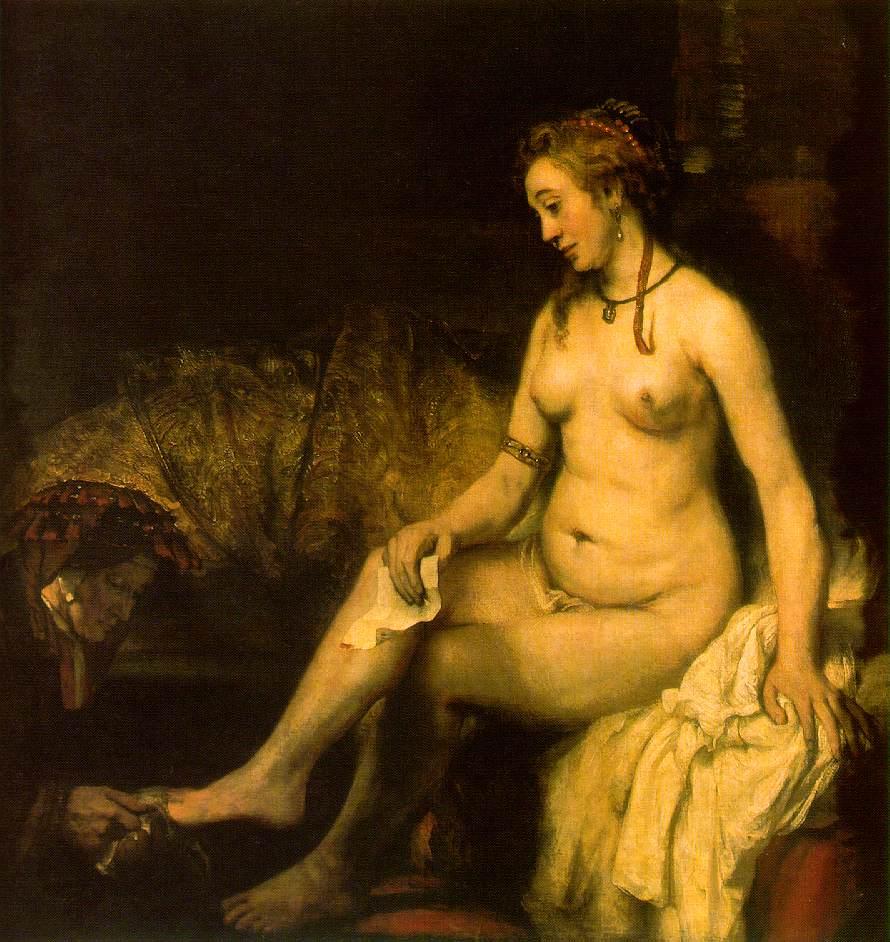
Bathsheba was the wife of Uriah the Hittite — one of David's elite warriors (one of the "thirty," the inner circle of David's military command, as 2 Samuel 23:39 records). The story of David's sin with her is told in 2 Samuel 11–12: David, observing her bathing from the roof of the palace while Uriah was at war, sent for her, slept with her, was unable to disguise the pregnancy that followed by recalling Uriah from the front to spend the night with her (Uriah insisted on remaining outside in soldier's discipline while his comrades were in the field), and finally arranged for Uriah to be placed in the most dangerous position of the battle and abandoned there to die. After Uriah's death David married Bathsheba. The narrator's verdict is one of the most direct in the entire Old Testament: "But the thing that David had done displeased the Lord" (2 Samuel 11:27).
The prophet Nathan was sent to confront David — through the parable of the rich man who took the poor man's one little lamb. David, hearing the parable, denounced the rich man in the strongest terms. Nathan replied: "Thou art the man." David's response to the rebuke (recorded in Psalm 51 by tradition) is one of the most theologically searching confessions in Scripture: "Have mercy upon me, O God, according to thy lovingkindness... Wash me throughly from mine iniquity, and cleanse me from my sin. For I acknowledge my transgressions: and my sin is ever before me." The first son born of David and Bathsheba died in infancy. The second was Solomon.
Bathsheba's later role in 1 Kings 1–2 is politically decisive. When David lay dying and his elder son Adonijah moved to take the throne by acclamation, Nathan instructed Bathsheba to go to the king and remind him of his oath that Solomon would succeed him. Her intervention secured Solomon's throne. She continued to function as Queen Mother (gebirah) in Solomon's court — a position of significant political authority in the ancient Near Eastern monarchies and a frequent feature of subsequent Davidic accession narratives.
Matthew's genealogy of Jesus is striking in its inclusion of four women in the Davidic ancestry — Tamar, Rahab, Ruth, and "her that had been the wife of Urias" (Matthew 1:3, 5, 6). Matthew does not name Bathsheba directly; he names her by the title that connects her ancestrally to the crime by which David took her. The theological point of the four women in the genealogy — all of them in some way irregular or scandalous in their relations to Israel — is that the messianic line is shot through with the same brokenness that the rest of the human story carries. The salvation Jesus brings is not a separate genealogy. It is this one.
Sources & Citations
- 2 Samuel 11–12 — David, Bathsheba, and Uriah
- 1 Kings 1–2 — Bathsheba's intervention for Solomon's succession
- Psalm 51 — David's confession of the sin
- Matthew 1:6 — "David the king begat Solomon of her that had been the wife of Urias"