Elizabeth
Mother of the Forerunner
Mother of John the Baptist; relative (syngenis) of the Virgin Mary
Mother of John the Baptist, relative of the Virgin Mary. Spoke the first half of the Hail Mary (Luke 1:42), greeted Mary's voice as the cause of John's leap in her womb — the Visitation.
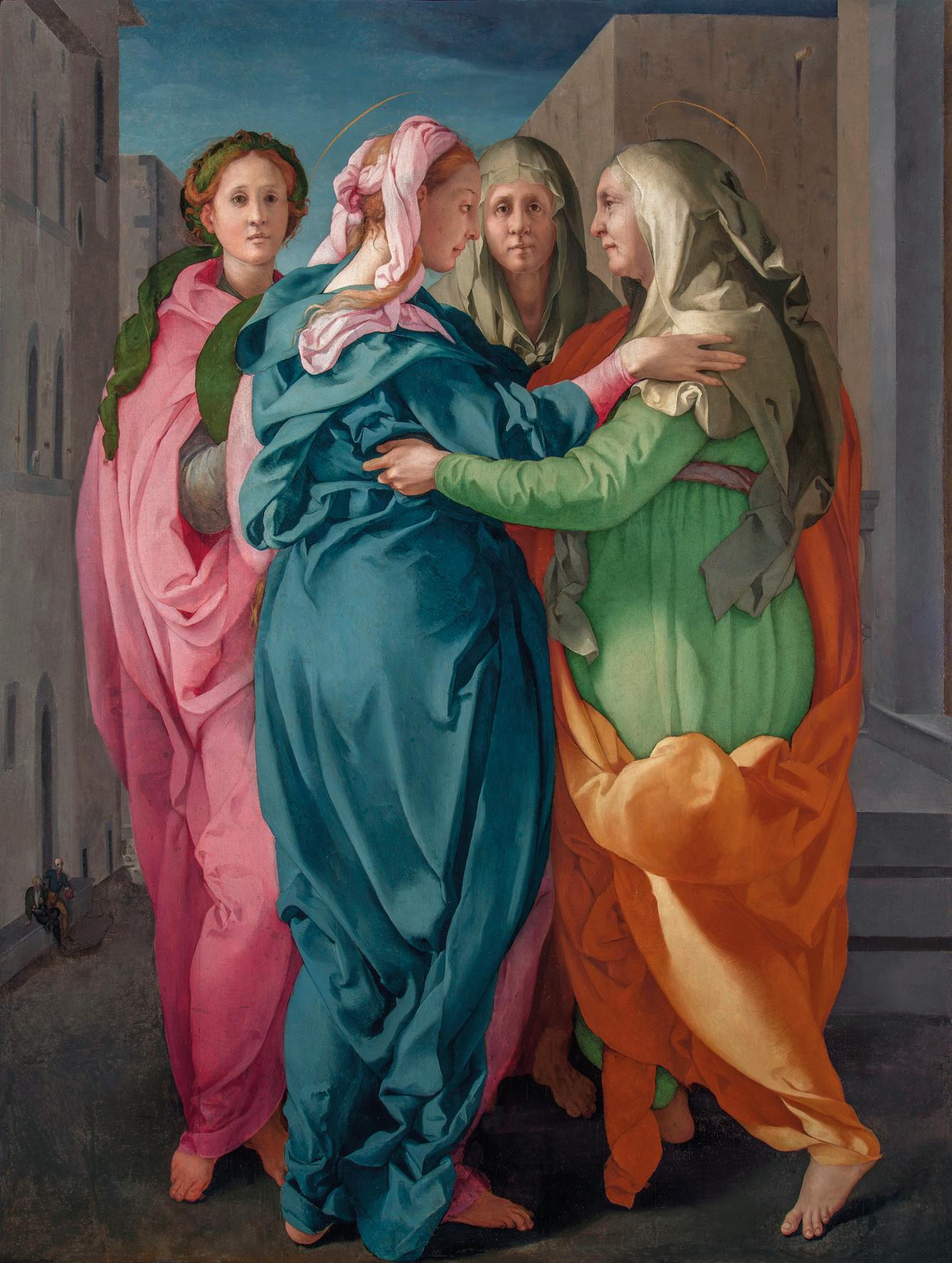
Elizabeth was an elderly, barren Israelite woman of the priestly line of Aaron, married to the priest Zechariah, when her cousin (more precisely her syngenis — "relative," the precise relationship is not specified) Mary received the angel Gabriel's annunciation. Gabriel's announcement to Mary explicitly named Elizabeth: "thy cousin Elizabeth, she hath also conceived a son in her old age: and this is the sixth month with her, who was called barren" (Luke 1:36). Mary immediately set out for the hill country to visit her.
The Visitation scene (Luke 1:39–56) is one of the most theologically dense passages in the entire infancy narrative. When Mary entered the house and greeted Elizabeth, John leapt in Elizabeth's womb. Elizabeth, "filled with the Holy Spirit" (Luke 1:41), spoke the first half of the angelic salutation that would later become the Hail Mary: "Blessed art thou among women, and blessed is the fruit of thy womb." She also recognized Mary's child as her Lord — "And whence is this to me, that the mother of my Lord should come to me?" (Luke 1:43). She thereby became the first human voice in the New Testament to confess the divinity of Jesus.
Elizabeth's response prompted Mary to sing the Magnificat — the great theological poem of Luke 1:46–55. Mary remained with Elizabeth for three months and then returned to Nazareth. When John was born, Elizabeth named him over the objections of the relatives, and the name was confirmed by Zechariah's tablet (Luke 1:57–63). She drops out of the Gospel narrative after this point. Tradition holds that she protected John during the Massacre of the Innocents and that he was raised in the wilderness — the John we meet at the Jordan in his maturity. The Visitation has remained one of the most-painted scenes in Christian art for nearly two millennia.
Sources & Citations
- Luke 1:5–7, 24–25, 36–45, 57–60 (Elizabeth's narrative)
- Luke 1:42 — "Blessed art thou among women" (the first recorded Marian salutation)