Joseph of Nazareth
Just Man, Foster-Father of the Lord
Husband of Mary; legal father of Jesus
The husband of Mary, legal father of Jesus, of the house of David. A carpenter (tekton) of Nazareth. The just man whose dreams the angel of the Lord used to protect the Holy Family.
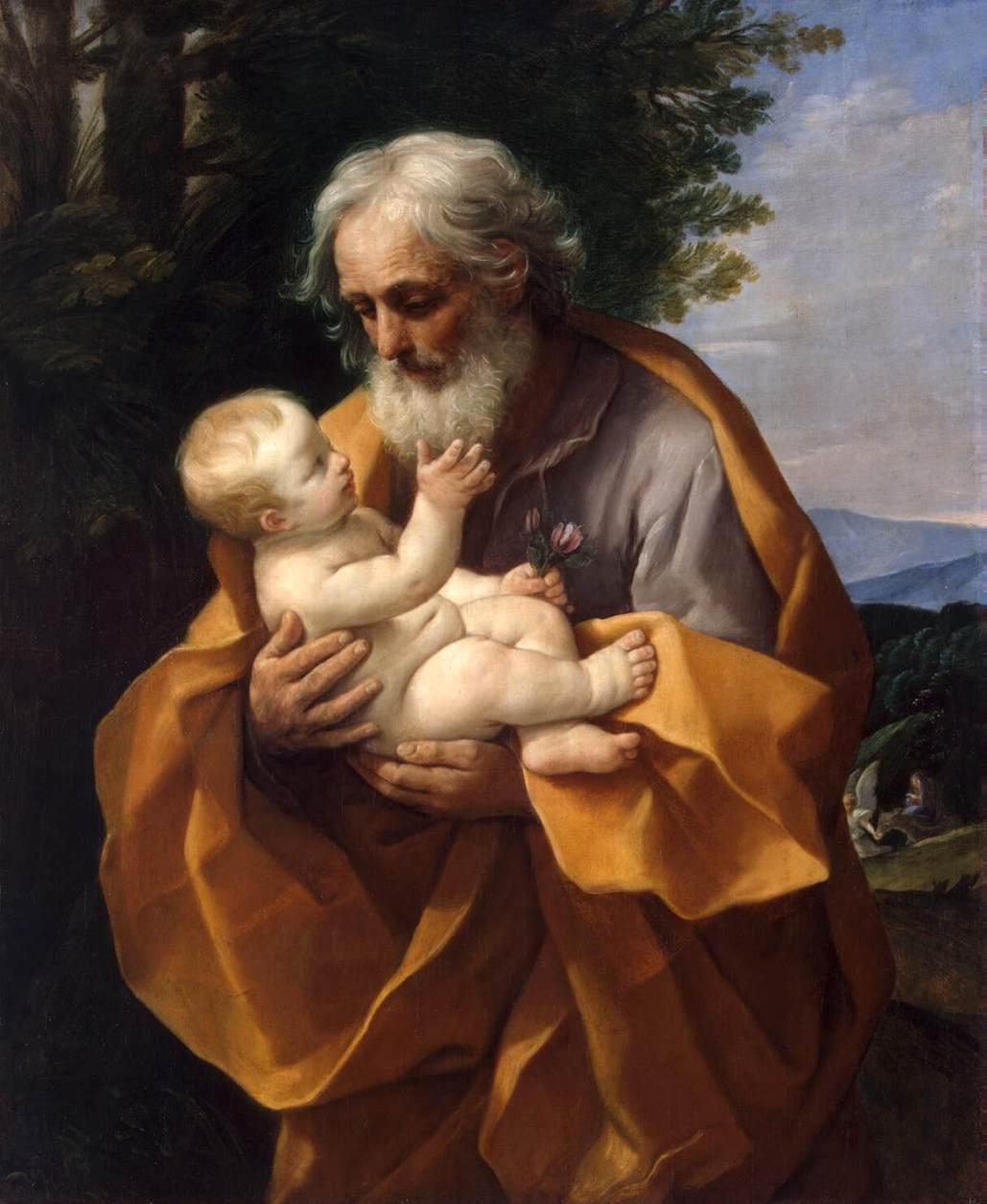
Joseph appears in the Gospels almost exclusively in the infancy narratives. Matthew 1 introduces him as a descendant of David through the royal line — Joseph's genealogy in Matthew traces 41 generations from Abraham. Luke's genealogy traces 76 generations from Adam (likely Mary's line — the question is exegetically debated). What both genealogies establish is the same theological point: Joseph's legal fatherhood places Jesus in the Davidic line, fulfilling the messianic promise that the Messiah would be the son of David.
Joseph's distinctive characterization in the Gospels is moral. Matthew 1:19 calls him a "just man" (dikaios) who, on discovering Mary's pregnancy before they were officially married, decided to divorce her quietly — protecting her from the public shame and legal consequences that the strict reading of the Mosaic law would have authorized. The angel of the Lord appeared to him in a dream and explained the situation; Joseph received the word and took Mary as his wife. The pattern of revelation through dreams recurs throughout the infancy narrative: the warning to flee to Egypt (Matthew 2:13), the return after Herod's death (Matthew 2:19), the warning not to settle in Judea (Matthew 2:22). Joseph is the silent, obedient man whose dreams from God protect the holy child.
Joseph's trade as a tekton (Matthew 13:55) is traditionally translated "carpenter" but more accurately means "craftsman" — someone who worked in wood and stone. Nazareth was a small village about four miles from the larger Roman city of Sepphoris, which was being rebuilt as the regional capital of Galilee throughout Jesus's youth — many scholars suggest that Joseph (and possibly the young Jesus) found work on the construction projects there. Joseph last appears in the Gospel narrative at the finding of the boy Jesus in the Temple at age twelve (Luke 2:41–51). The standard tradition (preserved in apocryphal sources of varying reliability) is that Joseph died sometime before Jesus's public ministry began.
The cult of Joseph developed slowly in the medieval period — partly because of the Western Church's increasing attention to the holy family as a domestic model, partly through the late medieval writings of Bernardine of Siena and others. Pius IX in 1870 declared Joseph the patron of the universal Church, and the 19th and 20th-century Catholic Church has emphasized his role with growing intensity. The Orthodox tradition has likewise honored him as "Joseph the Betrothed." His silence in the Gospels — there is no recorded word of Joseph in Scripture — has been read by patristic and devotional writers as part of his iconography: the just man who acts in obedience without needing to be heard.
Sources & Citations
- Matthew 1:18–25; 2:13–23 (Joseph's dreams, the flight into Egypt)
- Luke 1:27; 2:4, 16, 33, 41–51 (Joseph in the infancy narrative)
- Matthew 13:55 ("the carpenter's son")
- Pope Pius IX, Quemadmodum Deus (1870) — declared Joseph patron of the universal Church