Simeon the Righteous
The Righteous One; God-Receiver
Recognized the infant Jesus in the Temple at the Presentation
A righteous and devout man waiting for the consolation of Israel. He took the infant Jesus in his arms at the Presentation and sang the Nunc Dimittis — the third of Luke's three great canticles.
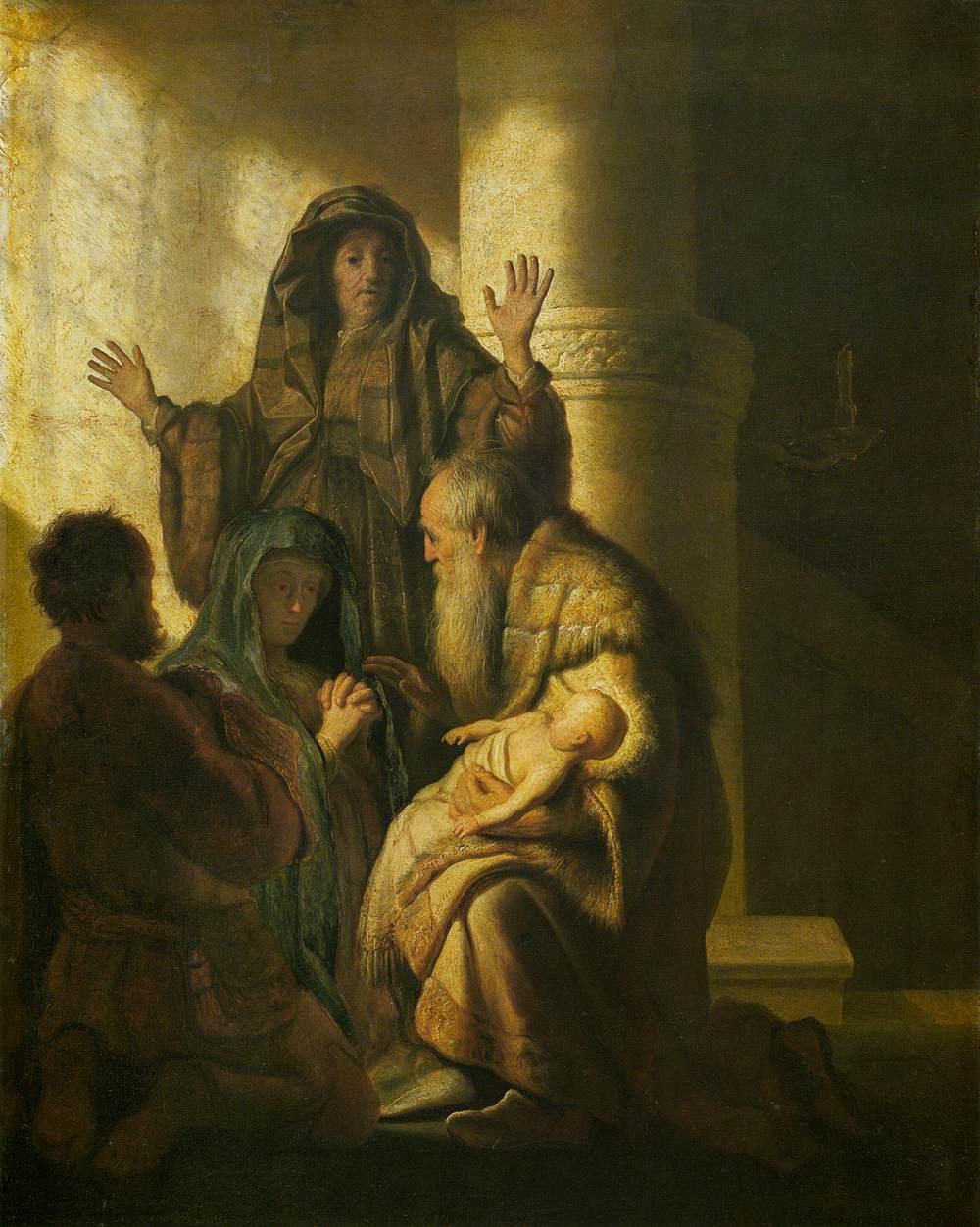
Simeon appears in Luke 2:25–35 as a righteous and devout man in Jerusalem who had received a revelation from the Holy Spirit that he would not see death before he had seen the Lord's Christ. When Mary and Joseph brought the forty-day-old Jesus to the Temple to make the offering required by Leviticus 12 (the purification of the mother and the redemption of the firstborn), Simeon — "led by the Spirit" — entered the Temple at the same time. He took the child into his arms and spoke the song now known as the Nunc Dimittis: "Lord, now lettest thou thy servant depart in peace, according to thy word: for mine eyes have seen thy salvation, which thou hast prepared before the face of all people; a light to lighten the Gentiles, and the glory of thy people Israel."
The Nunc Dimittis (Latin from its opening words, "Now you let depart") is the third of Luke's three great canticles — alongside Mary's Magnificat and Zechariah's Benedictus. It has been sung at Compline (the night office) in the Western liturgical hours for centuries. The song's theological power lies in its compression: salvation has arrived in this infant; the universal scope of that salvation extends to the Gentiles; the death the singer now welcomes is not a defeat but a release. The pattern — that recognition of Christ is the moment when death loses its sting — has shaped Christian dying-prayer ever since.
Simeon then prophesied to Mary directly, in a sentence that has been read with particular intensity by Catholic devotional tradition: "Behold, this child is set for the fall and rising again of many in Israel; and for a sign which shall be spoken against; (yea, a sword shall pierce through thy own soul also,) that the thoughts of many hearts may be revealed" (Luke 2:34–35). The sword Simeon names is read by the Catholic tradition as the sorrow of Mary at the cross (one of the Seven Sorrows of Mary) — the inseparability of the joy of the Incarnation and the suffering at Calvary, declared at the moment of the Presentation itself.
Sources & Citations
- Luke 2:25–35 — Simeon's Nunc Dimittis and prophecy
- Mishnah, Pirkei Avot 1:2 — Simon the Just (the Second Temple high priest; not certainly the same figure)
- The Compline office of the Western liturgical hours (Nunc Dimittis daily)