Zechariah
Priest of the Eighth Course
Father of John the Baptist; husband of Elizabeth (Mary's relative)
Priest of the course of Abijah. Saw the angel Gabriel in the Holy Place while burning incense, was struck mute for his unbelief, and at his son's birth sang the Benedictus — the second of Luke's three great canticles.
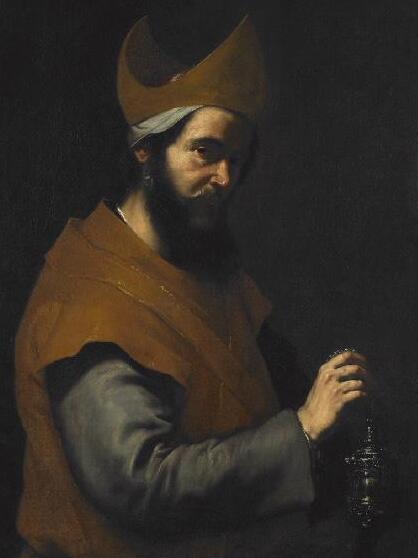
Zechariah enters Luke's Gospel as a priest of the course of Abijah (Luke 1:5) — one of the 24 priestly divisions established by David in 1 Chronicles 24 to rotate the Temple service. The course of Abijah served twice a year for one week each rotation. Zechariah, an elderly man married to Elizabeth ("daughter of Aaron," Luke 1:5), was on duty when, by the casting of lots, he was chosen to enter the Holy Place to burn incense — likely a once-in-a-lifetime opportunity for any priest. While he was alone at the altar of incense, the angel Gabriel appeared on the right side of the altar with the announcement that his elderly, barren wife would bear a son named John, who would prepare the way for the Lord.
Zechariah's response — his only recorded line of dialogue before his muteness — was understandable doubt: "Whereby shall I know this? for I am an old man, and my wife well stricken in years" (Luke 1:18). Gabriel's response was equally direct: because Zechariah did not believe the announcement, he would be unable to speak until the birth was fulfilled. Zechariah emerged from the Holy Place unable to bless the people, gestured to them that he had seen a vision, finished his week of service, and returned home. Elizabeth conceived. They lived in the hill country for the next nine months.
When the child was born, the family wanted to name him after his father. Elizabeth insisted on "John." The family appealed to Zechariah, who wrote on a tablet: "His name is John." His tongue was immediately loosed and he sang the song now known as the Benedictus (Luke 1:68–79) — the second of Luke's three great canticles, alongside Mary's Magnificat and Simeon's Nunc Dimittis. The Benedictus is a sustained reflection on God's covenant faithfulness to Israel, the dawn breaking upon those who sit in darkness, and the role his own infant son will play as the forerunner of the Lord. The Benedictus has been prayed daily at Lauds in the Western Church for more than a millennium.
Sources & Citations
- Luke 1:5–25, 57–79 (Zechariah's vision, muteness, the Benedictus)
- Numbers 18:7; 1 Chronicles 24:10 (the priestly courses of Abijah)