Baptism
Holy Baptism · The Washing of Regeneration · Christian Initiation
The rite of Christian initiation in which a person is washed with water in the name of the Father, Son, and Holy Spirit — the new birth from above into the body of Christ.
Water and the triune name. The rite by which a person enters the Christian Church. The unbroken Christian practice from Pentecost to the present — though the traditions disagree about who properly receives it and what exactly it accomplishes.
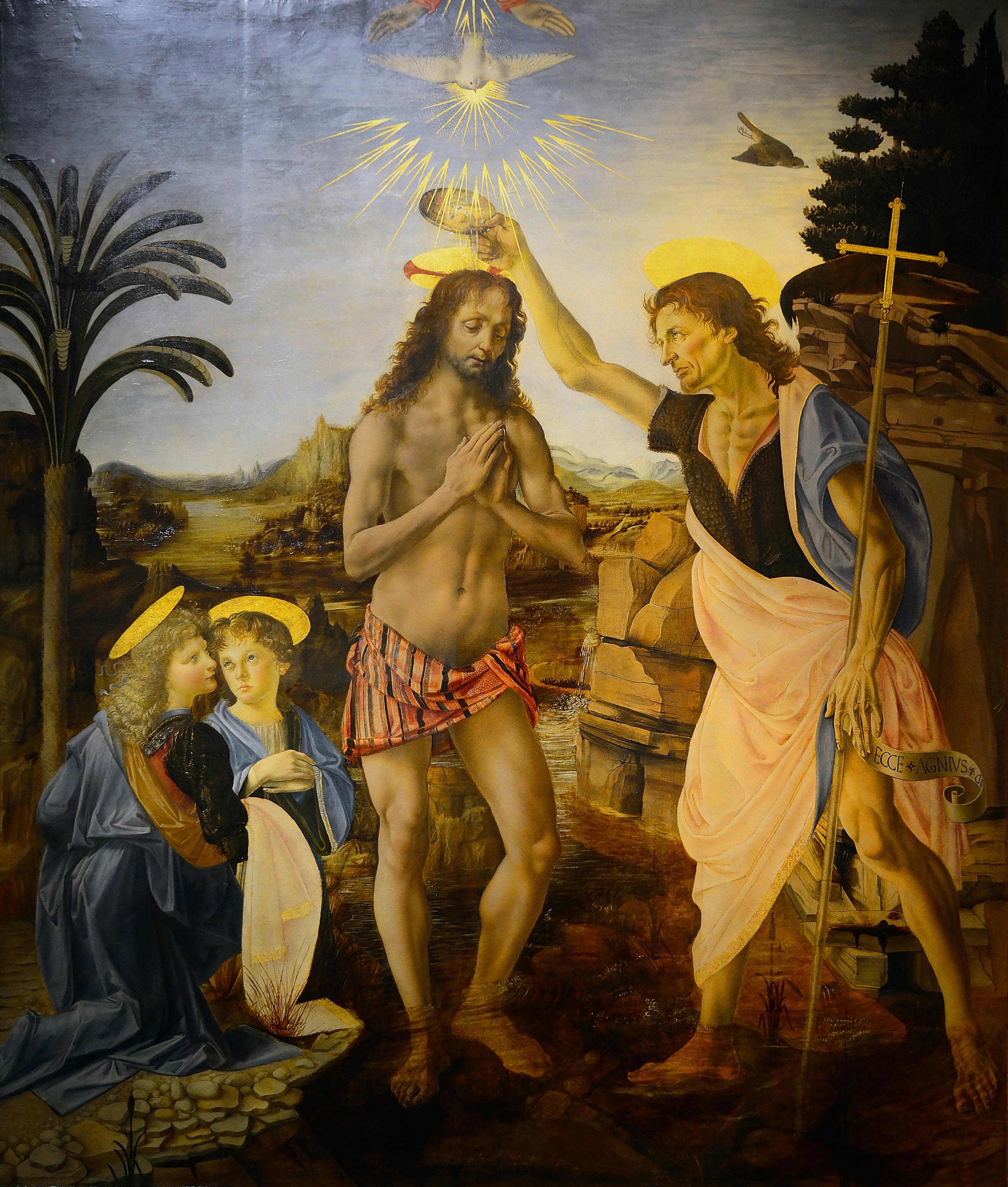
Baptism is the rite by which a person enters the Christian Church. The form prescribed by Jesus in the Great Commission — water and the triune name (Matthew 28:19) — has been the unbroken Christian practice from Pentecost to the present. The Didache (c. 70–110 AD) gives the earliest practical instructions: baptize in running water if possible, in still water if not, by pouring on the head if no water for immersion is available. From the second century onward, every patristic witness assumes baptism is necessary for incorporation into Christ. The disagreements that the Reformation and the Anabaptist movement raised are about who properly receives it, how it is administered, and what precisely it accomplishes — not whether Christ commanded it.
The Catholic and Orthodox traditions teach that baptism is the sacrament of regeneration: in baptism the recipient is born again of water and the Spirit (John 3:5), original sin is forgiven, and the person is incorporated into the body of Christ. Both traditions baptize infants on the basis of the household baptisms in Acts (the jailer in Acts 16, Lydia in Acts 16, the household of Stephanas in 1 Corinthians 1), the universal practice of the early Church, and the analogy with circumcision as the sign of covenant membership applied to children (Genesis 17). The Catholic Catechism (§§1213–1284) treats baptism as the foundation of the whole Christian life. Eastern Orthodoxy administers baptism by triple immersion (where possible) and immediately follows it with chrismation and the Eucharist, treating the three as a single rite of initiation, given to infants as well as adults.
Lutheran, Reformed Presbyterian, and Anglican traditions have retained infant baptism as their normal practice while reframing its theology. Luther's Small Catechism (1529) teaches that baptism 'works forgiveness of sins, delivers from death and the devil, and gives eternal salvation to all who believe.' The Reformed tradition, following Calvin (Institutes IV.16), holds that baptism is the sign and seal of the covenant of grace — applied to believers and to their children as members of the covenant community, on the same principle by which circumcision was applied to Abraham's household. The Westminster Confession (28.4) affirms that 'the infants of one, or both, believing parents, are to be baptized.' Anglican practice in the Book of Common Prayer follows the same pattern, treating baptism as full Christian initiation and confirming the baptized at a later age when they can answer for themselves.
The Baptist and Anabaptist traditions teach that baptism is properly given only to those who have made a personal confession of faith in Christ. The 1689 Baptist Confession of Faith (Chapter 29) and the earlier Schleitheim Confession (1527) hold that baptism is for disciples of Christ — those old enough to repent, believe, and confess. Mode follows meaning: because baptism in the New Testament images burial and resurrection with Christ (Romans 6:3–4), Baptists administer it by full immersion. The Anabaptists ('re-baptizers') of the 16th-century Radical Reformation were so named by their opponents because they re-baptized adults who had been baptized as infants, on the conviction that infant baptism was not true baptism at all. The Anabaptist tradition cost an enormous number of martyrs in the 16th century — drowned by Catholics and Protestants alike — for this conviction.
Pentecostal and most non-denominational evangelical traditions follow the Baptist pattern of believer's baptism by immersion, often adding a distinct experience of 'Spirit baptism' subsequent to water baptism. The Stone-Campbell Restoration movement (Churches of Christ, Disciples of Christ) teaches that baptism by immersion is the moment of regeneration and is necessary for salvation in a more direct way than most Protestant traditions affirm.
Beneath the disagreements, every historic Christian tradition affirms with the Nicene Creed (381 AD) 'one baptism for the forgiveness of sins.' The ecumenical document Baptism, Eucharist and Ministry (World Council of Churches, 1982) recorded a remarkable convergence: baptism is participation in Christ's death and resurrection, conversion and pardon, the gift of the Spirit, incorporation into the body of Christ, and the sign of the Kingdom. The disagreement over infant versus believer baptism is real, but it is a disagreement within a shared confession that baptism into Christ is the door into the Christian life.
How Each Tradition Receives It
| Tradition | Status | Local Name |
|---|---|---|
| Catholic | Sacrament of initiation | Holy Baptism |
| Orthodox | Mystery of initiation (followed immediately by chrismation and Eucharist) | Holy Baptism |
| Lutheran | Sacrament | Holy Baptism |
| Reformed | Sacrament — sign and seal of the covenant | Baptism |
| Anglican | Sacrament of the Gospel | Holy Baptism |
| Baptist | Ordinance — believer's baptism by immersion | Believer's Baptism |
Scriptural Basis
- Matthew 28:19 (the Great Commission — 'baptizing them in the name of the Father, and of the Son, and of the Holy Spirit')
- Mark 1:9–11 (the baptism of Jesus by John in the Jordan)
- Acts 2:38–41 (Pentecost: 'repent and be baptized')
- Romans 6:3–4 (baptism into Christ's death and resurrection)
- 1 Peter 3:21 (baptism saves through Christ's resurrection)
- Acts 16:15, 16:33; 1 Corinthians 1:16 (whole-household baptisms)
Patristic Witnesses
- Didache 7 (c. 70–110 AD) — the earliest description of Christian baptismal practice
- Justin Martyr, First Apology 61 (c. 155 AD) — baptism as regeneration and illumination
- Tertullian, On Baptism (c. 200 AD) — earliest Latin treatise on baptism
- Hippolytus, Apostolic Tradition 21 (c. 215 AD) — the Roman baptismal rite, including infants
- Cyril of Jerusalem, Mystagogical Catecheses I–III (c. 350 AD) — Eastern catechesis on baptism
- Augustine, On Baptism, Against the Donatists (c. 400 AD) — baptism's validity rests on Christ, not the minister
Further Reading
- Didache, ch. 7 (c. 70–110 AD)
- Tertullian, De Baptismo (c. 200 AD)
- Hippolytus, Apostolic Tradition 21 (c. 215 AD)
- Augustine, On Baptism, Against the Donatists (c. 400 AD)
- Council of Trent, Session 7, Canons on Baptism (1547)
- Martin Luther, The Small Catechism — Holy Baptism (1529)
- John Calvin, Institutes IV.15–16 (1559)
- Westminster Confession of Faith, Chapter 28 (1647)
- Schleitheim Confession (1527) and The 1689 Baptist Confession of Faith, Chapter 29
- World Council of Churches, Baptism, Eucharist and Ministry (Faith and Order Paper 111, 1982)
- Everett Ferguson, Baptism in the Early Church (Eerdmans, 2009)