Easter
Pascha (Greek and Latin)
Pascha — the Christian Passover, the feast of the Resurrection. The center of the Christian year, dated by the Council of Nicaea (325) to the first Sunday after the first full moon after the spring equinox. The fulfillment of Exodus 12 in 1 Corinthians 5:7.
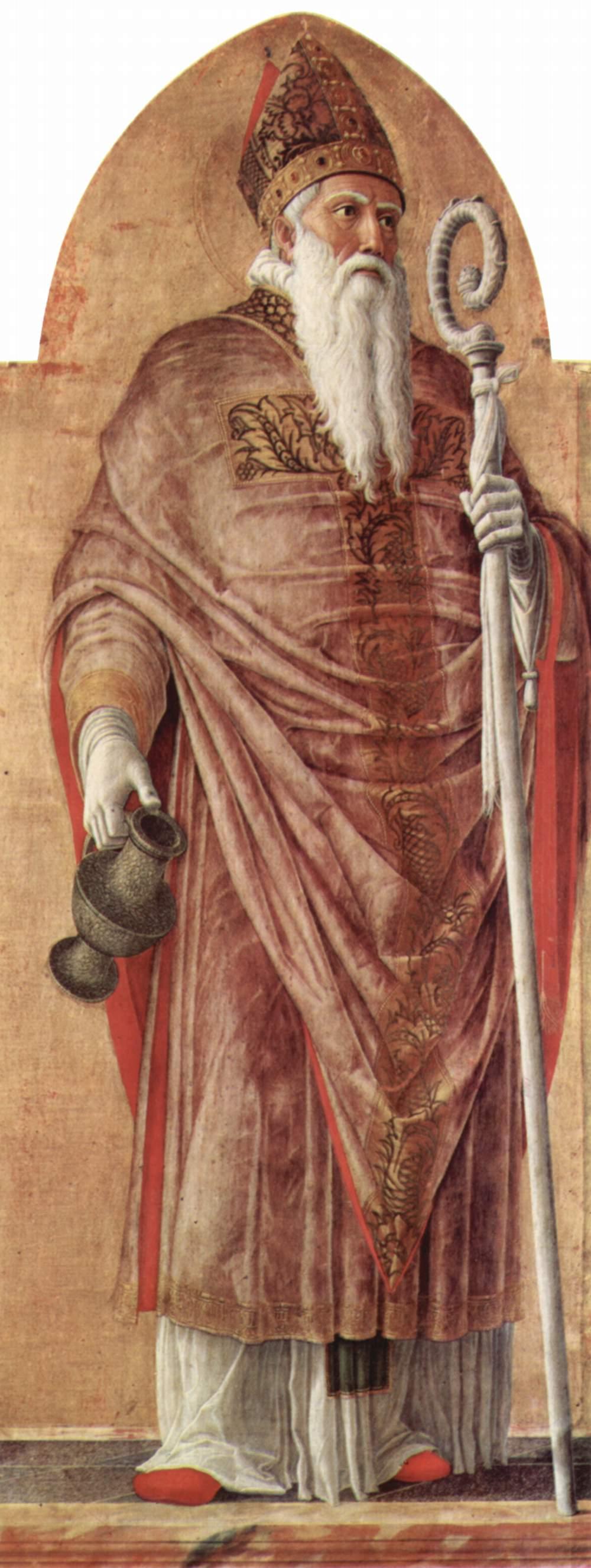
Easter — Pascha in both Greek and Latin, taking its name directly from the Hebrew Pesach — is the central feast of the Christian year. Every other day in the calendar derives its meaning from it. Every Sunday is in essence a weekly little Easter. The forty days of Lent prepare for it. The fifty days of Eastertide flow out of it. The dating of all the movable feasts and seasons is calculated from it. When Christians speak of "the feast" without qualification, this is the feast they mean.
The earliest Christians celebrated Easter as the direct continuation of the Jewish Passover — the Pascha of the new covenant fulfilling the Pascha of the old. Paul writes to the Corinthians in the mid-50s: "Christ our Pascha has been sacrificed; let us therefore celebrate the feast" (1 Corinthians 5:7–8). The language is not metaphorical. The Last Supper was either a Passover seder (Matthew, Mark, Luke) or its preparation eve (John 19:14, 31 — "the day of Preparation of the Passover"); either way, the death of Christ takes place in the calendrical and theological frame of the Passover lamb. The early church kept the feast on the night of 14 Nisan (the Quartodecimans, principally in Asia Minor) or on the Sunday following (the Roman and Alexandrian practice).
The Quartodeciman controversy of the second century is the first major intra-Christian dispute about the calendar. Eusebius (Hist. Eccl. 5.23–25) preserves the documents. Polycarp of Smyrna defended the Quartodeciman practice (14 Nisan) to Pope Anicetus around 155, citing the authority of John the Evangelist; the two parted in peace. Victor of Rome around 195 attempted to excommunicate the Quartodeciman churches; Irenaeus of Lyon wrote to him in protest, urging that diverse customs do not break the unity of faith. The Council of Nicaea (325) finally settled the matter: Easter would always fall on a Sunday, on the first Sunday after the first full moon on or after the spring equinox, and never on the Jewish 14 Nisan itself. The complicated computus of the medieval church (the calculation of the date of Easter) descends from Nicaea's decree.
Eastern and Western Christians now use different calendars and so usually celebrate Pascha on different Sundays — the Eastern church on the Julian calendar (which currently runs thirteen days behind the Gregorian) and following the Nicene rule strictly so that Pascha must always follow the Jewish Passover, the Western church on the Gregorian calendar (which Pope Gregory XIII introduced in 1582 partly to correct the drift of the equinox). Occasional years see the two paschas coincide (most recently 2025; before that 2017 and 2014). Most years they fall four or five weeks apart. The dating divergence is real and has been the subject of ecumenical proposals since Vatican II; no settled reform has yet been adopted.
Liturgically, Pascha begins with the Easter Vigil on Holy Saturday night. The new fire is struck. The Paschal Candle is lit and carried into the dark church. The Exsultet is sung. The readings move through the whole sweep of salvation history — creation, the fall, Abraham and Isaac, the Red Sea, the prophets — to the empty tomb. Catechumens are baptized; the church's baptismal vows are renewed. The Eucharist of Easter begins. In the Orthodox tradition, the priest opens the doors of the church at midnight with the Gospel of the Resurrection, the cry goes up — Christos anesti, Christ is risen — and the people respond Alithos anesti, He is risen indeed. The fifty days of Eastertide carry the paschal proclamation forward to Pentecost. For the entire fifty days, the church does not kneel. The Alleluia, suppressed throughout Lent, returns in every prayer. The paschal greeting is the customary salutation between Christians. Easter is not a day; it is a season, and the season's interior reality is that Christ is risen and that the church lives in his risen life.
Scriptural Basis
- Exodus 12 — the original Passover, the lamb whose blood saves Israel from death
- Isaiah 53 — the Suffering Servant
- Matthew 28, Mark 16, Luke 24, John 20 — the Resurrection narratives
- Acts 2:22–36 — Peter's Pentecost preaching of the Resurrection
- Romans 6:1–11 — baptism into Christ's death and resurrection
- 1 Corinthians 5:7 — "Christ our Pascha has been sacrificed"
- 1 Corinthians 15 — the great Pauline argument for the bodily Resurrection
Observance
- The Easter Vigil (Saturday night) — the principal liturgy of the entire Christian year
- The Great Easter / Pascha procession in the East: the priest and people processing around the church at midnight, the cry of "Christos anesti — Alithos anesti" ("Christ is risen — He is risen indeed")
- Easter Day Mass / Divine Liturgy — typically the largest single-day attendance of the year
- The Octave of Easter (eight days) and the fifty days of Eastertide leading to Pentecost
- Renewal of baptismal vows (in both East and West); the paschal greeting carried through the fifty days
- Easter foods after the Lenten fast (lamb, eggs, breads — kulich and pascha in the Slavic tradition, simnel cake in England, mämmi in Finland)
Citations & Further Reading
- 1 Corinthians 5:7–8 (Paul's earliest paschal theology)
- Melito of Sardis, Peri Pascha (On Pascha, c. 165) — the earliest surviving paschal homily
- Eusebius, Historia Ecclesiastica 5.23–25 (the Quartodeciman controversy)
- Council of Nicaea (325) — the paschal canon
- Augustine, Sermons 219–260 (the Easter Vigil and Easter season sermons)
- Raniero Cantalamessa, Easter in the Early Church (Liturgical Press, 1993)
- Talley, The Origins of the Liturgical Year (Pueblo, 1986), 1–78