Passover
Pesach (פֶּסַח)
Pesach — the foundational feast of the Jewish year, commemorating the Exodus from Egypt. The lamb whose blood spared Israel from the death of the firstborn, the matzah of haste, the Seder that re-enacts the redemption each spring.
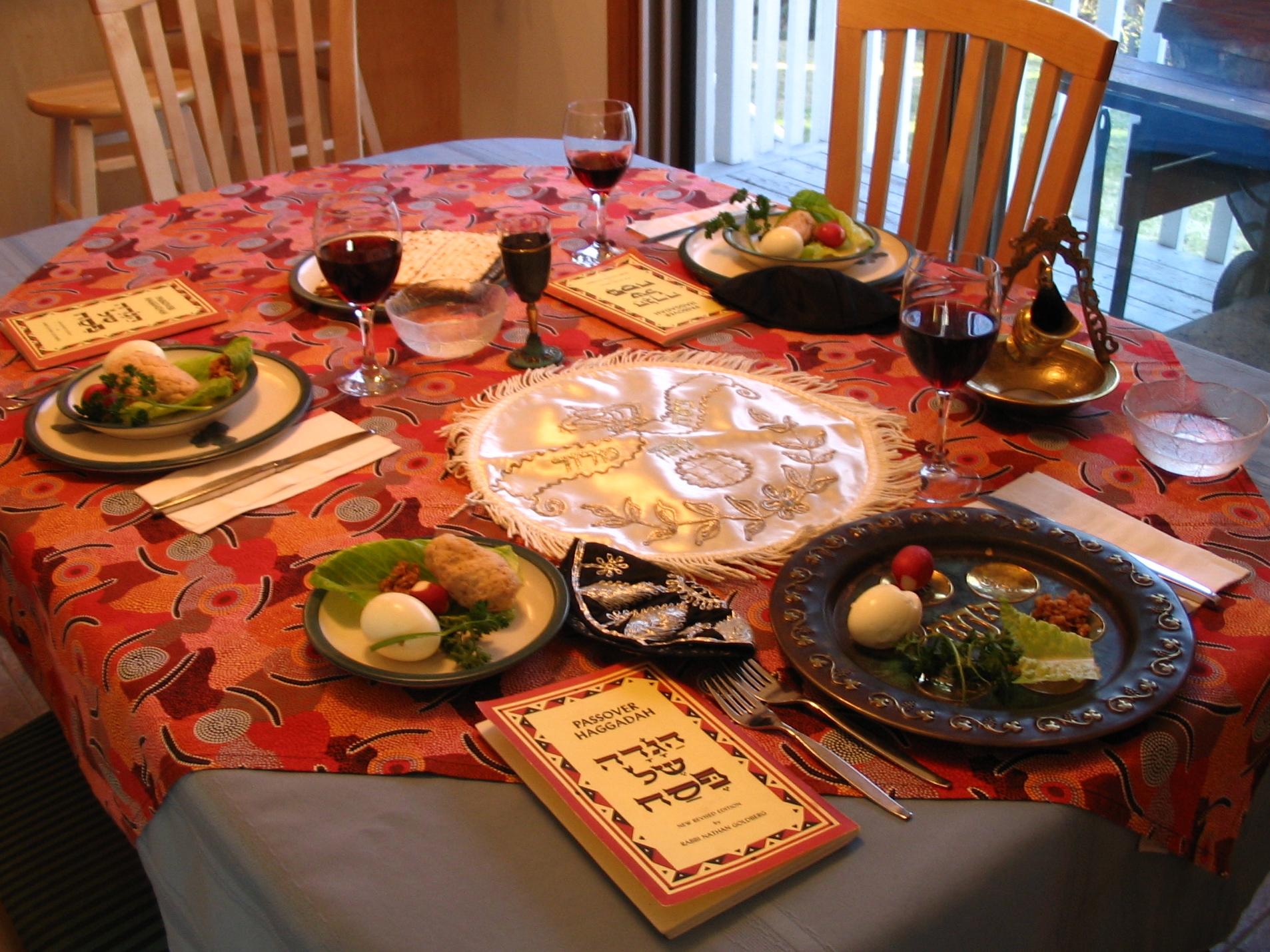
Pesach (Passover) is the foundational feast of the Jewish year and one of the three pilgrimage festivals (shalosh regalim) on which, in Temple times, every Israelite male was commanded to appear before the Lord (Exodus 23:14–17, Deuteronomy 16:16). It commemorates the night of the tenth plague (Exodus 12), when the firstborn of Egypt died and the firstborn of Israel were spared — the angel of death passing over (pasach) the houses marked with the blood of the lamb on the doorposts. The next morning, Pharaoh released the people of Israel from four hundred years of slavery, and the Exodus began. Every subsequent narrative of redemption in the Hebrew Bible reaches back to this event.
The biblical legislation prescribes that the feast be kept on the fourteenth of the first month (Nisan), with the lamb slaughtered at twilight, roasted whole, and eaten that night with unleavened bread (matzah) and bitter herbs (maror). The blood was painted on the lintels and doorposts. No leaven could be present in the house. The following seven days were the Feast of Unleavened Bread (Chag haMatzot), during which only unleavened bread could be eaten. In Deuteronomy 16, the feast is centralized: it must be kept at "the place that the Lord your God will choose to make his name dwell there" — that is, the Jerusalem Temple, once it was built.
With the destruction of the Second Temple in 70 CE, the lamb could no longer be sacrificed (since the Torah restricts sacrifice to the central sanctuary). Rabbinic Judaism therefore reshaped the feast around the Seder — the ritual meal at home that re-enacts the Exodus in its entirety. The Mishnah (Tractate Pesachim, especially chapter 10) preserves the earliest detailed instructions for the Seder. The four cups of wine, the four questions asked by the youngest (Ma nishtanah halaylah hazeh — "Why is this night different from all other nights?"), the dipping, the eating of matzah and maror, the recital of the Haggadah, the four sons (wise, wicked, simple, the one who does not know how to ask), the singing of the Hallel — all of these are in their main outline already in the Mishnah and are preserved in the Seder still kept by Jewish families everywhere on the first evening of Pesach.
The theological logic of the feast is twofold. It is historical commemoration: "It was not our ancestors alone whom the Holy One redeemed; he redeemed us with them" (Haggadah). The Seder is a deliberate act of memory in which each generation makes the Exodus its own. And it is also eschatological anticipation: the cup of Elijah is set out on the table, the door is opened for Elijah the prophet who will herald the coming of the Messiah, and the Seder closes with the prayer L'shanah haba'ah b'Yerushalayim — "Next year in Jerusalem." Pesach is the feast that points both back to the first redemption (from Egypt) and forward to the final redemption (the messianic age).
For Christian readers, Pesach is the great Old Testament feast on which the Gospels build their account of the Crucifixion. The Last Supper was either a Passover seder (Synoptic Gospels) or its preparation eve (John 19); the institution of the Eucharist is set inside the framework of the Passover meal. The Crucifixion is timed (in John's narrative) to the slaughter of the paschal lambs in the Temple. Paul's earliest paschal theology — "Christ our Pascha has been sacrificed" (1 Corinthians 5:7) — assumes the reader knows the Exodus 12 framework. The Christian feast of Easter takes its name (Pascha, in every European language except English and German) directly from the Hebrew Pesach. The Jewish observance of the feast did not stop and has not stopped; what Christianity claims, in the typological reading the New Testament itself initiates, is that the same God who acted in Egypt and at Sinai is the God who acted at the cross and the empty tomb. The cultivated olive tree (Romans 11) and the wild branches grafted onto it draw life from the same root.
Scriptural Basis
- Exodus 12 — the institution of the feast and the death of the firstborn of Egypt
- Leviticus 23:5–8 — the calendar legislation
- Numbers 9:1–14 — the second-month Passover for those who were ritually impure or distant
- Deuteronomy 16:1–8 — the centralization of the feast at the place the Lord chooses
- Joshua 5:10–12 — the first Passover in the land of Canaan
- 2 Chronicles 30, 35 — the great Passovers of Hezekiah and Josiah
- Isaiah 31:5 — "like birds hovering, so the Lord of hosts will protect [pasach over] Jerusalem"
Observance
- The Seder ("order") on the first night (and outside Israel, the first two nights) of Passover — a fifteen-part ritual meal following the Haggadah
- The Passover lamb (in Temple times) — a yearling male without blemish, slaughtered on 14 Nisan and eaten that night with unleavened bread and bitter herbs (Exodus 12:8)
- Removal of all leaven (chametz) from the household before the feast (bedikat chametz)
- Eating of matzah (unleavened bread) for seven days (Exodus 12:15–20)
- The reading of the Haggadah, which contains the story of the Exodus, the Hallel psalms (113–118), and the four cups of wine
- Modern practice (without the Temple): the Seder plate carries symbolic foods (zeroa — roasted shank bone, beitzah — egg, maror — bitter herbs, charoset — fruit-and-nut paste, karpas — green vegetable, chazeret — second bitter herb)
Citations & Further Reading
- Exodus 12, Leviticus 23:5–8, Numbers 9, Deuteronomy 16:1–8 (the Pentateuchal legislation)
- Mishnah, Tractate Pesachim (esp. chapter 10 on the Seder)
- Babylonian Talmud, Tractate Pesachim 116a–118a (the Four Questions, the Hallel, the four cups)
- Maimonides, Mishneh Torah, Hilkhot Hametz uMatzah (Laws of Leaven and Unleavened Bread)
- Joseph Tabory, JPS Commentary on the Haggadah (Jewish Publication Society, 2008)
- Baruch M. Bokser, The Origins of the Seder (University of California, 1984)
- Israel J. Yuval, Two Nations in Your Womb: Perceptions of Jews and Christians in Late Antiquity and the Middle Ages (UC Press, 2006) — on the historical relationship of Pesach and Pascha