Yom Kippur
Yom Kippur (יוֹם כִּפּוּר — "Day of Atonement")
The Day of Atonement — the holiest day of the Jewish year. The fast, the five services, the Avodah re-enactment of the Temple high priest's entry into the Holy of Holies, and the long shofar blast at the close of Ne'ilah. The day Hebrews 9–10 reads as the type of Christ's sacrifice.
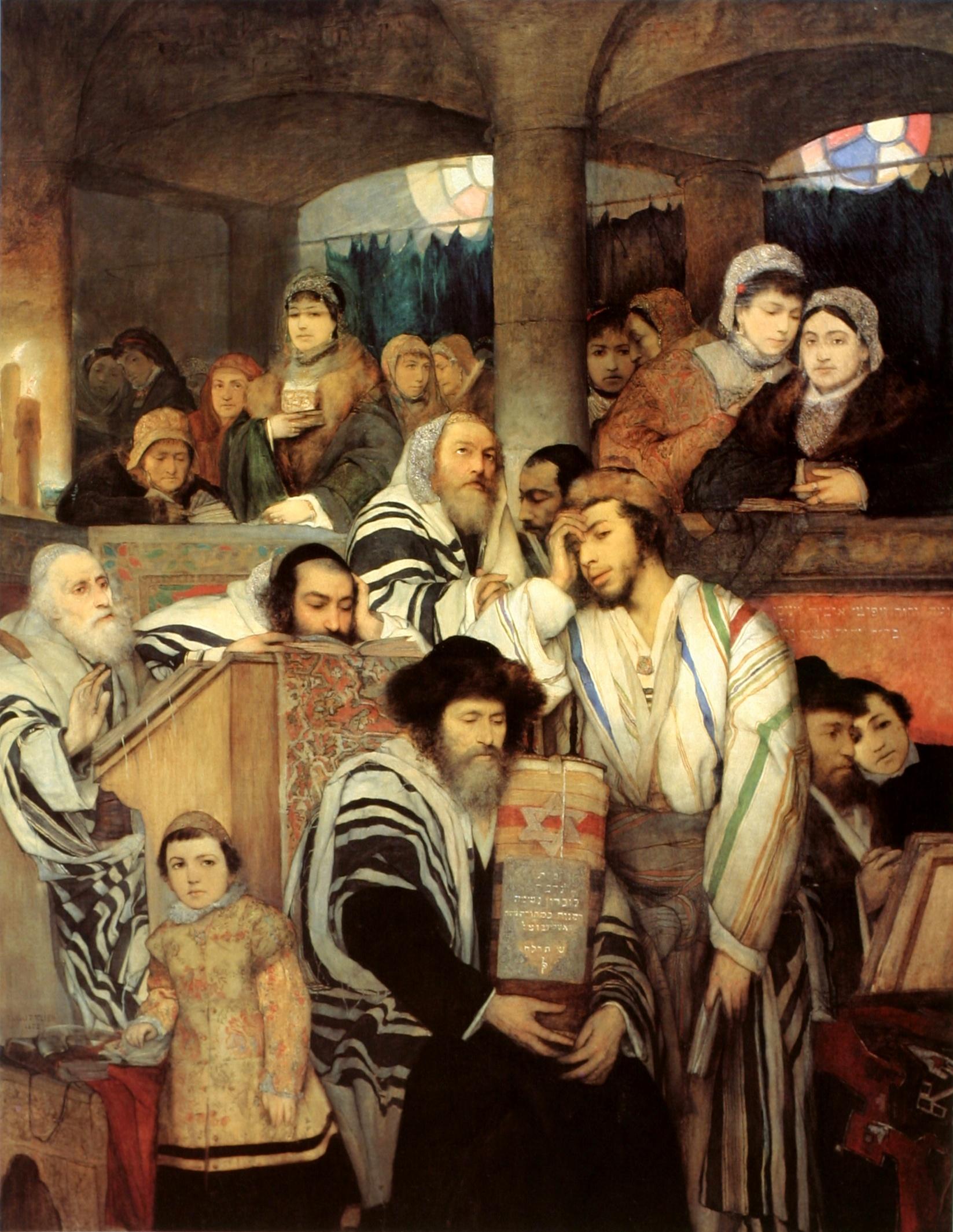
Yom Kippur — the Day of Atonement — is the holiest day of the Jewish year. It is the climax of the Ten Days of Repentance (Yamim Noraim, the High Holy Days) that begin with Rosh Hashanah. Its origin is in Leviticus 16, the chapter of Torah that prescribes the most elaborate ritual of the entire Jewish sacrificial system: the high priest's once-yearly entry into the Holy of Holies with the blood of the goat sacrificed for the people.
The biblical rite has three principal elements. First, the high priest offers a bull for his own sins and the sins of his household (Leviticus 16:6, 11–14). Second, he takes two identical goats from the people of Israel and casts lots over them: one is "for the Lord" and is sacrificed; the other is "for Azazel" — a name that has been variously interpreted as a place, a demon, or simply "the goat that goes away" — and over its head the high priest confesses all the sins of Israel before it is sent into the wilderness (Leviticus 16:7–10, 21–22). This is the scapegoat — the English word coined by William Tyndale in his 1530 translation of the Pentateuch from the Hebrew. Third, the high priest enters the Holy of Holies — the only day of the year on which any person enters — and sprinkles the blood of the goat on the kapporet, the gold cover of the ark of the covenant, between the two cherubim. "For on this day shall atonement be made for you to cleanse you. You shall be clean before the Lord from all your sins" (Leviticus 16:30).
After the destruction of the Second Temple in 70 CE, the high-priestly rite became impossible to perform. Rabbinic Judaism reshaped the day around the synagogue. The Mishnah's Tractate Yoma (which means simply "the Day") preserves the detailed memory of the Temple ritual and was eventually incorporated into the Yom Kippur liturgy as the Avodah service — a verbal reenactment of what the high priest used to do. At the words "and when the priests and the people who were standing in the courtyard heard the holy and awesome Name come forth from the mouth of the high priest, they would kneel and bow and fall on their faces," the entire congregation in the modern synagogue still falls forward to the floor — one of only a handful of moments of full prostration in the Jewish liturgical year.
The five services of the day (Kol Nidre on the eve, then Shacharit, Musaf, Mincha, and Ne'ilah on the day itself) are the most extensive liturgical sequence in the Jewish calendar. The fast is total — no food, no water, no washing, no leather shoes — and lasts approximately twenty-five hours. The day is one of confession (the Vidui prayer with its alphabetical confession of sins is recited ten times), of intercession (the Avodah, the Eleh Ezkerah remembering the martyrs of Israel), and of intense communal repentance. The Ne'ilah service is the climax: as sunset approaches and "the gates are closing" (so the imagery), the congregation makes its final plea for inscription in the Book of Life for the coming year. At the very end, the shofar is sounded — the tekiah gedolah, the long final blast — and the day is over.
For Christian readers, Yom Kippur is the feast most directly addressed by the New Testament's theology of atonement. The Letter to the Hebrews (chapters 7–10) is a sustained reading of Christ as both the great high priest and the sacrificial victim of the Day of Atonement, entering not the earthly Holy of Holies but the heavenly sanctuary, with the blood not of bulls and goats but of his own — once for all, not annually repeated. The Greek word hilasterion ("propitiation" or "mercy seat") that Paul applies to Christ in Romans 3:25 is the Septuagint's word for the kapporet of Leviticus 16. The connection is the most direct typological link between the Jewish liturgical year and the Christian theology of the cross. As with the other feasts, this Christian reading does not deny the Jewish observance or its continuing meaning to the Jewish people. Yom Kippur is still kept; the Day of Atonement still atones, in Jewish theology, through fast and repentance and prayer. What Christianity claims, in the reading the Letter to the Hebrews makes explicit, is that the eternal high-priestly sacrifice has been offered once for all, and that the deepest meaning of the day — the meaning that no annual repetition can finally exhaust — has been disclosed at the cross.
Scriptural Basis
- Leviticus 16 — the high priest's ritual
- Leviticus 23:26–32 — the people's observance, including the fast and the cessation of work
- Numbers 29:7–11 — the additional sacrifices
- Isaiah 57–58 — read as the haftarah; the true fast that the Lord chooses
- Jonah — read at Mincha (afternoon) on Yom Kippur, the great parable of repentance
- Hebrews 9–10 — the New Testament reading of Christ as both high priest and sacrifice, entering the heavenly Holy of Holies
Observance
- A complete fast for approximately twenty-five hours (no food, no water, no washing, no leather shoes, no marital relations)
- Five synagogue services: Kol Nidre (eve), Shacharit, Musaf, Mincha, and the climactic Ne'ilah ("Closing") as the gates are closed at the end of the day
- Kol Nidre — "all vows" — sung before the open Ark on the eve of the day, the legal release from vows made under duress, dating in its present form from the medieval period
- The Avodah service during Musaf — a verbal reenactment of the Temple high-priestly liturgy of Leviticus 16, with the congregation prostrating itself at the words "and when they heard the Name"
- Final shofar blast (tekiah gedolah) at the close of Ne'ilah, ending the fast
- White garments (kittel) traditionally worn by men; white covering on the Torah scrolls and reading desk — symbols of purity and of the shrouds of the dead
Citations & Further Reading
- Leviticus 16; Leviticus 23:26–32; Numbers 29:7–11 (the Pentateuchal legislation)
- Mishnah, Tractate Yoma (the Temple ritual preserved in detail)
- Babylonian Talmud, Tractate Yoma — extensive aggadic and halakhic material
- Maimonides, Mishneh Torah, Hilkhot Avodat Yom haKippurim
- Letter to the Hebrews, chapters 7–10 (the principal NT reading)
- Daniel Stökl Ben Ezra, The Impact of Yom Kippur on Early Christianity (Mohr Siebeck, 2003)
- Adin Steinsaltz, A Guide to Jewish Prayer (Schocken, 2000), 200–215