Abaddon — Hebrew for 'destruction' or 'place of ruin' — appears in the wisdom literature of the Hebrew Scriptures as one of the names for the underworld. Job 26:6 calls it the place that lies open before God; Proverbs 15:11 says 'Hell and destruction are before the Lord.' In these uses, Abaddon is a location, not a being.
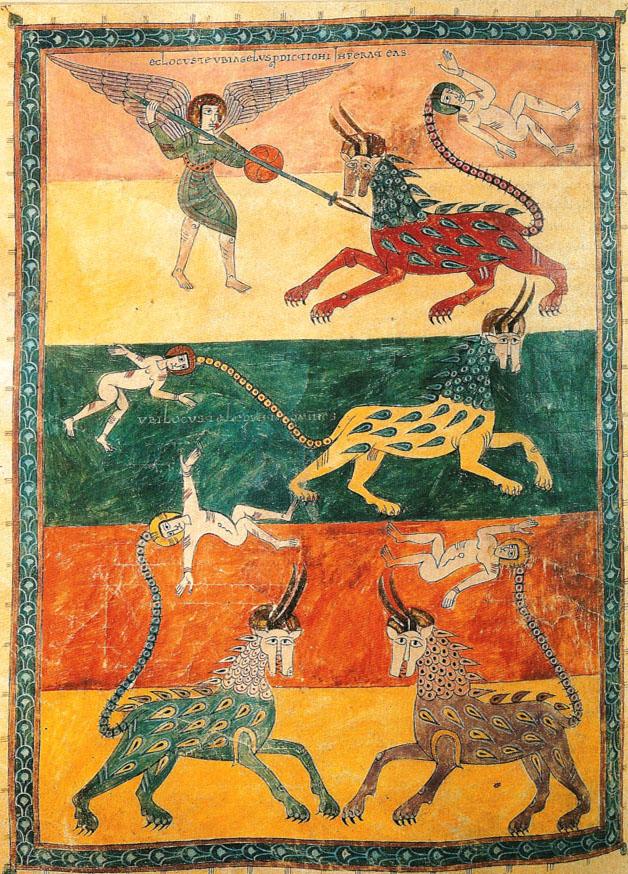
Revelation 9 takes the name in a new direction. The fifth trumpet opens, a star falls from heaven to the earth, and the bottomless pit is opened. Out of the smoke come locusts with the power of scorpions, commanded to torment for five months those who do not have the seal of God upon their foreheads. 'And they had a king over them, which is the angel of the bottomless pit, whose name in the Hebrew tongue is Abaddon, but in the Greek tongue hath his name Apollyon' (Revelation 9:11). The Greek Apollyon means 'destroyer.'
Patristic and medieval commentators debated whether Abaddon-Apollyon is a fallen angel acting under demonic compulsion or an angel of judgment who serves the Lord by executing wrath upon a rebellious world. The text holds the question open. What is unambiguous is the framing of the episode: the abyss is opened by God's permission and at his timing, the torment is limited to five months, and the locust host is restrained from killing. Even in the most violent imagery of Revelation, the destruction is bounded. The Destroyer is given a leash he cannot break.
The Destroyer's host is set loose only by the breath of the trumpet, and only for the season the Lord appoints — and after the seasons of judgment, the final destruction is not the destroyer's victory but the Destroyer's end (Revelation 20:10).