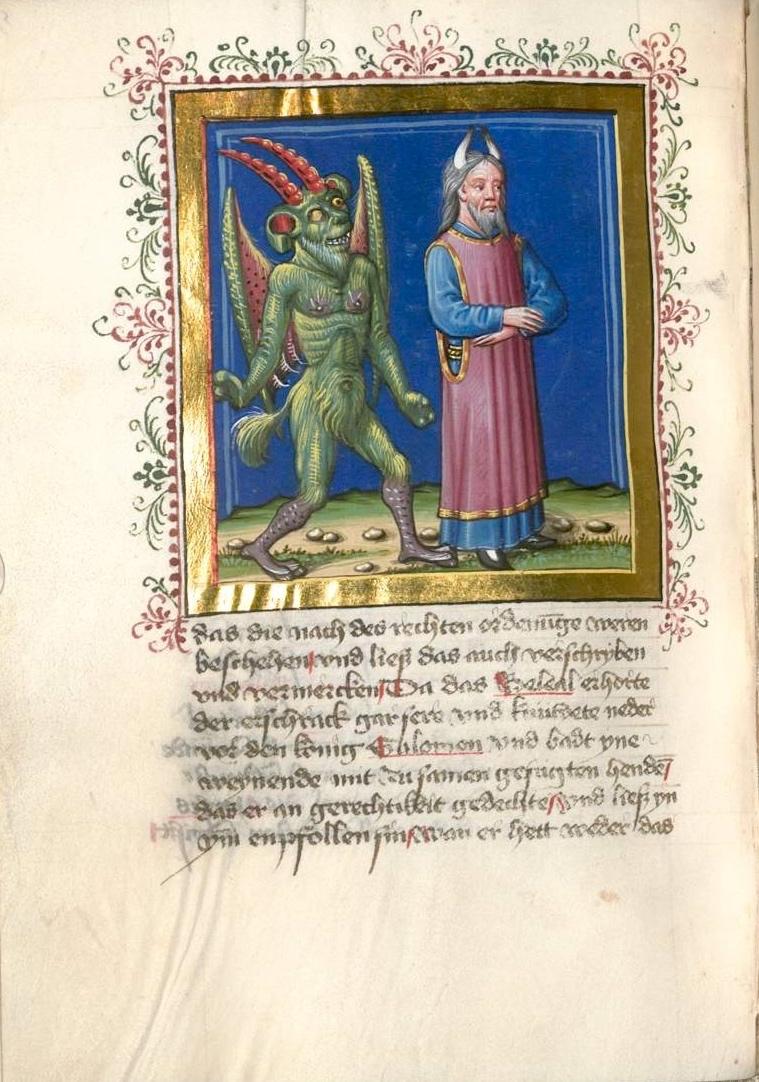
Belial — beliyya'al in Hebrew, meaning 'worthlessness' or 'lawlessness' — appears throughout the Old Testament as an adjective applied to ungodly behavior. The 'sons of Belial' are the wicked men of Gibeah in Judges 19, the corrupt sons of Eli in 1 Samuel 2, the false witnesses against Naboth in 1 Kings 21. The phrase is sometimes used to describe rebellious idolatry — Deuteronomy 13:13 warns of certain 'children of Belial' who would draw Israel away to other gods.
By the Second Temple period, what had been an adjective is treated as a name. In the Dead Sea Scrolls, particularly the War Scroll and the Community Rule, Belial appears as a personal figure — the prince of the kingdom of darkness who leads the spirits of error and who will be finally destroyed by the Messiah. The dualism is sharper in these texts than in the canonical writings, but the trajectory of personification is clear.
Paul picks up this trajectory in 2 Corinthians 6:15, where he asks the Corinthian Church the question that defines the moral life: 'What concord hath Christ with Belial?' The question is rhetorical. Belial, the personification of lawless ungodliness, is the opposite of Christ. To be a Christian is to have come out from the company of Belial and to be set apart for the Lord. The figure of Belial in this passage is less a being you encounter and more the principle of ungodliness you are called to refuse.
Christ has no concord with Belial — and through union with Christ, neither do those who belong to him (2 Corinthians 6:15–18).