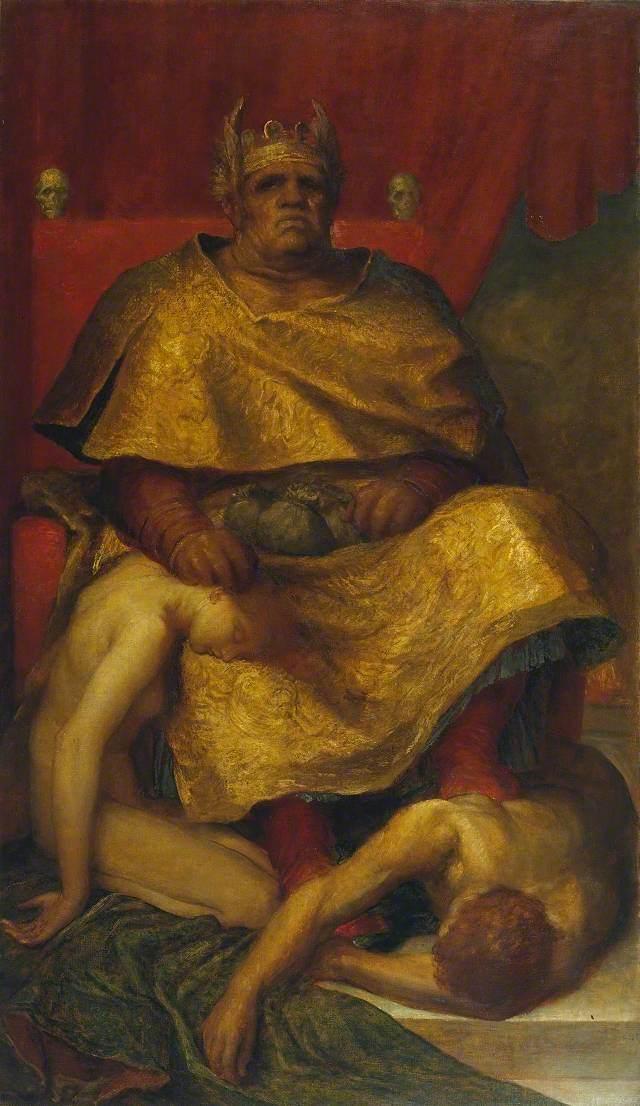
Mammon — mamonas in the Greek, from the Aramaic word for wealth or property — appears in only one teaching of Christ, but its placement is decisive. 'No man can serve two masters: for either he will hate the one, and love the other; or else he will hold to the one, and despise the other. Ye cannot serve God and mammon' (Matthew 6:24). The construction is not that money is a thing to be managed but that mammon is a master to be served — and the Christian must refuse it.
Patristic theology has read Mammon as a personification of an idolatrous power, similar to Belial. The Greek Fathers do not generally treat Mammon as a distinct fallen being but as the demonic principle behind the love of money that 1 Timothy 6:10 calls 'the root of all evil.' The personification is theological, not mythological — it names the spiritual reality that money operates as an alternative god in the hearts of those who give it the worship that belongs to God alone.
Aquinas, drawing on Augustine, comments that mammon's power is the power of misordered desire — wealth itself is morally neutral, but the love of wealth re-orders the soul toward an idol. The Reformers preached this teaching especially hard: Luther's catechetical writings on the First Commandment treat the practical idolatry of money as the most common false god of modernity. The same instinct that drove the patriarchs of the Old Testament to set up images of Baal lives in every age — but in our age it more often takes the form of a balance sheet than a stone idol.
Christ does not negotiate with Mammon; he requires the heart undivided — and in giving him our trust, money is reduced to what it always was, a tool that serves the Kingdom rather than rivals it.