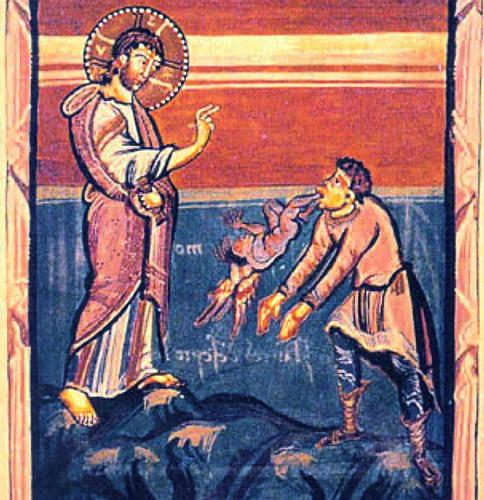
'Unclean spirit' — pneuma akatharton in the Greek — is the most common designation for demons in the Synoptic Gospels and Acts. It appears more than twenty times. The phrase tells us something specific about how the New Testament categorizes demonic activity. The term is not a proper name but a descriptor: these spirits defile. They render unclean. Their effect on the persons they inhabit is the loss of self-possession, the breaking of community, and the desecration of the body that was made to be a temple of the Holy Spirit.
The Gospels show Christ confronting unclean spirits from the opening pages of his ministry. The first miracle in Mark's Gospel (Mark 1:23–27) is an exorcism: a man in the synagogue at Capernaum cries out, the unclean spirit recognizes Christ — 'I know thee who thou art, the Holy One of God' — and Christ commands its silence and its departure. The crowd is amazed: 'With authority commandeth he even the unclean spirits, and they do obey him.' The pattern repeats across the Synoptics. Every confrontation ends the same way.
Patristic theology gives the category a sharper edge. Unclean spirits are not simply weaker demons but are characterized by their defiling function. The early Church's baptismal liturgies included explicit renunciations of the unclean spirit, and the exorcism prayers preserved in the ancient Eastern liturgies (and still used in Orthodox baptism today) draw directly on this Gospel category. To be baptized is to have the unclean spirit driven out and the Holy Spirit poured in.
Revelation 16:13–14 names three unclean spirits like frogs coming out of the mouth of the dragon, the beast, and the false prophet — the final eschatological deception attempting to gather the kings of the earth to the battle of the great day of God Almighty. The category remains all the way to the end. So does the authority that has always commanded it.
Christ never lost a confrontation with an unclean spirit in the Gospels, and the same authority has been entrusted to his Church (Matthew 10:1).