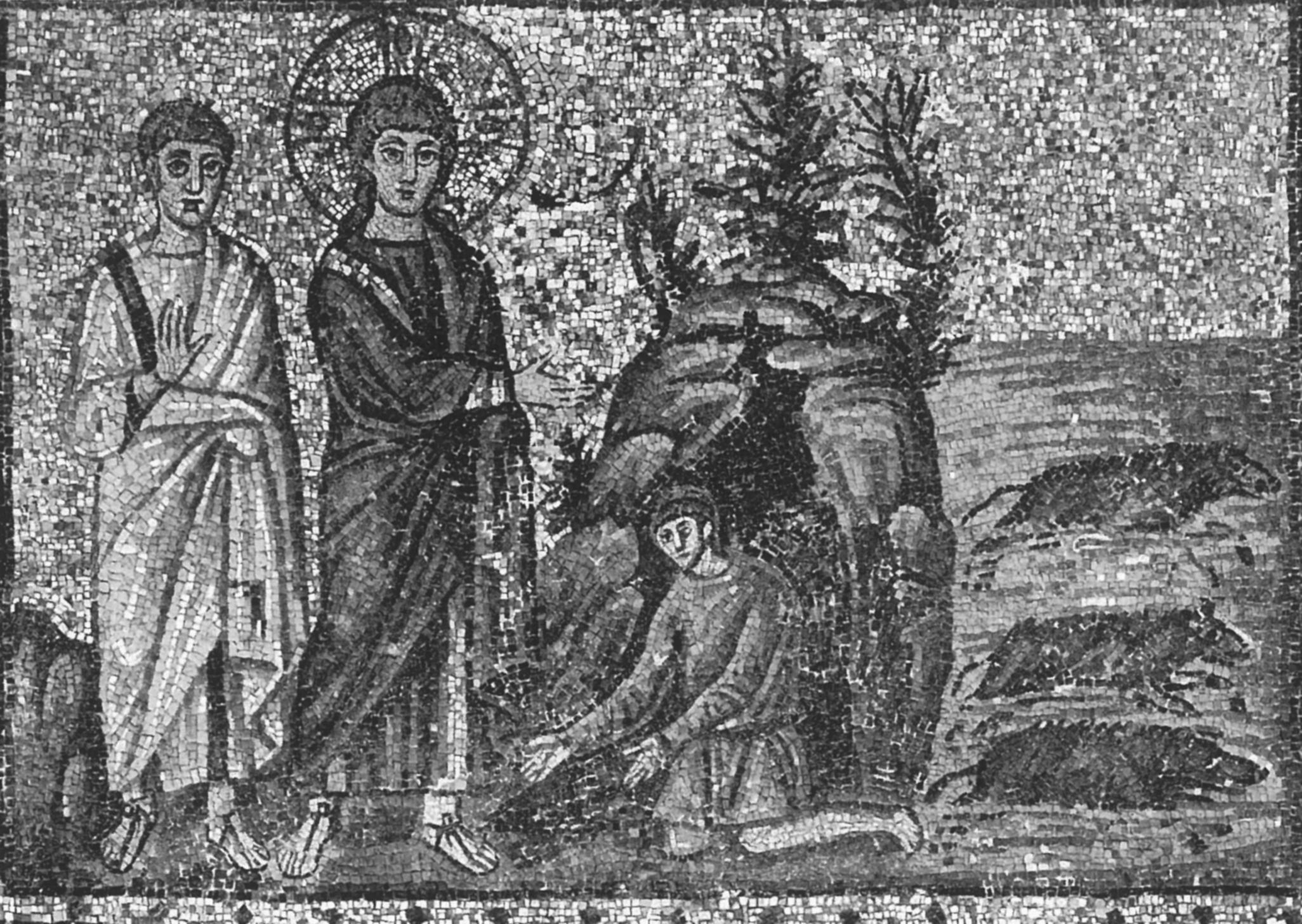
The encounter at Gerasa is one of the most theologically dense exorcism narratives in the Gospels. Christ confronts a man so overrun by unclean spirits that no one can bind him — not with chains, not with fetters. The man lives among the tombs, cuts himself with stones, and cannot be subdued. When Christ asks his name, the answer comes from the spirits within: 'My name is Legion: for we are many' (Mark 5:9).
The Greek word legion is the Roman military term for a unit of roughly five to six thousand soldiers. The name is not poetry. It tells us several things at once. The man is held by an organized host, not a single tormentor. The host operates with military precision — chain of command, group identity, coordinated action. And the host is afraid of the Word incarnate standing before them; they beg not to be sent out of the country, not to be commanded to the abyss. Christ permits them entry into the herd of swine, and two thousand pigs run violently down a steep place into the sea and are drowned.
The patristic reading of Legion is sober. The episode tells us that demonic oppression is real, that it can be massive in scale, that it is organized along recognizable lines — and that it is utterly subject to the authority of Christ. The same Christ who had stilled the storm in the previous chapter now stills the storm in a man. The deliverance is total: when the people come out to see what has happened, the man who had been overrun is now 'sitting, and clothed, and in his right mind.' The seated posture is intentional in the Gospel narrative — it is the posture of a disciple at his teacher's feet.
Legion was many; Christ is one and is enough — the unclean host obeyed the Word who stood before it, and a man was returned to himself.