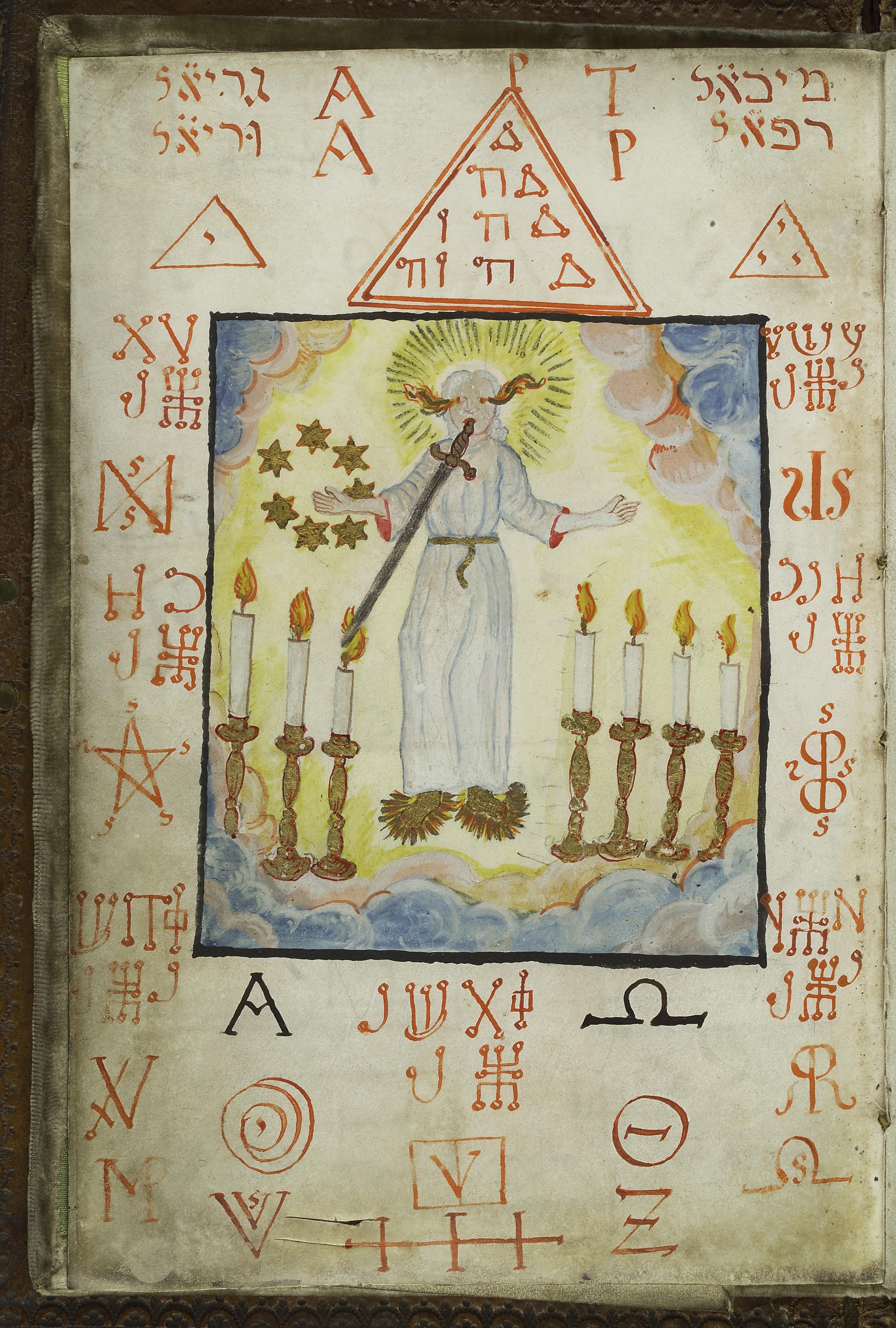
Metatron is an angelic figure from Jewish mystical literature — particularly the Hekhalot writings and the Babylonian Talmud — who occupies an unusually exalted position in the heavenly court. The clearest source is 3 Enoch (the Sefer Hekhalot), where the figure of Metatron is identified with the transformed Enoch of Genesis 5:24, who 'walked with God, and he was not, for God took him.' In the mystical tradition, this transformation is rendered as an apotheosis: Enoch ascends, is enthroned, and is given the name Metatron and the title 'the lesser YHWH' — a name that troubled the rabbis themselves, who in Sanhedrin 38b record a debate about whether such an identification compromises the unique divinity of God.
Christianity has never venerated Metatron and never accorded him a place among the named angels. The figure does not appear in the New Testament or in any patristic source as an object of devotion. But Metatron is worth knowing for two reasons. First, the world of Second Temple Jewish angelology — with its named exalted angels, its principal-angel traditions, and its question of where the divine ends and the highest creature begins — is the world the New Testament writers inherited and wrote against. The Christological claims of Hebrews and Colossians take their full force only when read against this background.
Second, the Metatron tradition makes vivid the danger the early Church was confronting in Colossae and elsewhere. Paul's insistence in Colossians that Christ is the image of the invisible God, the firstborn of all creation, and that in him 'dwelleth all the fulness of the Godhead bodily,' is in direct contrast to a theology that would exalt an angelic intermediary to the place of God. The Christological confession is precise because the alternative was historically real: someone or something other than the eternal Word, raised up to take that place.
Christianity recognizes one mediator — and he is not an angel. The Metatron tradition, read as a historical witness, sharpens the gospel's claim.