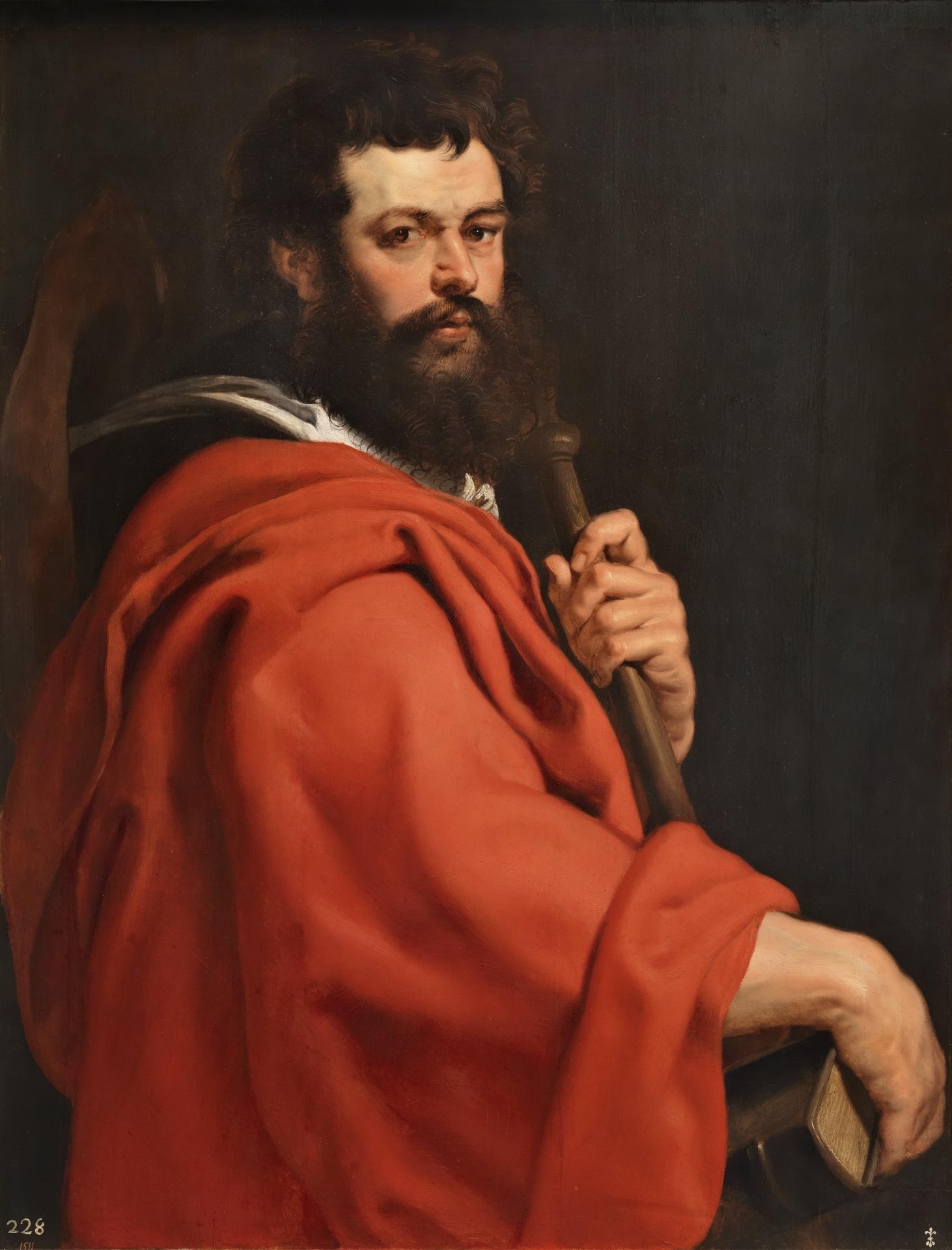
James the son of Zebedee, brother of John the Evangelist, is one of the inner three of the apostolic company — present with Peter and John at the Transfiguration (Matthew 17:1), at the raising of Jairus's daughter (Mark 5:37), and in the garden of Gethsemane (Mark 14:33). Jesus gave the brothers the nickname 'Boanerges' — 'sons of thunder' (Mark 3:17) — a name whose origin Mark does not explain but which suggests a temperament: they once asked the Lord whether they should call down fire on a Samaritan village (Luke 9:54), and they later asked Jesus to seat them on his right and left in the kingdom (Mark 10:37). His martyrdom is treated more fully in the Martyrs library; this profile focuses on his apostolic identity and ministry.
James is consistently called 'the Greater' (or 'the Major') in church tradition to distinguish him from James the son of Alphaeus (James the Less) and James the brother of the Lord. The distinction is by age or seniority, not stature; 'greater' here is the older / more prominent of the two apostles named James.
Acts 12:1–2 records his death in a single, almost terse, sentence: 'About that time Herod the king laid violent hands on some who belonged to the church. He killed James the brother of John with the sword.' He was the first of the Twelve to be martyred, around 44 AD. The Herod in question is Agrippa I, grandson of Herod the Great, ruler of Judea from 41 to 44 AD. James's execution was politically motivated — Agrippa was courting Jewish establishment opinion, and James was the visible, prominent disciple whose death could be used to demonstrate the kingdom's stance.
The medieval Spanish Camino de Santiago — the pilgrimage to Santiago de Compostela in Galicia — is grounded in a tradition that James preached in Spain before his death and that his body was translated to Iberia afterward. The tradition first appears in the 7th century and was consolidated in the 9th century when supposed relics were discovered at Compostela. Modern critical scholarship does not consider the Spanish mission historically attested in the early sources, but the Compostela pilgrimage became one of the three great medieval pilgrimages (alongside Rome and Jerusalem) and remains one of the most-walked Christian pilgrimage routes in the world. The scallop shell — the traditional emblem of the Compostela pilgrimage — became James's iconographic attribute in medieval Western art.