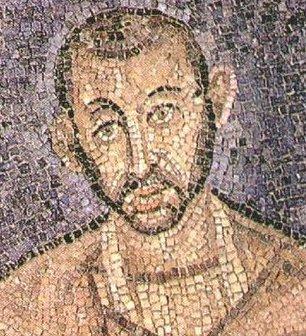
Ambrose of Milan
The Roman governor turned bishop who baptized Augustine, confronted emperors, and established the moral authority of the Church over temporal power.
“The emperor is within the Church, not above it.”
— Sermo contra Auxentium
Ambrose of Milan is one of the original four Doctors of the Western Church (with Jerome, Augustine, and Gregory the Great). His life charts an extraordinary trajectory: from Roman imperial governor to bishop to one of the most consequential churchmen of the 4th century.
In 374, the Bishop of Milan died amid fierce Arian-Nicene tensions. The crowd — by tradition — suddenly called out Ambrose's name. He was the popular imperial governor of the region, a catechumen (not yet baptized), and entirely reluctant. Within a week he was baptized, ordained through all the clerical orders, and consecrated bishop.
From this position he preached with enormous authority, shaped the liturgical music of the Western church (the Ambrosian chant tradition), and gave Augustine the preaching that finally broke open his resistance to Christianity.
His most dramatic act was confronting Emperor Theodosius after the Thessalonica massacre of 390, in which imperial troops slaughtered 7,000 civilians. Ambrose denied him communion until he performed public penance — a landmark moment in the relationship between Church authority and secular power.
- The Church's moral authority over secular rulers
- Virginity as a theological witness to eschatological life
- Liturgical hymnody as congregational theology
- The sacraments as mysteries mediating the divine life
Born in Augusta Treverorum (modern Trier), Germany
Appointed Roman governor of Aemilia-Liguria, based in Milan
Acclaimed Bishop of Milan by popular demand
Preaching heard by Augustine; refuses Arians the basilica
Baptizes Augustine at Easter
Bars Emperor Theodosius from communion after Thessalonica
Dies on Easter morning in Milan
A Christianization of Cicero's Stoic ethics — the foundational text of Christian moral philosophy in the West.
Mystagogical catecheses on baptism and the Eucharist for the newly baptized.
Ambrose wrote the first Latin hymns for congregational use — shaping Western liturgical music for a millennium.