Articlepublished
Why the Lord's Supper Divides Christians
By Christian Garces2026-05-1711 min read
Release2026-05-17
Read time11 min read
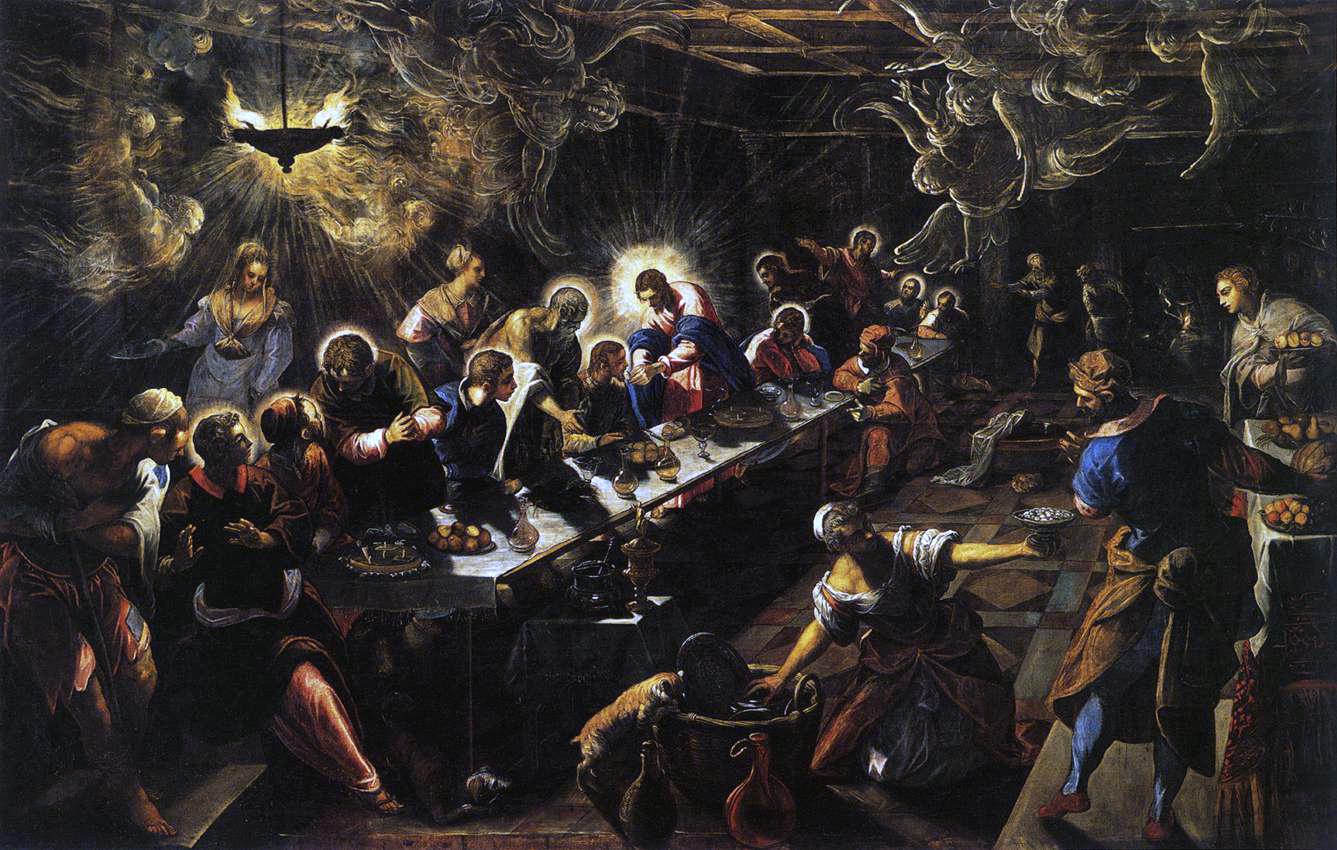
The Earliest Practice We Have
If you wanted to identify the most thoroughly attested practice of the earliest Christian Church, you would not need to argue. Before the canon of the New Testament was closed, before the office of bishop was universalized, before the first creed was hammered out, the followers of Jesus were gathering on the first day of the week to break bread and pour wine in memory of him and in expectation of him. The Didache, perhaps the earliest extant non-canonical Christian document, preserves what appear to be its eucharistic prayers in chapters 9 and 10. Ignatius of Antioch, writing on his way to martyrdom in Rome around 110 AD, calls the Eucharist “the medicine of immortality, the antidote against death.”[1] By the mid-second century, Justin Martyr’s First Apology 65–67 describes a service recognizable in form to any historic Christian today: reading of the prophets and the memoirs of the apostles, sermon, prayers, kiss of peace, presentation of bread mixed with water and wine, the eucharistic prayer with thanksgiving, the communion of the faithful, and the carrying of the consecrated elements to those who could not attend.[2]
And yet this rite — the one practice that every form of historic Christianity shares — has done more to keep Christians from each other than any other thing. The Reformation broke partly over it. Two of the most important Protestant movements in the sixteenth century refused communion to one another over it. Catholic and Protestant Christians today cannot, in most of the world, share the cup. The simplest meal in the New Testament has produced more theological literature than any other single sacrament. The reason is not pettiness or scholasticism. It is Christology. What the Eucharist is depends on who Christ is, and what salvation requires.
The Patristic Consensus on Real Presence
The pre-Nicene witnesses are remarkably consistent. Ignatius writes against the Docetists who were dividing his congregation at Smyrna: “They abstain from the Eucharist and from prayer, because they do not confess that the Eucharist is the flesh of our Savior Jesus Christ, the flesh which suffered for our sins, and which the Father, in his goodness, raised up again” (Smyrnaeans 7.1).[3] The argument is precise. Docetists believed Christ only seemed to have a body; therefore, Ignatius says, they cannot believe the Eucharist is his body either. Eucharistic realism and Incarnational realism stand or fall together. Justin Martyr makes the same connection: “Not as common bread and common drink do we receive these; but in like manner as Jesus Christ our Saviour, having been made flesh by the Word of God, had both flesh and blood for our salvation, so likewise have we been taught that the food which is blessed by the prayer of His word, and from which our blood and flesh by transmutation are nourished, is the flesh and blood of that Jesus who was made flesh” (First Apology 66).
Irenaeus of Lyon, around 180 AD, makes the link explicit in Against Heresies IV.18 and V.2: the Eucharist is the offering of creation taken up into Christ’s sacrifice. To deny the goodness of created matter is to deny that bread and wine could ever bear Christ’s flesh and blood. By the fourth century, Cyril of Jerusalem’s Mystagogical Catechesis IV is teaching the newly baptized in unmistakable language: “Do not, therefore, regard the bread and wine as mere elements, for they are, according to the Lord’s declaration, the body and blood of Christ.”[4] The patristic mind is consistent. The bread is bread; the wine is wine; and yet, by the prayer of the Church and the descent of the Spirit, they are also the body and blood of Christ. The pre-Reformation Church did not feel obliged to specify the mechanism. It was enough to confess that the Lord had said “this is my body,” and that the Church had believed him.

The Medieval Refinement: Transubstantiation
The first attempts to specify the mechanism are medieval. The ninth-century dispute between Paschasius Radbertus and Ratramnus at the abbey of Corbie established the question that the Latin West would worry for the next four hundred years: how does the bread become Christ’s body? A more dramatic controversy in the eleventh century, around Berengar of Tours, drew explicit conciliar action: Berengar was made in 1059 to confess that the bread and wine were “sensibly handled and broken by the hands of the priests and crushed by the teeth of the faithful.” The formula was clumsy. The theological problem it tried to address was real. If the consecrated bread is truly Christ’s body, what kind of being does it have?
The Fourth Lateran Council of 1215 gave the Latin Church its mature answer. The bread and wine, by the words of consecration, are transubstantiated (transsubstantiantur) into the body and blood of Christ. The Council of Trent in Session 13 (October 1551) elaborated the position with full Aristotelian precision: the substance of bread and wine is converted into the substance of Christ’s body and blood, while the accidents (appearance, taste, texture, weight, smell) remain unchanged.[5] Trent was emphatic that this is not a philosophical theory added to the faith but the most apt expression of what the Church has always believed: aptissime, “most fittingly.” To Catholics it is the natural elaboration of patristic realism. To the Reformers about to break with Rome, it would look like the importation of Aristotelian metaphysics into the simple words of Christ.
The Reformation Fracture
Luther’s break with Rome did not begin with the Eucharist; the Ninety-Five Theses of 1517 concern indulgences. But the Eucharist became central by 1520, when Luther published The Babylonian Captivity of the Church. There he rejected the cup’s withholding from the laity, rejected the Mass as a propitiatory sacrifice offered by the priest, and rejected transubstantiation. He kept, however, what he considered the heart of the matter: the real bodily presence of Christ in the bread and the wine. “This is my body,” Luther insisted, means what it says.[6] He worked out the doctrine in detail in That These Words of Christ ‘This Is My Body’ Still Stand Firm (1527) and in the Smalcald Articles (1537). The Lutheran tradition has preferred the term sacramental union for what it confesses; popular shorthand calls it consubstantiation, though that is not a Lutheran term.
Huldrych Zwingli, the reformer of Zürich, went much further. In Commentarius de Vera et Falsa Religione (1525) and On the Lord’s Supper (1526), Zwingli read “this is my body” as “this signifies my body.” The Supper is a memorial, a public confession of faith, a thanksgiving for the once-for-all sacrifice at Calvary. Christ’s body is in heaven, at the right hand of the Father, and cannot be eaten in the bread. To speak of bodily presence in the elements, Zwingli argued, would be to repeat the Catholic error of locating the infinite in finite matter.[7] For Zwingli, this was not a diminishment of the Supper but its purification. For Luther, it was a denial of the words of Christ.
The two men met at the Marburg Colloquy in October 1529. Philip of Hesse had convened the meeting in the hope of unifying the German and Swiss Reformations into a single confessional bloc. Luther, Melanchthon, Zwingli, Oecolampadius, Martin Bucer, and others worked through fifteen articles. Fourteen they agreed on. On the fifteenth — the Lord’s Supper — they could not. Luther chalked the words hoc est corpus meum on the table and would not move. Zwingli pressed the philosophical and exegetical case for the figurative reading. At the end, when Zwingli with tears asked Luther to recognize him as a brother in Christ, Luther replied (in one of the most quoted lines of the Reformation): “You are of a different spirit” (Ihr habt einen anderen Geist).[8] The two Protestant traditions parted. The political unification Philip of Hesse had hoped for did not happen. The Swiss and the Saxons would build separate confessional structures, marry into separate political alliances, and produce separate theological literatures for the next five hundred years.
Calvin’s Mediating Position
John Calvin, who came to theological maturity after Marburg, attempted to find a position between Luther and Zwingli. In Institutes IV.17, Calvin argues for what is now called the doctrine of pneumatic presence or spiritual real presence: Christ is truly and substantially received in the Supper, but by the work of the Holy Spirit lifting the believer’s heart to heaven, not by the descent of Christ’s body into the elements. “The Spirit truly unites things separated by space.”[9] The bread and wine remain bread and wine, but the believing communicant feeds on the body and blood of the ascended Christ. Calvin reached the Consensus Tigurinus of 1549 with Heinrich Bullinger, Zwingli’s successor in Zürich, on the basis of this formulation. The Reformed tradition has held to it ever since: the Heidelberg Catechism (Q. 75–80, 1563), the Belgic Confession (Article 35, 1561), and the Westminster Confession (Chapter 29, 1647) all teach versions of pneumatic presence.
The Confessional Settlements
By the late sixteenth century the confessional positions had hardened. The Council of Trent had given the Catholic position its mature shape: Session 13 (1551) defined real presence and transubstantiation; Session 22 (1562) defined the Mass as a true and propitiatory sacrifice. The Lutheran Formula of Concord (1577), Article 7, defended Luther’s real-presence doctrine against Reformed objections and condemned both transubstantiation and the Zwinglian reading. The Reformed confessions had codified Calvin’s pneumatic presence. The Thirty-Nine Articles of the Church of England (Article 28, 1571), drafted by Cranmer and revised by Parker, charted a careful middle course: transubstantiation is rejected as “repugnant to the plain words of Scripture,” but the body of Christ is given, taken, and eaten in the Supper “after an heavenly and spiritual manner,” and “the mean whereby the Body of Christ is received and eaten in the Supper is Faith.”[10] Anglican theology has accommodated a wide range of views within that frame, from Receptionism to a robust Real Presence position close to Lutheranism.
The Free Church and Baptist tradition has followed Zwingli more often than not. The Lord’s Supper in most Baptist polities is an ordinance — a divinely commanded act of obedience and remembrance — rather than a sacrament that conveys grace. The bread and the cup are signs that point to the sacrifice of Christ on the cross; the meal proclaims his death until he comes (1 Corinthians 11:26). Eastern Orthodoxy, finally, holds something close to the Catholic position but is reluctant to define the mode philosophically: the Confession of Dositheus (1672) adopts the language of transubstantiation, but the mainstream of Eastern theology prefers to confess the change a mystery and to focus on what the rite accomplishes rather than how.
The Modern Ecumenical Convergence — and What It Could Not Bridge
The twentieth century brought the most serious attempt at convergence since the Reformation. The Faith and Order Commission of the World Council of Churches produced the Lima text — Baptism, Eucharist and Ministry — in 1982, after fifty years of drafting and consultation involving Catholic, Orthodox, Anglican, Lutheran, Reformed, Methodist, Baptist, and Pentecostal theologians.[11] The Eucharistic section of BEM is remarkable. It affirms thanksgiving (anaphora), memorial (anamnesis), invocation of the Spirit (epiclesis), communion of the faithful, and the meal as foretaste of the Kingdom — categories the major traditions had treated as proprietary — as common Christian doctrine. The Anglican–Roman Catholic International Commission (ARCIC) produced The Final Report in 1981, with its Eucharist statement of 1971/1979 declaring “substantial agreement” on the central questions of presence and sacrifice. The Lutheran World Federation and the Pontifical Council for Promoting Christian Unity reached the Joint Declaration on the Doctrine of Justification in 1999, and continuing bilateral dialogues have explored the eucharistic question with the same care.
What none of these documents has been able to bridge is the practical division at the altar. The Catholic Church does not generally admit non-Catholic Christians to communion (Code of Canon Law 844, with limited exceptions). Most Orthodox jurisdictions do not commune non-Orthodox at all. Many Reformed and Baptist congregations practice closed or close communion. The doctrinal convergence is real; the ecclesial discipline that protects each tradition’s confession of what the meal is has not yielded. To Catholic and Orthodox theology, intercommunion without doctrinal agreement is a polite fiction that wounds the sign. To Free Church theology, denial of the table to a fellow believer is a wound of a different kind. Both positions are theologically intelligible. Both are pastorally costly. The meal Christ gave his Church on the night he was betrayed has not yet been received in common, and the wound of that division is the church’s open question, not its closed one.
What Remains
What the patristic Church held without specifying, the medieval West specified, and the Reformation broke over. The Eucharist is the irreducible center of historic Christian worship. The fight over what it is is therefore inseparable from the fight over what Christ is, what salvation requires, and what the Church is for. To minimize the Supper to a memorial is to lose the patristic conviction that Christ comes to his people in the meal. To make it a re-sacrifice independent of Calvary is to lose the New Testament conviction that the offering was made “once for all” (Hebrews 10:10). The historic positions are not all equally right, but they are all attempts to guard the same thing: a sacrament that is mystery enough to support reverence, and real enough to bear weight. The Church will not stop arguing about the Lord’s Supper because the Lord’s Supper is what the Church is for. The sacramental positions side by side are not a museum of confusion. They are a record of how seriously the Church has taken her Lord’s words.
Continue Exploring
The Eucharist is the most thoroughly attested practice of the earliest Church — and the single sacrament that has done the most to keep Christians apart. The reason is not pettiness. It is Christology.
The Studio Brief
Theology Delivered Weekly
Essays on the Fathers, sacred art, cosmology, and the hidden logic of Christian doctrine — sent directly to your inbox. No noise. No filler.
Weekly
Cadence
Free
Always
Patristic
Focus
Related
Browse Archive
Read
Sacred Art
2026-05-22
The Apostolic Fire
Memory, martyrdom, and the visual language of witness.
Read
Christology
10 min read / 2026-05-17
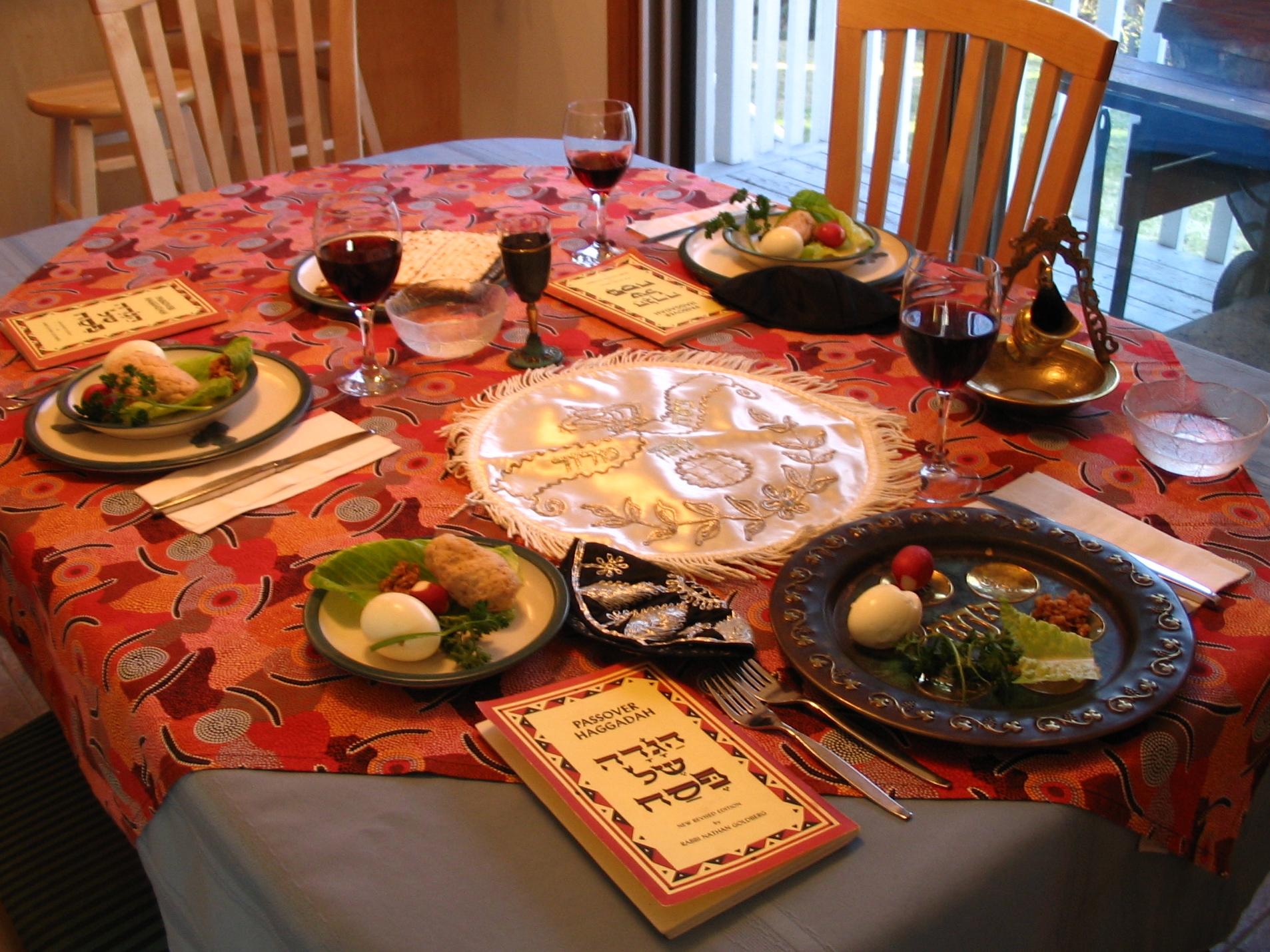
The Jewish Roots of Christian Easter
Easter is not a Christian appropriation of pagan spring rites. It is the Christian fulfillment of the Jewish Passover — and the New Testament insists on this from its earliest layer.
Read
Church Fathers
11 min read / 2026-05-17
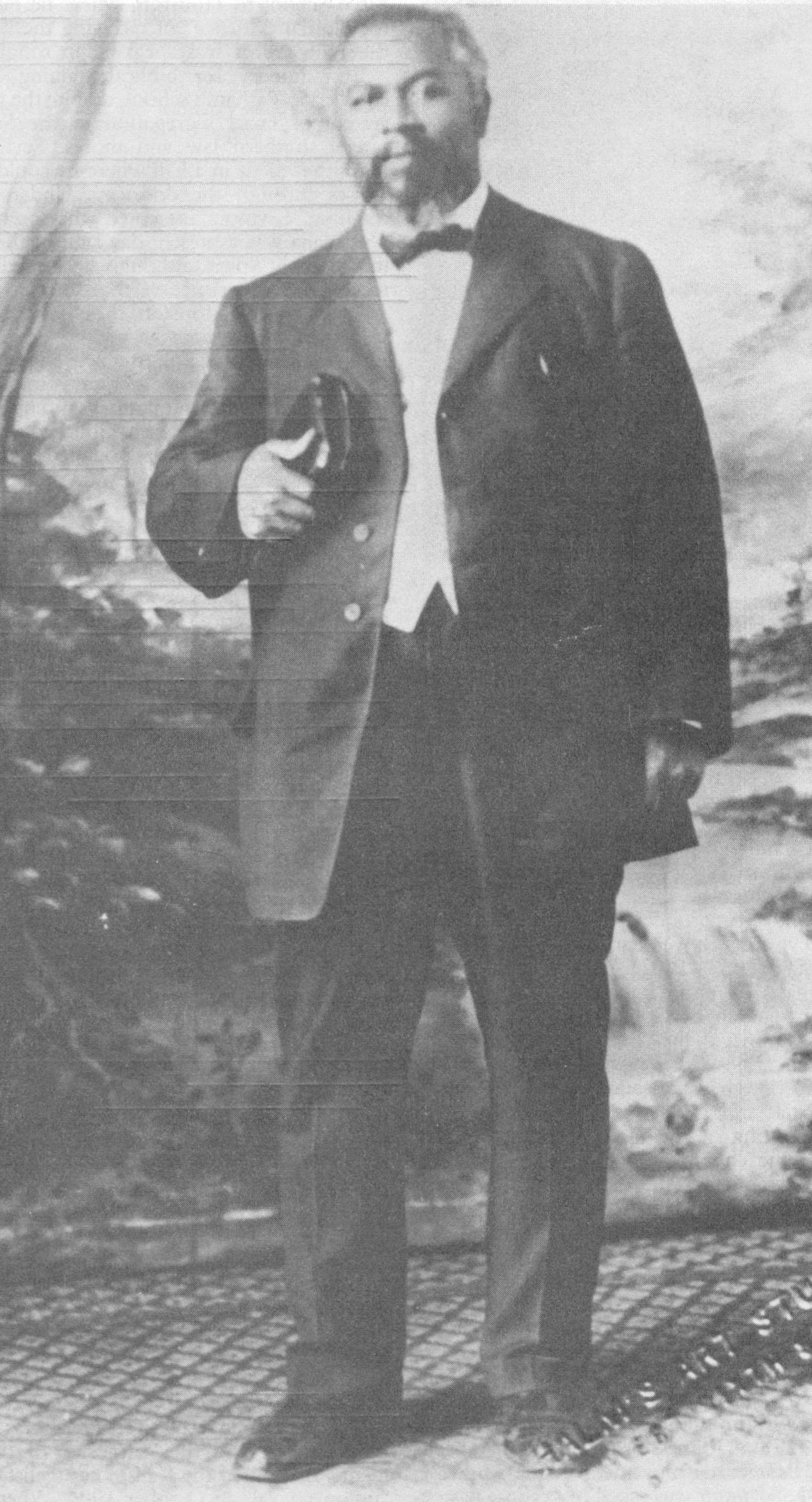
Azusa Street and the Birth of Global Pentecostalism
From a converted livery stable at 312 Azusa Street, Los Angeles, between 1906 and 1915, the second-largest stream of contemporary Christianity was born — and almost immediately segregated.