Articlepublished
The Jewish Roots of Christian Easter
By Christian Garces2026-05-1710 min read
Release2026-05-17
Read time10 min read
The Misreading That Will Not Die
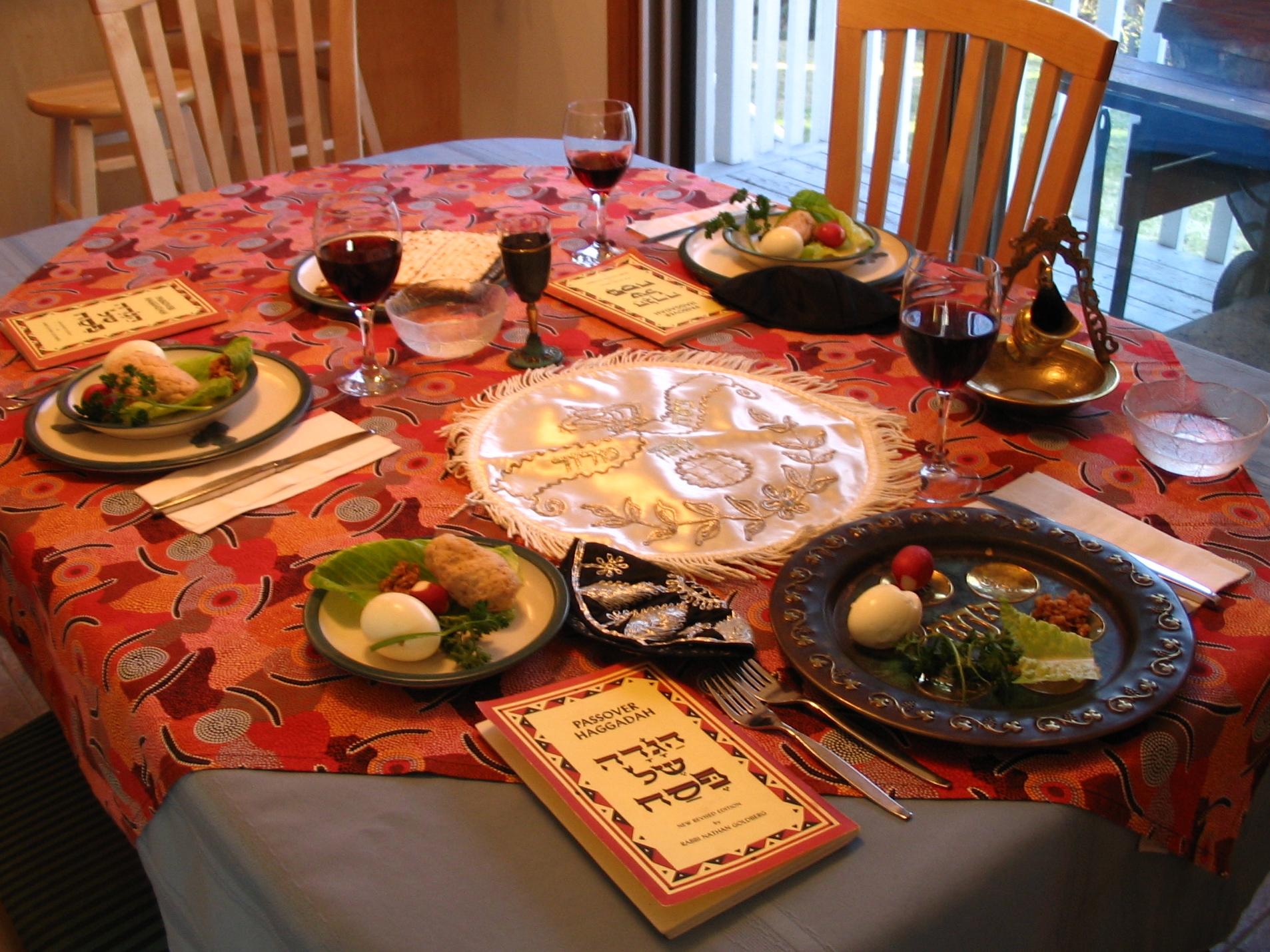
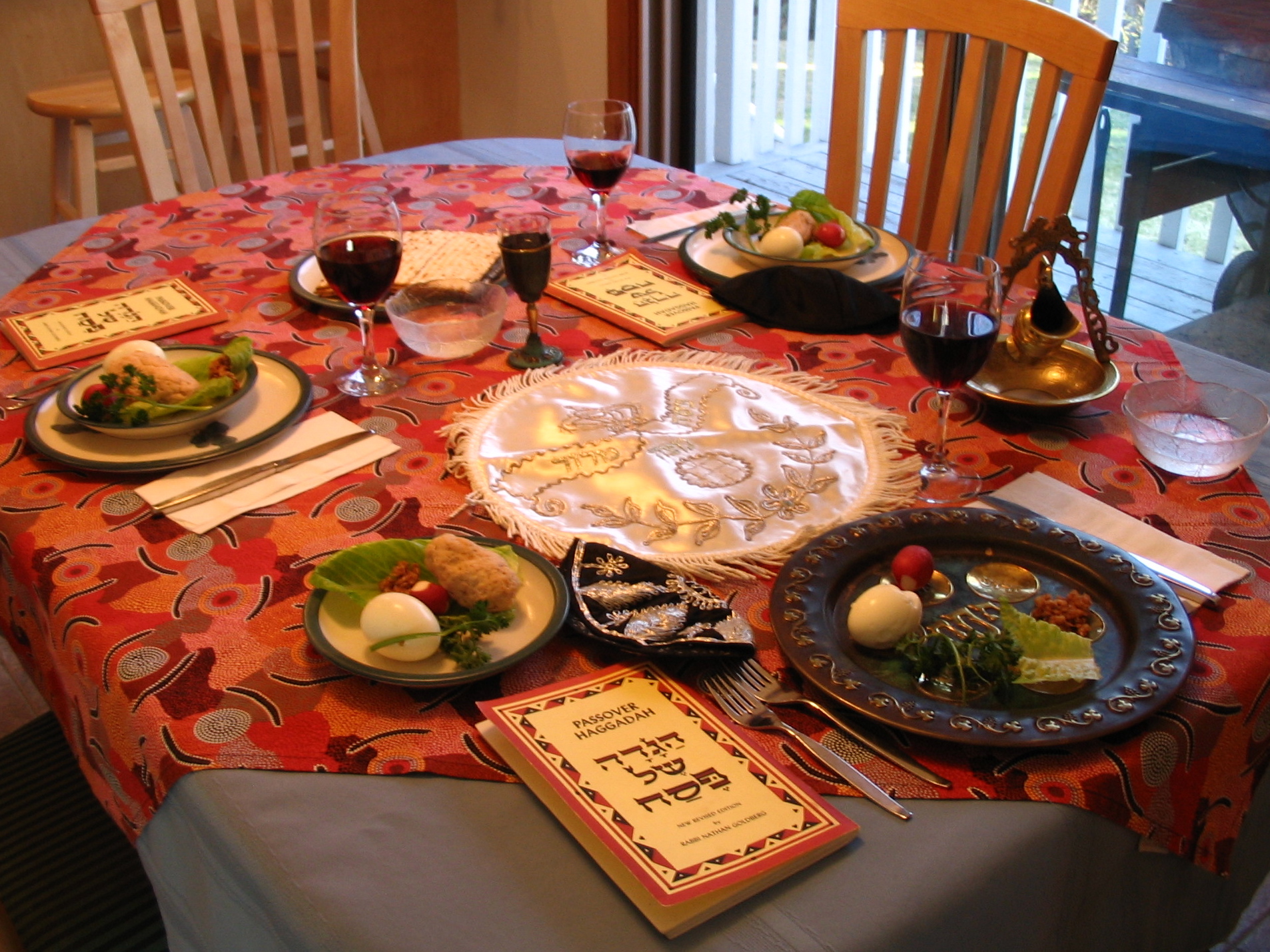
Every spring, somewhere on the internet, a confident assertion circulates: Easter is a baptized pagan festival, named for an Anglo-Saxon dawn goddess Eostre, grafted onto the Christian story to ease the conversion of northern Europe. The argument is older than its current popularity. It rests almost entirely on a single sentence in Bede’s De Temporum Ratione (725 AD) noting that the Anglo-Saxons in pre-Christian times kept a month named Eosturmonath in honor of a goddess Eostre, and that the Christian feast had borrowed the month’s name.[1] The Old English and German names for the Christian feast (Easter, Ostern) reflect that linguistic borrowing. But the feast itself is older than the Anglo-Saxons by six hundred years. In every other major European language — Greek Pascha, Latin Pascha, French Pâques, Italian Pasqua, Spanish Pascua, Russian Paskha — the Christian feast simply carries the Hebrew word Pesach in light translation. The Christian Pascha is not a baptized pagan rite. It is the Jewish Passover, read by the Church as fulfilled in Christ. The New Testament itself initiates that reading.
The Synoptic and Johannine Passover
The four Gospels frame the Last Supper, the Crucifixion, and the Resurrection inside the Jewish Passover. Matthew, Mark, and Luke present the Last Supper as a Passover seder: “On the first day of Unleavened Bread, when they sacrificed the Passover lamb, his disciples said to him, ‘Where will you have us go and prepare for you to eat the Passover?’” (Mark 14:12; cf. Matt 26:17, Luke 22:7–8). The Synoptic disciples prepare the upper room; they recline as for a festal meal; they sing “a hymn” before going out to Gethsemane, which in the Mishnaic tradition is the Hallel (Psalms 113–118).[2] John’s Gospel times the events differently: in John 18:28 the Jewish leaders refuse to enter Pilate’s praetorium “so that they might not be defiled, but might eat the Passover,” and in 19:14 the trial is on the day of Preparation of the Passover. In John’s chronology, Christ dies on the cross at the hour the paschal lambs are slaughtered in the Temple.
The discrepancy between the Synoptic and Johannine Passover timing is one of the oldest unresolved questions in New Testament chronology. Some scholars have proposed that Jesus and his disciples followed a calendar different from the Temple authorities’ (the Qumran calendar, or a Galilean variant), allowing the Last Supper to be a true Passover meal on the Synoptic dating while the Crucifixion still falls on the day of Preparation. Others, beginning with Joachim Jeremias in The Eucharistic Words of Jesus, defend the Synoptic dating and read John as theologically highlighting the paschal-lamb typology rather than reporting a different chronology.[3] What no serious reading of the Gospels denies is that the Crucifixion is theologically and calendrically located inside the Passover. The earliest Christian commemoration of the death and resurrection of Jesus is therefore from the very beginning a paschal commemoration.
Paul’s “Christ Our Pascha”
The earliest extant Christian theological reading of the connection is in 1 Corinthians 5:7–8, written some time in the mid-50s AD — a generation before the Gospels were composed. Paul exhorts the Corinthian church to purge the leaven of malice and wickedness “for Christ our Pascha [to pascha hêmôn] has been sacrificed; let us therefore keep the feast.” The construction is striking. Paul does not say Christ is like the paschal lamb. He says Christ is our Pascha. He assumes his readers know the Exodus 12 background — the lamb whose blood marks the doorposts, the unleavened bread of haste, the angel of death that passes over. He assumes a Christian community that is already “keeping the feast” in some recognizable form. The verbal coincidence of the Hebrew Pesach, the Aramaic Pascha, and the Greek participle pascho (“to suffer”) generated a tradition of paschal puns and theological wordplay that runs through the rest of the patristic period; Melito of Sardis’s second-century homily Peri Pascha is its earliest sustained example.[4]
Melito of Sardis and the Earliest Paschal Sermon
Melito of Sardis was bishop of the church at Sardis in western Asia Minor around 165 AD. His homily Peri Pascha (“On the Pascha”), rediscovered in a fourth-century papyrus codex acquired by Chester Beatty and the University of Michigan in the 1930s, is the earliest fully extant Christian paschal sermon. Its argument is sustained typological exegesis of Exodus 12. The angel of death that struck the firstborn of Egypt sees the blood on the lintels of Israel and passes over; the angel of death that strikes the fallen creation sees the blood of Christ on the wood of the cross and passes over those who shelter under it. The lamb without blemish is Christ; the unleavened bread is the broken body; the bitter herbs are the bitterness of his passion. The Sinai-bound Israel is now the Spirit-bound church.[5] Melito’s prose is poetic, ferocious, and (for modern readers) painful: the same sermon that establishes the typology contains some of the earliest extant anti-Jewish polemic in the Christian tradition, blaming “Israel” for the murder of God. The two strands appear in the same text. The typology is the New Testament’s own; the polemic is Melito’s development, and is the seed of a long and disastrous Christian tradition of anti-Jewish reading. To read Melito honestly is to read both.
The Quartodeciman Controversy
For most of the second century the Christian churches of Asia Minor — Smyrna, Ephesus, Sardis, Hierapolis — kept Pascha on 14 Nisan with the Jewish calendar, ending their fast on the same day the Jewish community ate the lamb, whatever day of the week 14 Nisan fell on. The practice was called Quartodeciman, “Fourteenth-ist,” from the Latin for fourteen. Eusebius preserves the controversy in Historia Ecclesiastica V.23–25. Around 155 AD Polycarp of Smyrna, the disciple of the apostle John, traveled to Rome and met Pope Anicetus to discuss the question of paschal dating; the two could not agree on practice but parted in peace, each church keeping its own custom. Forty years later, around 195, Victor of Rome attempted to excommunicate the Quartodeciman churches for refusing to adopt the Roman Sunday practice; Irenaeus of Lyon (himself originally from Asia Minor, a hearer of Polycarp in his youth) wrote to Victor urging him to step back, on the grounds that diverse paschal customs had been kept by holy bishops on both sides for generations without breaking the unity of the Church.[6] Irenaeus’s plea succeeded; the schism was averted. The Quartodeciman practice continued in Asia Minor for at least another century.
The theological point of the Quartodeciman practice was the connection to the Jewish festival. Polycarp’s argument to Anicetus rested on apostolic tradition: this is what John kept, and John was the disciple whom Jesus loved. For the Quartodecimans the dating was not a calendrical pedantry but a confession that the Christian feast was the Jewish feast read in light of Christ — one Passover, not two. The Roman practice of moving the feast to the Sunday after 14 Nisan reflected a different theological intuition: the Christian feast is the feast of the Resurrection, and the Resurrection was on a Sunday, and so the feast that commemorates it should also fall on a Sunday. Neither position was a denial of the Jewish roots of the feast. They were two ways of holding them.
Nicaea and Its Unhappy Letter
The Council of Nicaea in 325 settled the paschal-dating question for the Catholic Church. The actual canon of Nicaea on Pascha is now lost; what is preserved is the encyclical letter Constantine sent to the bishops who had not attended, summarizing the decision. The dating rule that emerged — the first Sunday after the first full moon on or after the spring equinox — is essentially the computus the Latin West still uses, and is the basis for the medieval calculations preserved by Bede, Dionysius Exiguus, and the great computists. But the rationale Constantine offered for the change was not the irenic appeal to common practice that Irenaeus had used. The letter is preserved in Eusebius’s Vita Constantini III.18, and it makes painful reading:
“It appeared an unworthy thing that in the celebration of this most holy feast we should follow the practice of the Jews, who have impiously defiled their hands with enormous sin, and are, therefore, deservedly afflicted with blindness of soul... Let us then have nothing in common with the detestable Jewish crowd; for we have received from our Saviour a different way... Strive and pray continually that the purity of your souls may not seem in anything to be sullied by fellowship with the customs of these most wicked men.”[7]
The letter has to be read honestly. The supersessionist rhetoric — that the Jews are the murderers of the Lord, that Christian fellowship with their customs is defilement — is in the conciliar record. It is not a modern fabrication. It is the moment at which a destructive theological grammar enters the Christian magisterial tradition and begins to shape the calendar itself. The Quartodeciman practice was suppressed not only because it was calendrically inconvenient but because, for Constantine and the bishops who signed the encyclical, its connection to Jewish observance was theologically intolerable. The rule the Council settled has lasted seventeen centuries; the rhetoric that accompanied it has done immense damage. Both are part of the legacy. Both need to be named.
The Typology That Will Not Let Go
The bracing fact is that the supersessionist rhetoric did not finally succeed at the theological level. The Easter liturgy of every historic Christian tradition is still saturated with Passover typology. The Exsultet sung at the Roman Easter Vigil names the “true Lamb whose blood anoints the doorposts of the faithful” and the “night of Israel’s deliverance.” The readings of the Vigil walk through the whole sweep of salvation history — creation, the binding of Isaac, the Red Sea, the prophets — ending with the empty tomb. The Byzantine paschal canon attributed to John of Damascus is built on the same typology: “The Passover, the Lord’s Passover, from death to life and from earth to heaven, has Christ our God led us across.”[8] The Orthodox Triodion preserves the dating rule that Pascha must always follow Jewish Pesach. The festal greeting (Christos anesti, alithos anesti) is conceptually unintelligible without the Jewish framework: the lamb has been slain, the people have been redeemed, the new exodus is underway.
Augustine, writing to Bishop Januarius in Epistle 55 (c. 400 AD), is candid about the long process by which the Christian Pascha had come to its mature form. He defends the Nicene dating but acknowledges that the variation between Christian and Jewish calendars and within the Christian world is a relatively recent settlement that has produced real pastoral difficulty.[9] The differing dates today between Western (Gregorian) and Eastern (Julian) Christians extend the same difficulty into our own century: in most years the two paschas are four or five weeks apart; in occasional years (2025, 2017, 2014) they coincide. Ecumenical proposals to reunify the date have been discussed since Vatican II without producing settled reform. Different Christian families guard the calendar with the kind of seriousness that suggests they think the date matters — which, of course, they do.
Fulfillment, Not Replacement
The honest theological reading of Easter, then, sits between two errors. The first error is the modern claim that Easter is a pagan import. It is not. It is the Christian Pascha, taking its name in every language but English and German directly from the Hebrew Pesach, framed by the New Testament inside the Passover, and read for fifteen centuries through the typology of Exodus 12. The second error is the supersessionist claim that the Christian Pascha replaced the Jewish Pesach, leaving the Jewish feast as the empty husk of a now-fulfilled type. Paul’s argument in Romans 11 is precisely that this is not the relationship. The cultivated olive tree is Israel; the wild branches grafted in are the Gentiles; the root is still the root. The Jewish feast did not stop. The Jewish people did not stop. What the New Testament initiates and the Church confesses is fulfillment of the same feast, drawing life from the same root, not the abolition of the root or the supersession of the people for whom the root was given. Easter without Passover is amputated. Easter that pretends Passover was replaced is supersessionist. Easter that is the Christian reading of Passover — that watches the lamb die at the hour the paschal lambs were slaughtered, that breaks unleavened bread and pours unmixed wine in continuity with the seder, that sings of a new exodus while honoring the old one — is the orthodox reading, and the only one that does not lose either feast.
Continue Exploring
Easter is not a Christian appropriation of pagan spring rites. It is the Christian fulfillment of the Jewish Passover — and the New Testament insists on this from its earliest layer.
The Studio Brief
Theology Delivered Weekly
Essays on the Fathers, sacred art, cosmology, and the hidden logic of Christian doctrine — sent directly to your inbox. No noise. No filler.
Weekly
Cadence
Free
Always
Patristic
Focus
Related
Browse Archive
Read
Sacred Art
2026-05-22
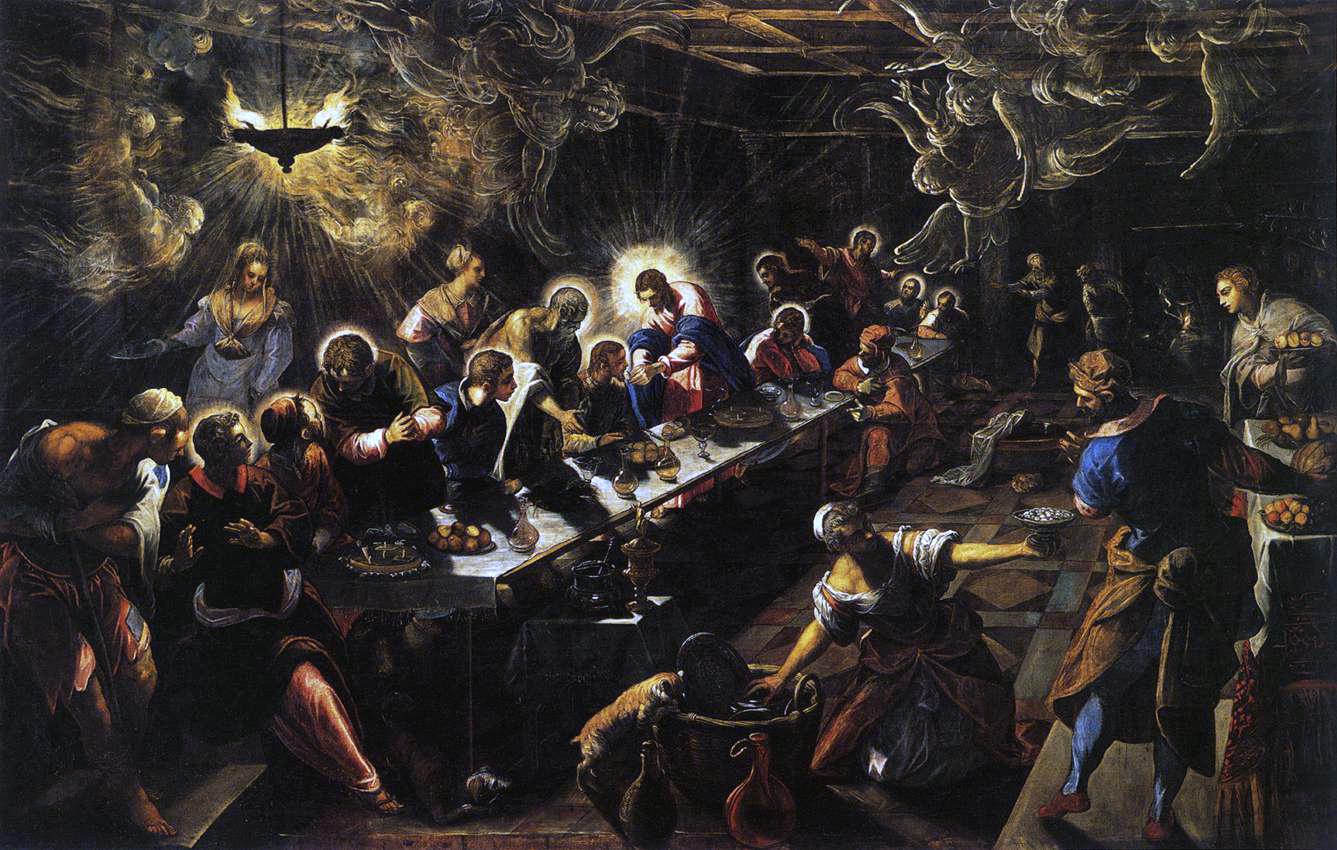
The Apostolic Fire
Memory, martyrdom, and the visual language of witness.
Read
Christology
11 min read / 2026-05-17
Why the Lord's Supper Divides Christians
The Eucharist is the most thoroughly attested practice of the earliest Church — and the single sacrament that has done the most to keep Christians apart. The reason is not pettiness. It is Christology.
Read
Church Fathers
11 min read / 2026-05-17
Azusa Street and the Birth of Global Pentecostalism
From a converted livery stable at 312 Azusa Street, Los Angeles, between 1906 and 1915, the second-largest stream of contemporary Christianity was born — and almost immediately segregated.