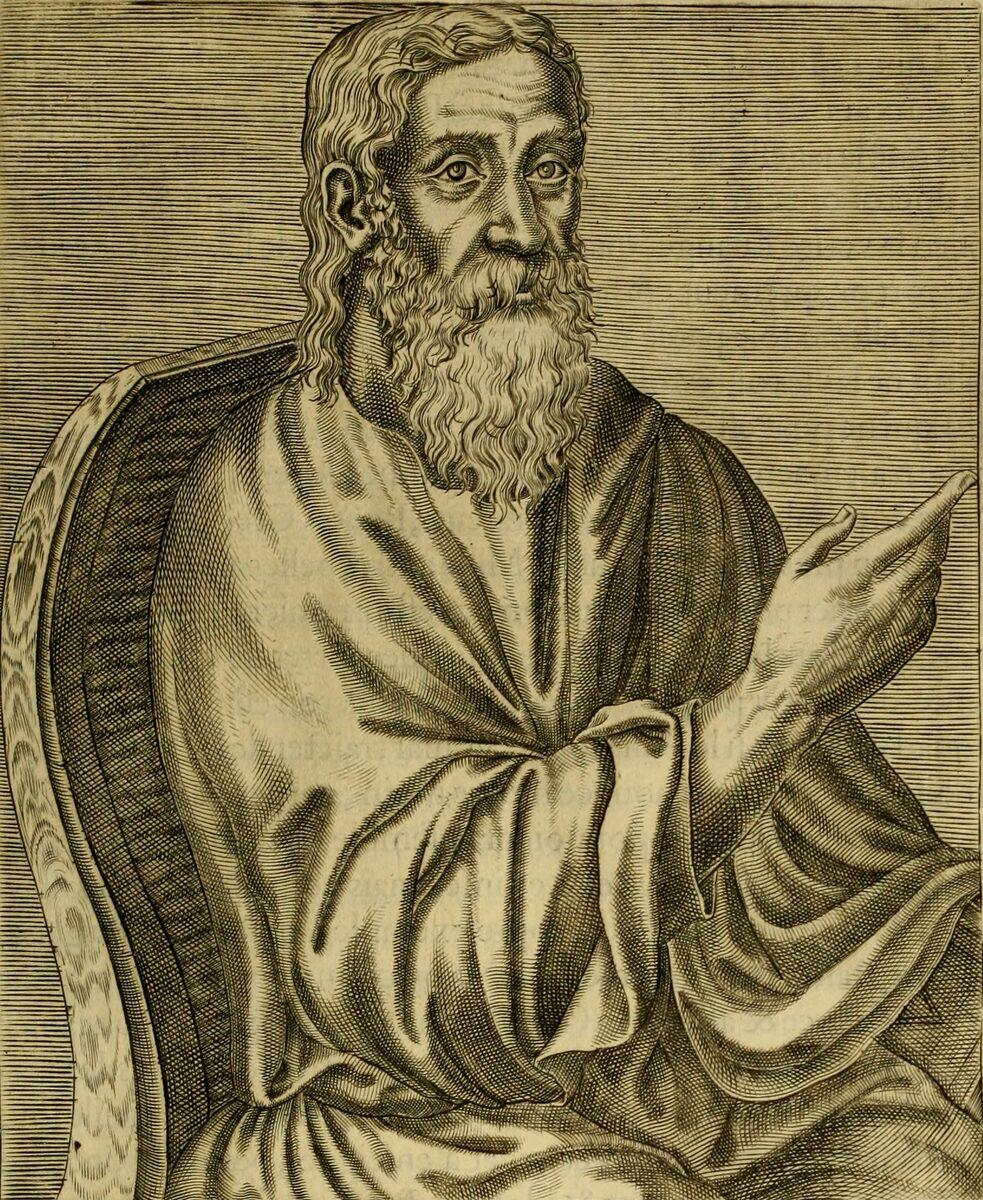
Clement of Alexandria
The Alexandrian master who pioneered the synthesis of Greek philosophy and Christian revelation, arguing that philosophy was God's gift to the Greeks to prepare them for Christ.
“There is one river of truth, but many streams fall into it on this side and that.”
— Stromata I.5
Clement of Alexandria was the first major Christian intellectual to engage seriously and positively with Greek philosophy. Head of the famous Catechetical School of Alexandria — the intellectual center of the ancient Christian world — he argued that Plato and the philosophers were given reason by the same Logos who became flesh in Christ.
Born around 150 AD, possibly in Athens, Clement was a convert from paganism who traveled the Mediterranean studying under various Christian teachers before settling in Alexandria under Pantaenus.
Clement's project was a Christian humanism: truth is truth wherever it appears, and philosophy at its best points toward the Word. The Logos is the teacher of all humanity — through Moses and the prophets to Israel, and through philosophy to the Greeks.
He had to flee Alexandria around 202 during the persecution of Septimius Severus, and died sometime before 215. His student Origen would carry his Alexandrian synthesis to even greater heights.
- The Logos as the universal teacher of humanity
- Philosophy as preparation for the Gospel (praeparatio evangelica)
- The true Gnostic — a Christian of deep wisdom, not the heretical Gnostics
- Salvation as progressive illumination and deification
Born, possibly in Athens
Arrives in Alexandria; studies under Pantaenus
Becomes head of the Catechetical School
Writes Protrepticus, Paedagogus, and Stromata
Flees Alexandria during Severan persecution
Dies, location unknown
An invitation to the pagan world to turn from idolatry to the Logos of God — classical rhetoric in service of Christian proclamation.
The Logos as the divine teacher who forms Christian character in the details of daily life.
Eight books weaving together philosophy, scripture, and theology — Clement's most ambitious intellectual work.