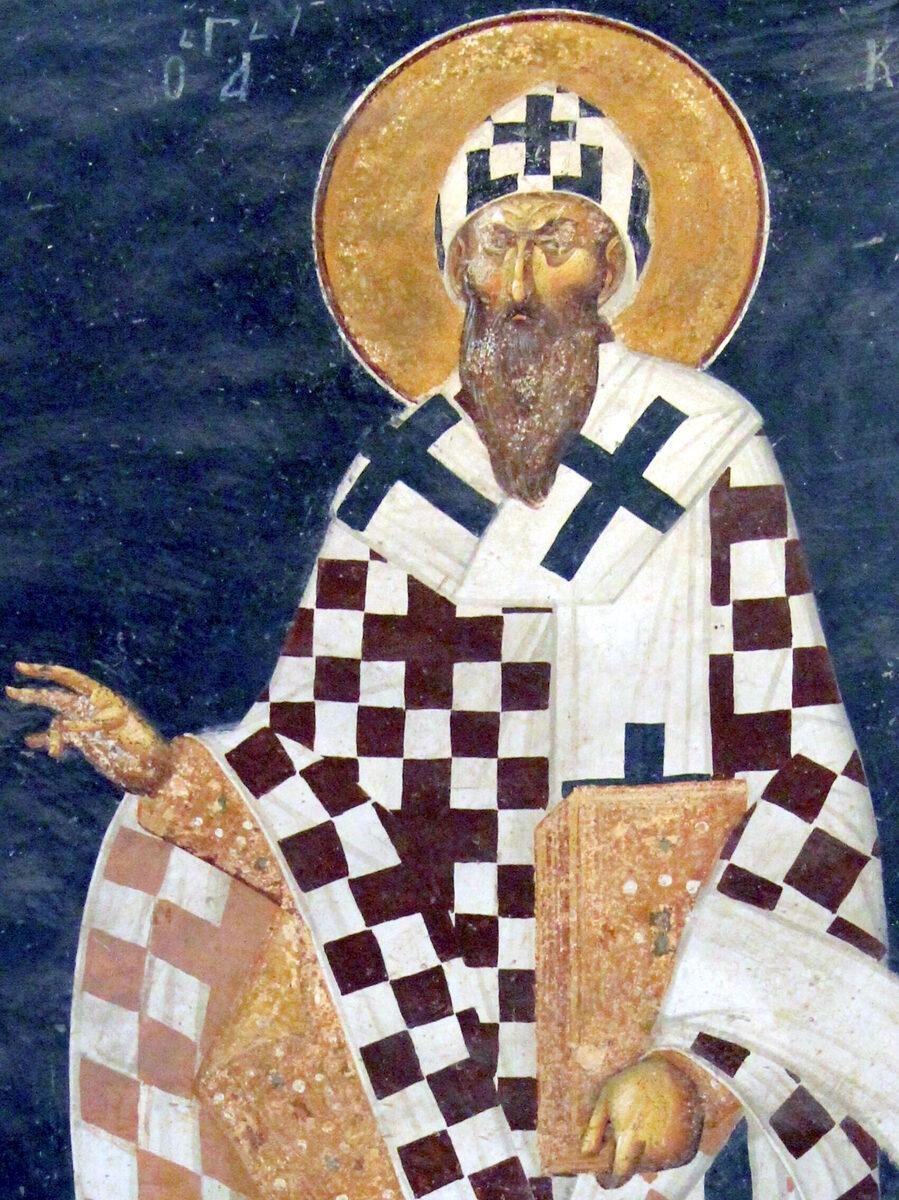
Cyril of Alexandria
The formidable defender of the Theotokos — Mary as God-bearer — whose Christology shaped the Council of Ephesus and all subsequent orthodox doctrine on the person of Christ.
“Emmanuel is one, and the Lord Jesus Christ is one, the same yesterday, today, and forever.”
— On the Unity of Christ
Cyril of Alexandria was the most rigorous Christologist of the patristic age. His insistence that Mary be called Theotokos — Bearer of God, not merely Bearer of Christ — was not about Mariology but about Christology: the one born of Mary was fully divine, one Person, not two loosely connected natures.
Cyril became Archbishop of Alexandria in 412. His methods were often hardline — he closed Novatian churches, expelled Jews from Alexandria after riots, and had a complex relationship with the philosopher Hypatia's death. His legacy is complicated, but his theology proved decisive.
Nestorius, the Archbishop of Constantinople, taught that Mary was only Christotokos — Bearer of Christ — implying that the divine and human in Christ were so separate that the divine Son did not truly suffer or die. Cyril saw this as a betrayal of the Incarnation itself.
At the Council of Ephesus in 431, Cyril's position prevailed: Mary is Theotokos because Christ is one divine Person who assumed human nature. His Twelve Anathemas and his letters to Nestorius became the doctrinal spine of Chalcedonian Christology confirmed in 451.
- Theotokos — Mary as God-bearer, affirming Christ's single divine personhood
- Hypostatic union — two natures in one divine Person
- The communicatio idiomatum — divine attributes predicated of the one Christ
- The Eucharist as the body of the one incarnate Word
Born in Egypt
Becomes Archbishop of Alexandria
Nestorius appointed to Constantinople; controversy begins
Sends Twelve Anathemas to Nestorius
Council of Ephesus — Cyril's position adopted; Nestorius deposed
Dies in Alexandria
A masterwork on the single personhood of Christ — the divine Son as the one subject of both divine and human acts.
The twelve doctrinal propositions against Nestorius that became the benchmark of Christological orthodoxy.
An extensive theological commentary on the Gospel of John, rich in Christological and sacramental theology.