Hilary of Poitiers
The Western defender of Nicene orthodoxy who battled Arianism in Gaul and exile, and brought the theology of the Greek East to the Latin West.
“Everything that we believe about the Father, we must believe in the same way about the Son.”
— On the Trinity IV.13
Hilary of Poitiers is called the 'Athanasius of the West' — a fitting title. Like Athanasius, he was a bishop exiled for defending the Nicene faith against Arian pressure, and like Athanasius, he returned vindicated. He became the primary vehicle through which Nicene theology from the Greek-speaking East was transmitted to the Latin West.
Born around 310, probably to a pagan family of high social standing, Hilary converted to Christianity through philosophical reflection and was baptized as an adult. His conversion account — in the preface to On the Trinity — is one of the great intellectual conversion narratives of antiquity.
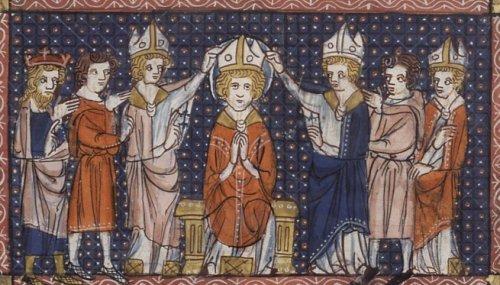
Elected Bishop of Poitiers around 353, he immediately confronted the Arian-aligned Emperor Constantius II and was exiled to Phrygia (Asia Minor) in 356 — the same year Athanasius was driven into the Egyptian desert.
Paradoxically, exile in the East gave Hilary access to Greek theology he could never have encountered in Gaul. He returned to the West in 360 with a deep knowledge of Origen, Athanasius, and the Cappadocians. His On the Trinity became the foundational Latin text of Nicene Trinitarian theology.
- The eternal generation of the Son — against Arian subordinationism
- Homoousios as the necessary bulwark against Arian compromise
- The incarnate Christ's full experience of human suffering
- Transmission of Greek Nicene theology to the Latin tradition
Born in Poitiers, Gaul
Converts to Christianity as an adult
Elected Bishop of Poitiers
Exiled to Phrygia by Emperor Constantius II
Studies Greek theology in Asia Minor; writes On the Trinity
Returns to Gaul; resumes battle against Arianism
Dies in Poitiers
Twelve books on the Trinity — the most comprehensive Latin exposition of Nicene theology, engaging extensively with Greek sources.
A survey and critique of Arian council decisions, helping Western bishops navigate the complex Eastern theological debates.
The oldest surviving Latin commentary on Matthew — notable for its typological and Christological reading.
Hilary introduced hymn-singing to the Gallic church; only fragments survive, but his initiative shaped Western liturgy.