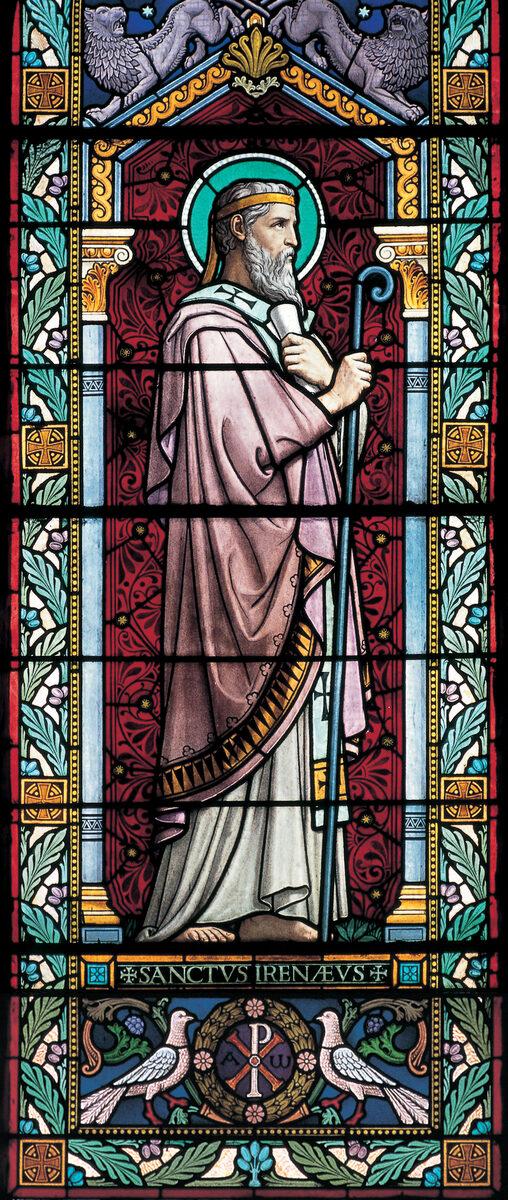
Irenaeus of Lyon
The first great systematic theologian of the Church, who demolished Gnosticism and articulated the rule of faith, the authority of Scripture, and the theology of recapitulation.
“The glory of God is a human being fully alive; and the life of man consists in beholding God.”
— Against Heresies IV.20.7
Irenaeus of Lyon is one of the most important theological figures of the 2nd century — the man who, more than any other, defined what Christian orthodoxy actually was in the face of Gnosticism's bewildering array of alternatives.
Born in Asia Minor around 130, Irenaeus heard the aged bishop Polycarp of Smyrna preach — and Polycarp had known the Apostle John. This chain of witness mattered deeply to Irenaeus: apostolic tradition, transmitted through bishops in unbroken succession, was the guarantee of true teaching.
As Bishop of Lyon in Gaul, Irenaeus faced the challenge of Valentinian Gnosticism — a sophisticated system that claimed secret knowledge (gnosis), dismissed the material world as evil, posited a distant high God separate from the Creator, and effectively gutted the Incarnation of meaning.
His response — Against Heresies — is a masterwork of refutation and constructive theology. He articulated the rule of faith, the canon of Scripture, the authority of apostolic churches, and his own great theological vision: recapitulation (anakephalaiosis), in which Christ re-heads and restores all that Adam lost.
- Recapitulation — Christ as the new Adam who re-heads all humanity
- The goodness of creation against Gnostic dualism
- Apostolic tradition and episcopal succession as guarantees of orthodoxy
- The one God as both Creator and Redeemer
Born in Asia Minor; hears Polycarp preach
Becomes Bishop of Lyon after persecution
Writes Against Heresies
Writes Demonstration of the Apostolic Preaching
Dies, possibly as a martyr, in Lyon
Five books exposing and refuting Gnosticism — the foundational work of Christian heresiological and systematic theology.
A summary of Christian doctrine showing its continuity with the Old Testament — a catechetical masterpiece rediscovered in 1904.