Jerome
The greatest biblical scholar of antiquity, whose Latin Vulgate translation of the Bible remained the standard text of Western Christianity for a thousand years.
“Ignorance of Scripture is ignorance of Christ.”
— Commentary on Isaiah, Prologue
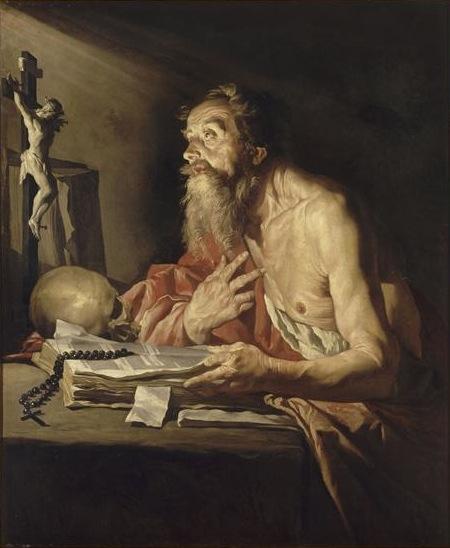
Jerome was the most learned biblical scholar of the patristic era — a polymath who mastered Latin, Greek, and Hebrew, studied in Rome and the East, and produced the Vulgate, the Latin translation of the Bible that would be the standard text of Western Christianity from the 5th through the 20th century.
Born around 347 in Stridon, Dalmatia, Jerome studied in Rome under the famous grammarian Aelius Donatus. His conversion was accompanied by a dream in which he was judged: 'Thou art a Ciceronian, not a Christian' — his love of pagan literature warring with his faith.
He spent years in the Syrian desert as an ascetic, then studied Hebrew with a Jewish teacher, worked as secretary to Pope Damasus in Rome, and finally settled in Bethlehem in 386 — where he spent the last 34 years of his life translating, commenting, and conducting a voluminous correspondence.
Jerome's character was fierce and polemical — he made enemies easily and attacked them with savage wit. But his dedication to the text of Scripture was total. His Vulgate and his biblical commentaries shaped the entire exegetical tradition of the medieval West.
- Scripture as the supreme authority for Christian theology
- The Hebrew text (Hebraica veritas) as the authoritative Old Testament source
- Ascetic life as conformity to Christ crucified
- Virgin consecration as a sign of the Kingdom
Born in Stridon, Dalmatia
Baptized in Rome
Retreats to the Syrian desert; begins studying Hebrew
Returns to Rome; serves as secretary to Pope Damasus
Begins the Vulgate translation at Damasus's request
Settles permanently in Bethlehem
Completes the Vulgate translation of the Old Testament
Dies in Bethlehem
Jerome's Latin translation of the entire Bible from the original Hebrew and Greek — the standard Western Bible for over a thousand years.
Extensive commentaries on the prophets (especially Isaiah, Jeremiah, Ezekiel, Daniel) and New Testament letters.
Biographies of Paul of Thebes, Hilarion, and Malchus — key texts in the formation of Western monasticism.
Over 150 surviving letters covering biblical exegesis, Christian life, polemics, and pastoral direction.