Origen of Alexandria
The most prolific and intellectually daring theologian of early Christianity — whose Hexapla, biblical commentaries, and speculative theology shaped every subsequent Christian thinker.
“Understand that you are a second world in miniature, and that within you there are the sun, the moon, and the stars.”
— Homilies on Leviticus
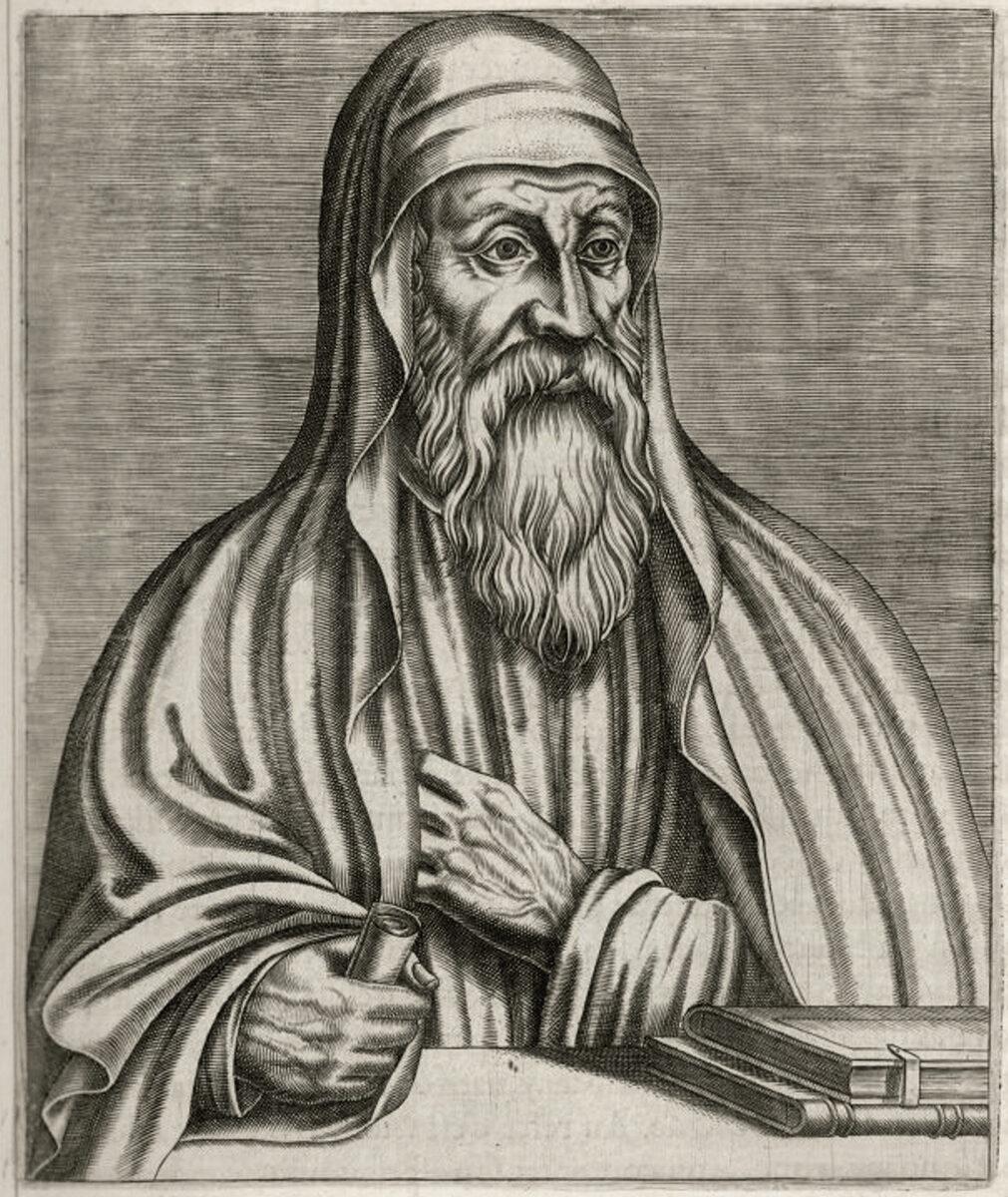
Origen of Alexandria was arguably the greatest intellectual force in early Christianity. Called 'Adamantine' — man of steel — by his contemporaries, he produced more written work than almost anyone in antiquity and set the agenda for Christian theology for centuries after his death.
Born around 184 to a Christian family in Alexandria, his father Leonides was martyred in 202. The young Origen, then 18, had to be physically restrained from following him to execution. He became head of the Catechetical School at that age and proved a teacher of extraordinary intensity.
His scholarly achievement is staggering. The Hexapla was a six-column parallel Old Testament in Hebrew and four Greek translations — the greatest feat of biblical scholarship in antiquity. His commentaries on Scripture run to thousands of pages. His treatise On First Principles was the first systematic Christian theology.
Some of Origen's speculative ideas — pre-existence of souls, universal salvation (apokatastasis), the spiritual nature of the resurrection body — were later condemned as heterodox at the Fifth Ecumenical Council in 553. But his influence on Athanasius, the Cappadocians, Jerome, and Augustine is incalculable. He was the teacher who taught the teachers.
- Scripture as having literal, moral, and spiritual (allegorical) senses
- The Logos as the divine Reason behind all creation
- The spiritual life as a progressive ascent to God
- Universal salvation (apokatastasis) — later condemned, but widely influential
Born in Alexandria to a Christian family
Father martyred; becomes head of Catechetical School at 18
Studies under Clement of Alexandria's successor Pantaenus
Compiles the Hexapla
Writes On First Principles — first systematic theology
Moves to Caesarea Maritima after conflict with Bishop Demetrius
Tortured during Decian persecution
Dies from injuries at Tyre
The first systematic Christian theology — on God, creation, free will, Scripture, and the spiritual life.
A six-column Old Testament with Hebrew text and four Greek versions side by side — the greatest work of ancient biblical scholarship.
A comprehensive refutation of the pagan philosopher Celsus's attack on Christianity — the greatest apologetic work of the ancient Church.
The most detailed theological commentary on John's Gospel from the ancient world — shaping all subsequent Johannine interpretation.