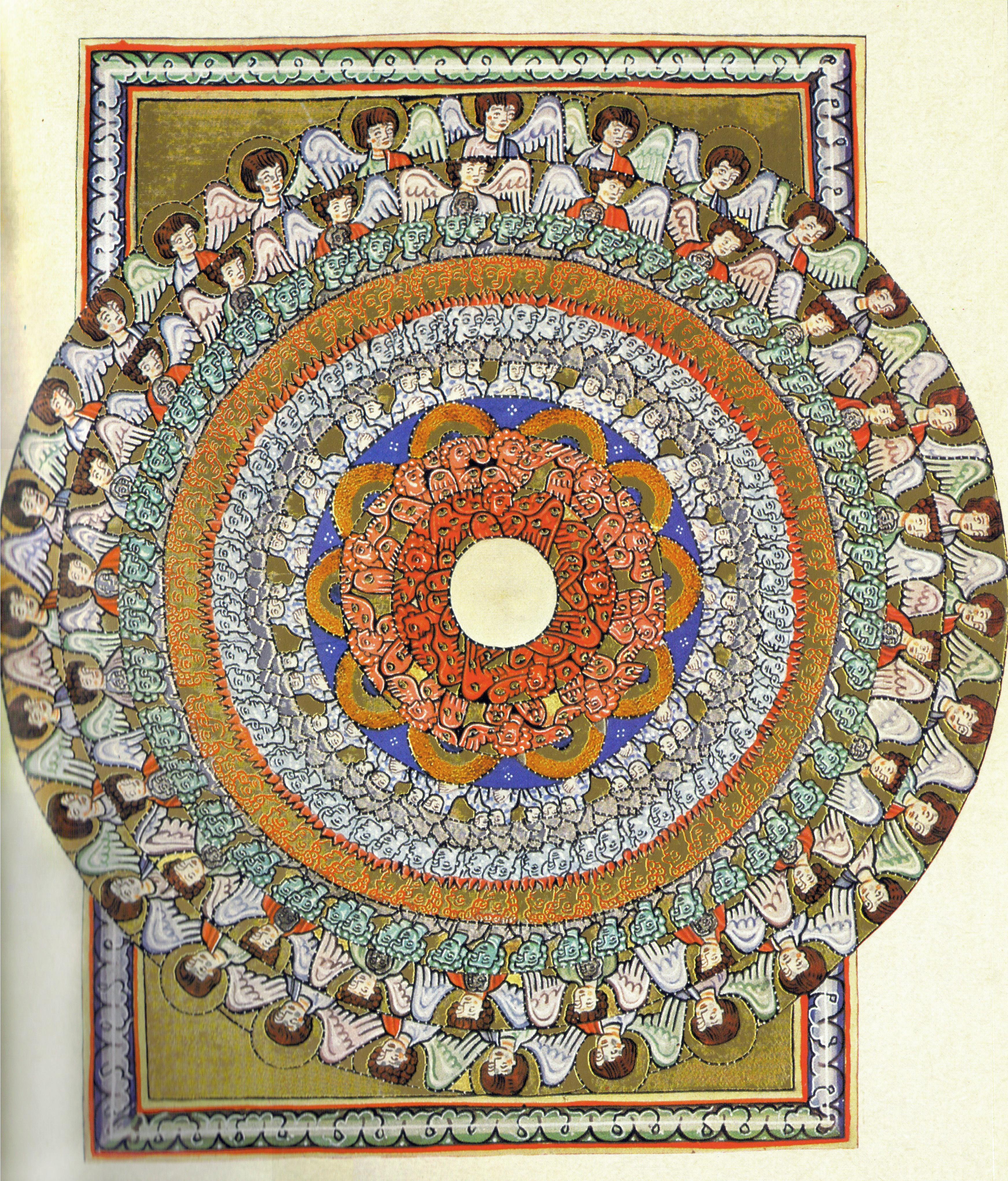
The Angels — the rank itself, the lowest of the nine orders in the Dionysian hierarchy — are the angelic beings most directly engaged with human life. Where the Seraphim worship in the immediate light of God and the Principalities preside over nations, this order is the one assigned to individual persons, churches, and the small ministries that the providence of God works through them.
Hebrews 1:14 calls them 'ministering spirits, sent forth to minister for them who shall be heirs of salvation' — a definition that places service to the saints at the heart of their identity. Christ himself, speaking of children in Matthew 18:10, says that 'their angels in heaven always behold the face of my Father which is in heaven,' a verse the patristic and medieval traditions read as evidence that each believer is the particular care of a guardian. In Acts 12, when Peter is delivered from prison and knocks at the door of the house where the Church is praying, the disciples insist 'It is his angel' — assuming that his guardian had taken his form. This is the everyday angelology of the early Church.
Psalm 91:11 — 'For he shall give his angels charge over thee, to keep thee in all thy ways' — is the foundational text for the doctrine of guardian angels in both East and West. The Eastern Orthodox tradition includes a daily prayer to the guardian angel in the prayer rule. Latin tradition observes the Feast of the Guardian Angels on October 2.
Pseudo-Dionysius, in placing the Angels at the lowest rank, does not diminish them. He observes that this order is the most directly missional: they receive illumination from every order above them and bring it into the world. The lowest rank is in some ways the most visible — these are the angels Scripture most often names as appearing, speaking, guarding, and going. Every angel named in the daily life of the saints in the Old and New Testaments — apart from the named archangels — belongs to this rank.