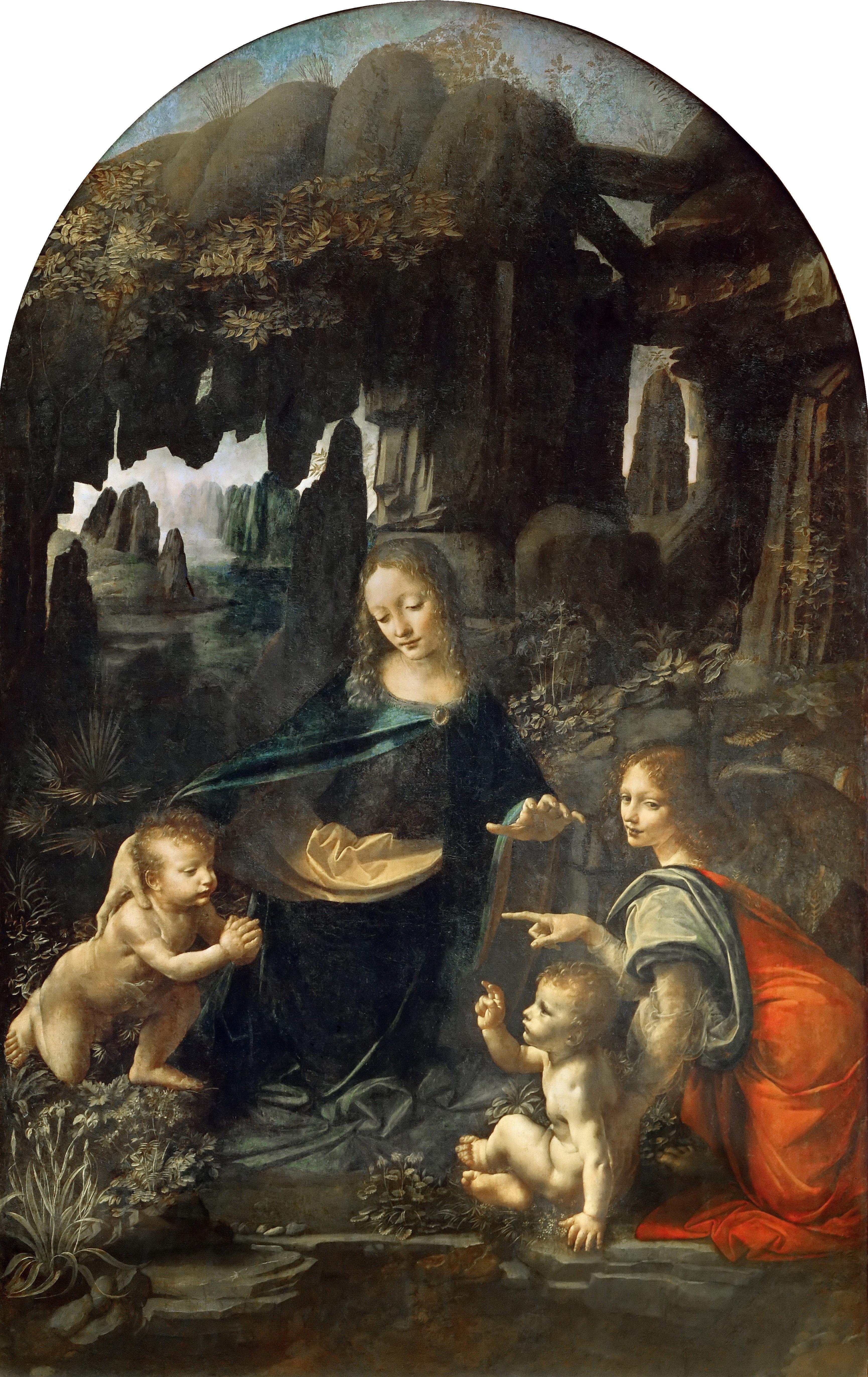
Uriel — Hebrew Uri'el, 'Fire of God' or 'Light of God' — is the most prominent of the four 'unnamed' archangels in the broader Christian tradition. He does not appear in the Hebrew Bible or in the New Testament, but he is a major figure in 2 Esdras (4 Ezra), where he interprets the apocalyptic visions of the prophet, and in 1 Enoch, where he is named alongside Michael, Gabriel, and Raphael as one of the four (later seven) archangels who stand before the throne.
1 Enoch gives him a specific portfolio: 'Uriel, one of the holy angels, who is over the world and over Tartarus' (1 Enoch 20:2). The Tartarus connection is striking. In 2 Peter 2:4 — one of only two New Testament passages to use the word 'Tartarus' — God 'cast the angels who sinned into Tartarus,' which parallels precisely the role 1 Enoch assigns to Uriel as warden over that abyss. The earliest Christian readers who knew both texts would have recognized the connection. Uriel also has a particular role in the Flood narrative of 1 Enoch (chapter 10): he is the angel sent to warn Noah of the coming destruction, fulfilling a role canonical Genesis leaves unnamed.
Uriel's veneration is geographically uneven across the Christian world. The Eastern Orthodox Church and the Coptic and Ethiopian traditions honor him as one of the seven archangels. The Ethiopian Homily on the Archangel Uriel — a fifteenth-century text recovered by modern scholarship — depicts Uriel dipping his wing in the blood and water flowing from Christ's side at the Crucifixion, filling a chalice, and sprinkling the blood across Ethiopia in every place where a church was to be built. This is why Ethiopian Orthodox iconography typically shows Uriel carrying a chalice — a tradition unique to that church.
Roman Catholic veneration of Uriel was widespread in the medieval West but was restricted by Pope Zachary at the Council of Rome in 745 AD, which removed Uriel's name from the official list of venerated angels along with a longer list of named angels whose biblical attestation was insufficient. The intent was to curb a tendency toward angelolatry that the church considered theologically dangerous. Devotion to Uriel continued at the popular level despite the restriction, and Uriel reappeared in Anglican and some Protestant uses — particularly among readers of Milton, whose Paradise Lost (Book III) describes Uriel as 'the Regent of the Sun' and one of the seven who stand before God's throne.
In Anglican tradition, Uriel is recognized as the patron of the sacrament of confirmation and as 'the keeper of beauty and light.' The longstanding motto of the University of Oxford — Dominus illuminatio mea, 'The Lord is my light' — is a Latin translation of Uriel's Hebrew name. The Episcopal Church in the United States maintains a parish dedicated to him (St. Uriel's at Sea Girt, New Jersey), and Lutheran iconography in major historic churches includes statuary of all four archangels Gabriel, Uriel, Michael, and Raphael as a quartet.
Within the angelological systems of late antiquity and the early medieval period, Uriel is variously identified with Phanuel ('God has turned'), whose role in 1 Enoch is to oversee repentance, and with Sariel, who delivers warnings against transgression. Whether these are the same being under different names or different beings of similar function is a question patristic and rabbinic commentators answered both ways. The Anglican prayer to Uriel asks for the grace 'to use the sword of truth to pare away all that is not in conformity to the most adorable Will of God' — a fusion of his Enochian role as angel of judgment and his Catholic and Anglican role as angel of confirmation in the faith.