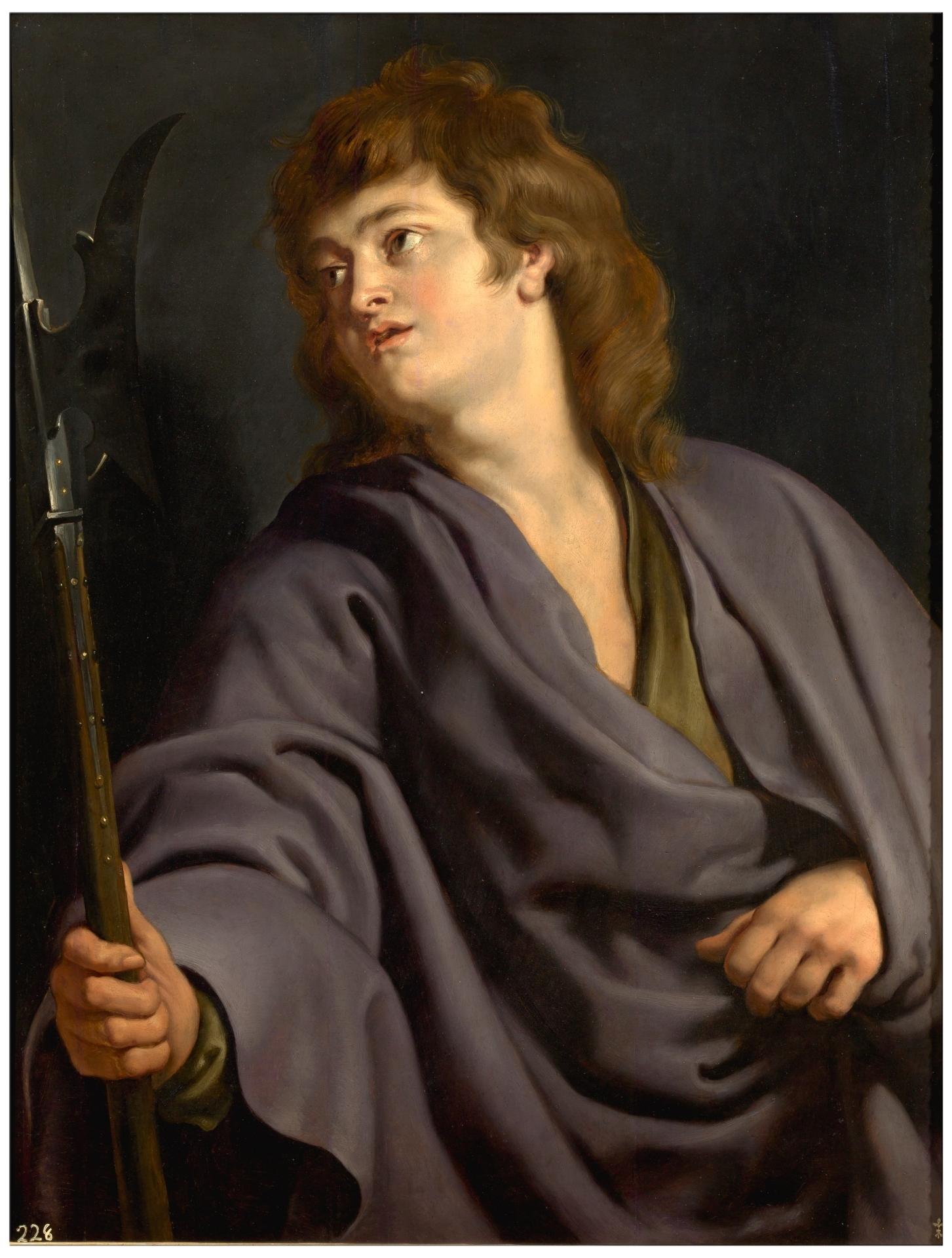
Matthew was a tax collector (Greek: telōnēs) in Capernaum on the northern shore of the Sea of Galilee when Jesus called him. The Synoptic Gospels record the calling: 'And as Jesus passed forth from thence, he saw a man, named Matthew, sitting at the receipt of custom: and he saith unto him, Follow me. And he arose, and followed him' (Matthew 9:9). The parallel passages in Mark 2:14 and Luke 5:27 name the same apostle as 'Levi the son of Alphaeus' — almost certainly the same person under his Hebrew name (Levi) and his apostolic name (Matthew).
Tax collectors in first-century Galilee were uniformly despised as collaborators with the Roman occupation and as ritually unclean due to their constant contact with Gentile coinage and unbeliever clients. The text immediately following Matthew's calling emphasizes this: Jesus dines with 'many publicans and sinners' at Matthew's house, provoking the Pharisees to ask the disciples why Jesus eats with such people. Jesus's reply — 'They that be whole need not a physician, but they that are sick. But go ye and learn what that meaneth, I will have mercy, and not sacrifice: for I am not come to call the righteous, but sinners to repentance' — is the programmatic statement of his ministry to the marginal in the very chapter that records Matthew's calling.
The First Gospel — the Gospel of Matthew — is traditionally attributed to him. The attribution is ancient: Papias of Hierapolis (c. 130 AD, preserved in Eusebius's Historia Ecclesiastica III.39.16) writes that 'Matthew compiled the oracles (logia) in the Hebrew language, and everyone translated them as he was able.' Modern critical scholarship is divided on what Papias meant — whether he is describing the canonical Greek Matthew, a Hebrew/Aramaic 'Q' source, or an early Aramaic gospel that has not survived. The canonical Greek Matthew shows clear marks of being written for a Jewish-Christian audience: extensive use of the Hebrew Bible (especially in fulfillment formulas), strong emphasis on Jesus as the new Moses, and the structural division into five great discourses that mirrors the five books of the Torah.
Matthew's iconographic attribute is the winged man (or angel) — one of the four living creatures of Ezekiel and Revelation, identified with the four Evangelists in Irenaeus's Adversus Haereses III.11.8. The man symbolizes Matthew because his Gospel begins with the human genealogy of Jesus, tracing his descent from Abraham through David in the most thoroughly 'human' opening of any of the four Gospels.
Post-apostolic tradition takes Matthew to Ethiopia, Parthia, or Persia — the geographic specificity varies by source. His martyrdom is poorly attested: some sources say he was killed by sword, others say fire, and some (notably Heracleon, quoted by Clement of Alexandria) say he died a natural death. The uncertainty itself is historically interesting: while Peter, Paul, and James the Greater have well-attested martyrdoms, Matthew's death is one of the most disputed of any apostle.