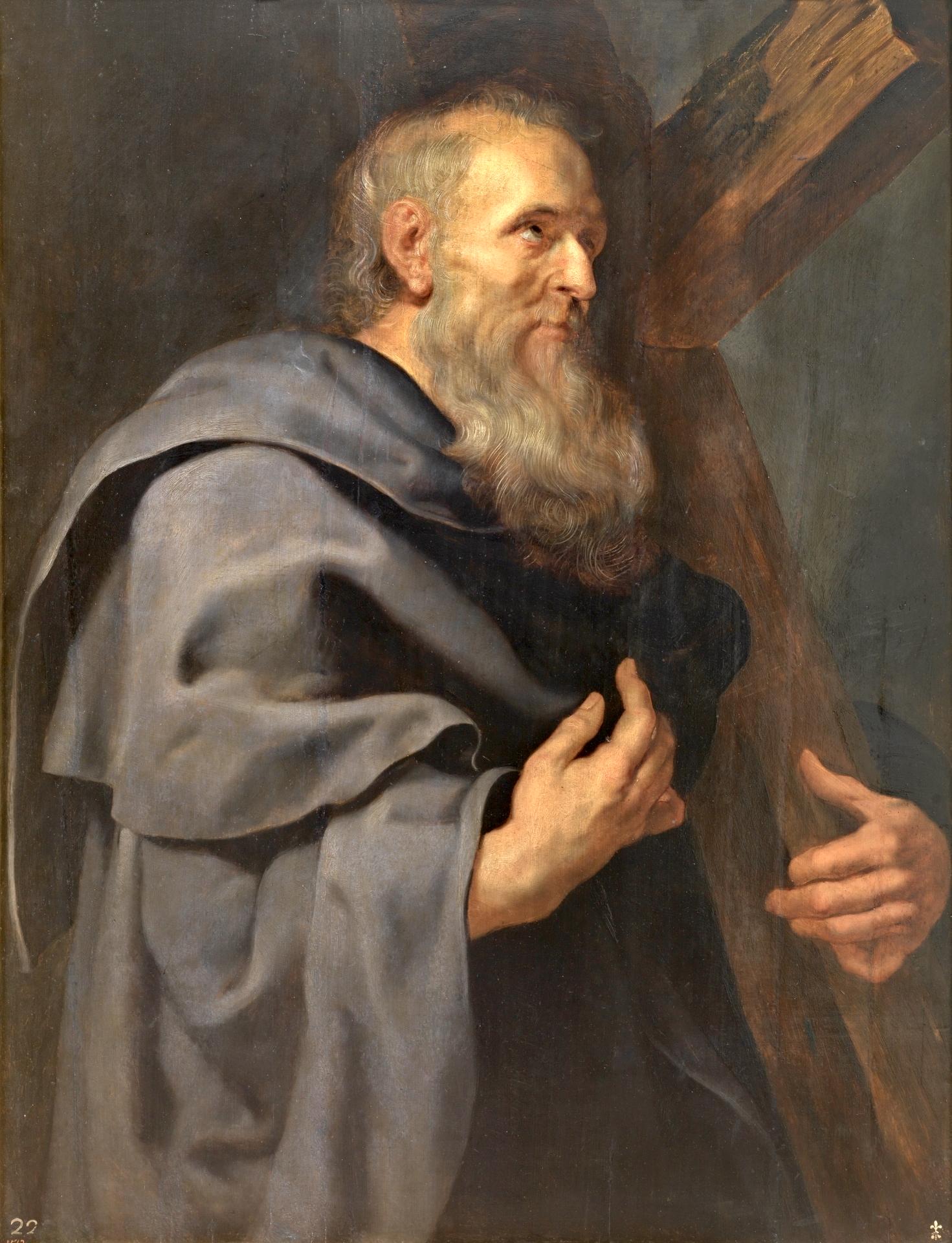
Philip was from Bethsaida, the same town as Peter and Andrew (John 1:44), and was called to follow Jesus the day after Andrew and Peter (John 1:43). His immediate response was to find Nathanael and bring him — 'We have found him of whom Moses in the law and the prophets did write' (John 1:45). Like Andrew, Philip is consistently shown bringing others to Christ.
He plays a particular role in the Gospel of John. At the feeding of the five thousand (John 6:5–7), Jesus tests him with the question, 'Where shall we buy bread, that these may eat?' Philip's response — 'Two hundred denarii worth of bread is not sufficient for them' — is the practical calculation that the miracle is about to overturn. In John 12:20–22, when Greeks come asking to see Jesus, they come to Philip first (probably because of his Greek name and possibly his Greek-speaking background), and Philip consults with Andrew before bringing the request together to Christ.
His most theologically significant moment is John 14:8–11. After Jesus's discourse on going to prepare a place, Philip asks, 'Lord, show us the Father, and it sufficeth us.' Jesus's reply is one of the strongest Christological statements in the New Testament: 'Have I been so long time with you, and yet hast thou not known me, Philip? he that hath seen me hath seen the Father; and how sayest thou then, Shew us the Father?' The patristic tradition has consistently read this passage as a foundational text for the doctrine that the Son is the perfect image of the Father — the visible revelation of the otherwise invisible God.
Post-apostolic tradition associates Philip with Hierapolis in Phrygia (modern western Turkey). Eusebius (citing Papias of Hierapolis, c. 130 AD) records that Philip and his daughters lived and died there. Some early sources (and especially the apocryphal Acts of Philip) confuse Philip the Apostle with Philip the Evangelist (one of the seven deacons of Acts 6 who later baptized the Ethiopian eunuch in Acts 8); both had daughters, both were known in the early Church, and Eusebius himself notes the difficulty of distinguishing them. The tradition of Philip's martyrdom at Hierapolis — crucified upside down at the age of 87 — is a development of the apocryphal Acts of Philip and is not securely historical, though archaeological work at Hierapolis since 2011 has identified what may be Philip's first-century tomb and a fifth-century martyrium church above it.