Gregory the Great
A Roman aristocrat who became a monk, then a reluctant pope — and reshaped the medieval church through pastoral care, mission, and reform.
“The art of arts is the government of souls.”
— The Pastoral Rule
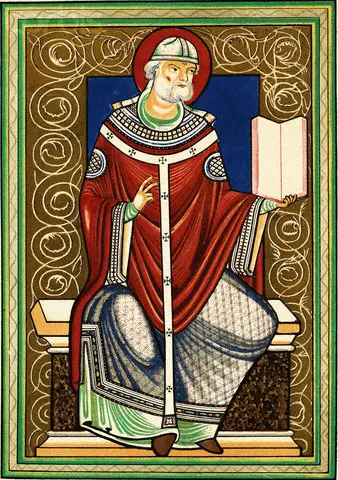
Gregory was born around 540 into a noble Roman family as the old empire crumbled in the West. He rose to be prefect of the city of Rome, then renounced public life, turned his family home into a monastery, and became a monk — the happiest years of his life, he later said. The church would not leave him in peace: he served as papal envoy to Constantinople, and in 590, amid plague and the Lombard threat, he was elected pope against his will, calling himself not a ruler but 'servant of the servants of God,' a title the popes have kept ever since.
His genius was pastoral and practical. He reorganized the vast estates of the Roman church to feed the poor, negotiated with the invading Lombards when the emperor could not, and reformed the church's worship and music (the tradition of 'Gregorian' chant bears his name, however much later legend embellished his role). His Pastoral Rule, a handbook on the care of souls for bishops and pastors, became one of the most widely read books of the Middle Ages — a manual on how to lead different people with different needs toward God.
Gregory also looked outward. Seeing fair-haired Anglo-Saxon slaves in the Roman market — 'not Angles but angels,' the famous story has him say — he sent the monk Augustine and a band of companions to evangelize England in 597, planting the church among a people far from Rome. He wrote vast commentaries, especially the Moralia on Job, and shaped Western theology's understanding of penance and purgatory. The last of the four great Latin Doctors, Gregory closed the patristic age in the West as John of Damascus closed it in the East — and stood at the threshold of the Middle Ages he did so much to form.
- Pastoral care as the heart of church leadership
- Mission to peoples beyond the old empire (the conversion of England)
- Reform of worship, charity, and church administration
- A bridge from the patristic age to the medieval Western church
Born to a noble family in Rome
Serves as prefect of the city of Rome
Turns his home into a monastery and becomes a monk
Papal envoy (apocrisiarius) in Constantinople
Elected pope amid plague and Lombard invasions
Writes the Pastoral Rule
Sends Augustine of Canterbury to evangelize England
Dies in Rome
A manual on the care of souls — how a pastor should live and how to guide different people toward God; a medieval bestseller for bishops.
A vast moral and spiritual commentary on the book of Job, mining its depths for the Christian life.
Accounts of the lives and miracles of Italian saints, including the earliest life of Benedict of Nursia.